Grimes has weighed in on an unusual theory that a comet that’s currently traveling through space isn’t what it seems…
Comet 3I/ATLAS was discovered earlier this year and astronomers have been tracking its movements ever since.
It was detected by the Chile-based and NASA-funded Asteroid Terrestrial-impact Last Alert System and the International Asteroid Warning Network (IAWN) then started making plans to observe the object.
Starting on November 27, they will monitor comet 3I/ATLAS for the next two months.
“While it poses no threat, comet 3I/ATLAS presents a great opportunity for the IAWN community to perform an observing exercise due to its prolonged observability from Earth and high interest to the scientific community,” the IAWN said.
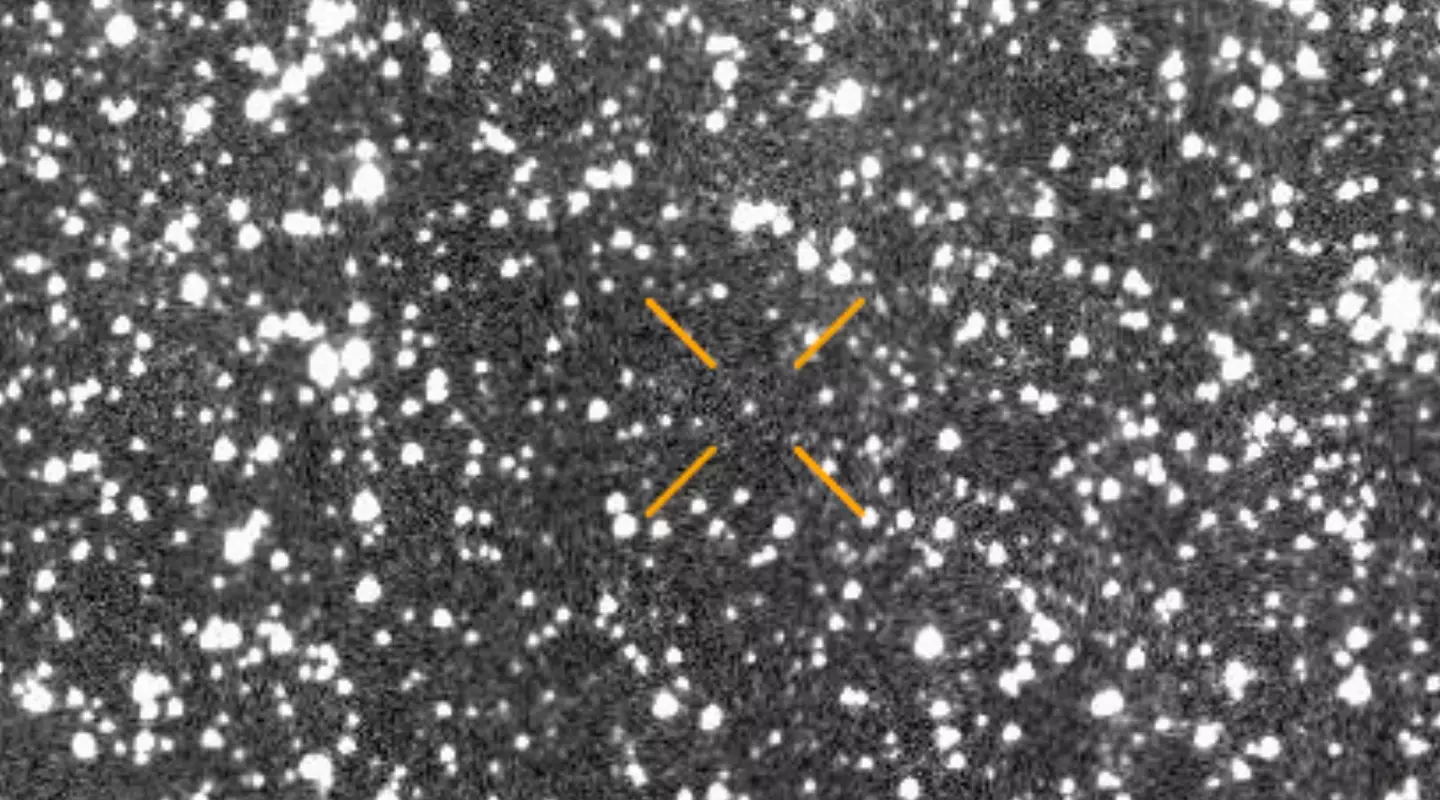
The first sighting of 3I/ATLAS was recorded in July (ATLAS/University of Hawaii/NASA)
It added: “This 3I/ATLAS campaign is the 8th IAWN observing exercise since 2017 – IAWN holds these exercises roughly once a year.”
The comet has so far gained a lot of attention, even outside of the scientific community, because of one physicist’s theory about the space object.
Avi Loeb’s theory
The Harvard scientist has been tracking 3I/ATLAS and has been noting its anomalies, one being that the supposed comet didn’t break up after passing the Sun, as many comets do.
“Images taken of 3I/ATLAS on November 11, 2025 show a single body, with no evidence for breakup following the perihelion passage [the moment an astronomical object in orbit around the Sun reaches its closest point to the Sun] two weeks earlier,” Loeb penned on his blog, adding: “Given the large-scale jets reported recently, the fact that 3I/ATLAS remains a single body is surprising for a natural comet.”
Loeb continued: “Technological thrusters which point their exhaust towards the Sun would accelerate away from the Sun. This post-perihelion maneuver might be employed by a spacecraft that aims to gain speed rather than slow down through the gravitational assist from the Sun.”
Loeb has his own scale when it comes to comets; zero means the object is definitely natural while 10 means it’s a technological object. At the time of his blog post, he put 3I/ATLAS at a six.
The physicist’s idea has drawn a lot of speculation from astronomers who are still confident that 3I/ATLAS is a comet.
What has Grimes said?
Now Elon Musk’s ex-partner Grimes, real name Claire Boucher, has shared her own unusual theory on it all.
Taking to Twitter on November 29, the singer penned: “My theory is 3i atlas is coming to check us out cuz we’re so close to asi and perhaps when we achieve certain goals we get to join the alien federation of civilizations or else they need to check if we’re mentally stable for such god like tech and if they need to eradicate us (in which case we shud be nicer).”
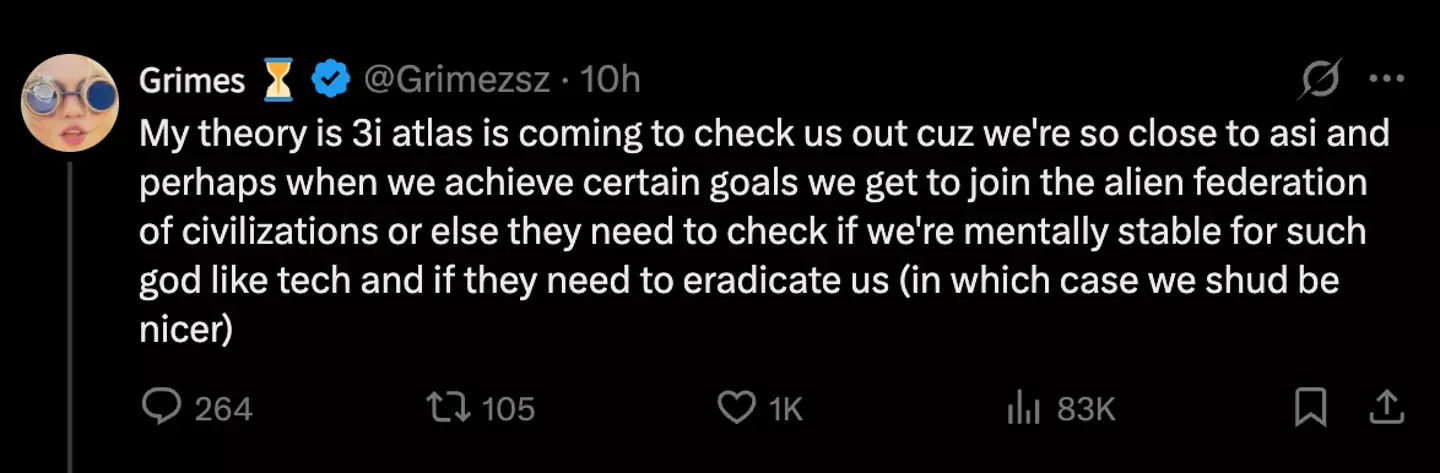
Grimes shared an unusual theory about the comet (Twitter)
But even she admitted that this idea was just a ‘fantasy’.
Somebody replied to the post: “Realistically if they wanted to stay hidden all they’d have to do is paint the spaceship black, and if they want us to know they’re coming all they need to do is blink a laser at us or change velocity in an unexpected way.”
Grimes then responded: “Stop destroying my fantasies with ur realistic and informed takes.”
Harvard scientist saying mysterious object aiming at Earth is ‘not natural’ explains what the world must do to prepare
The Harvard scientist disagrees with NASA on what the object could potentially be
A Harvard scientist has issued a warning for an object heading towards Earth and insisted that the planet needs to be prepared for some weird eventualities.
Harvard physicist Avi Loeb has admitted to having concerns about the recently discovered space object 3I/ATLAS.
He has released his own paper on the matter and has concluded that the object is ‘not natural’, arguing that the world can’t just wait to understand more about it.
On the contrary, he has insisted the world needs to take a few steps to decide on how we would deal with the object if the worse should happen…
What has NASA said about 3I/ATLAS?
3I/ATLAS was detected on July 1 at the NASA-funded ATLAS survey telescope at Río Hurtado, Chile and immediately scientists began investigating what they were actually looking at.
Amazingly, it’s only the third known object to originate from interstellar space – meaning it came from beyond our own Solar System.
Scientists came to this conclusion ultimately because the object was traveling too fast to be bound by the Sun’s gravity, at more than 41 miles per second.
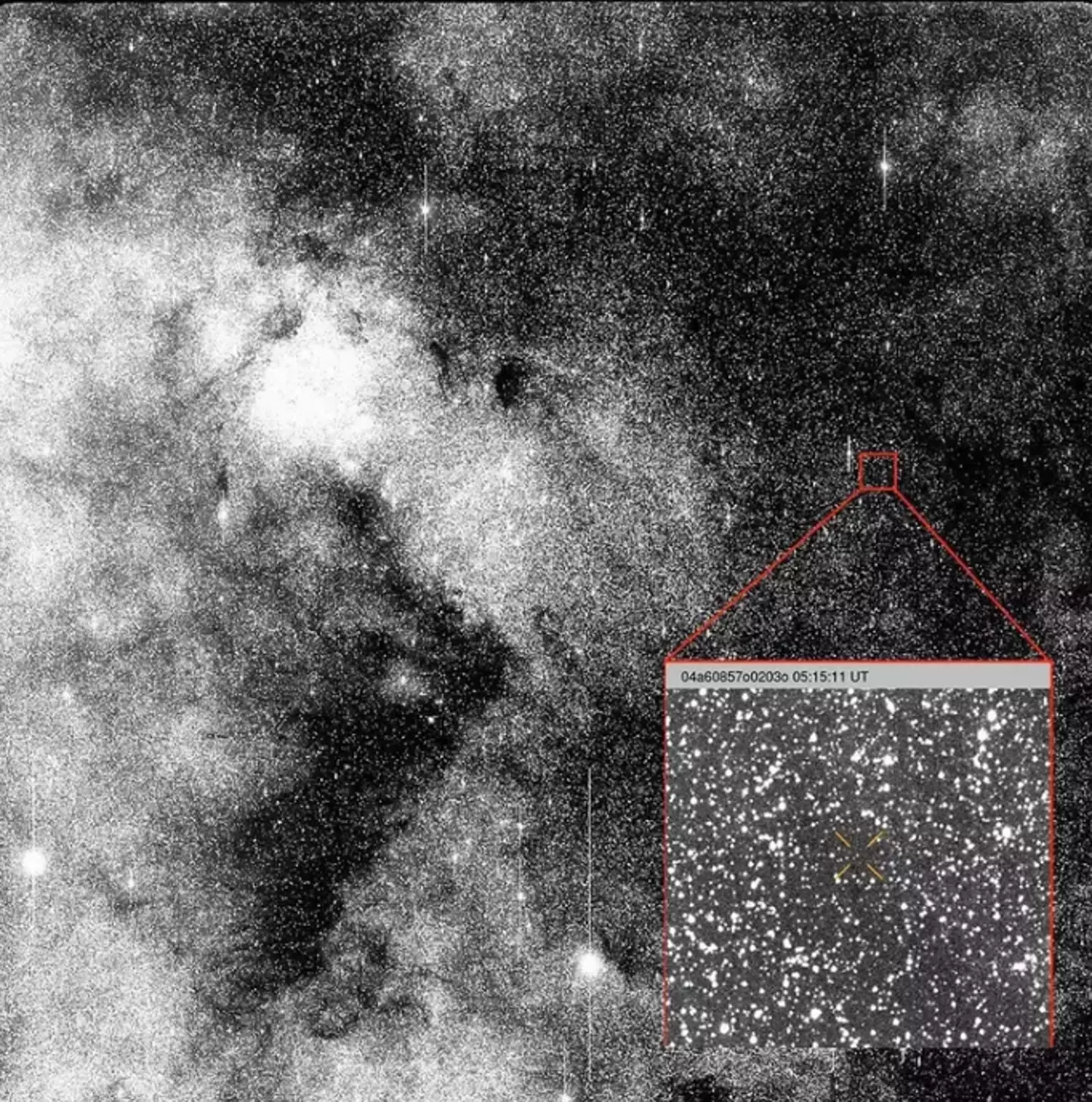
The space object has caused some concern in the scientific community (ATLAS/University of Hawaii/NASA)
While it becomes easier to understand what the object is when it comes closer to us, NASA and other scientists have concluded that it is likely an interstellar comet.
Ultimately, NASA doesn’t appear to be that worried about the object and has said 3I/ATLAS will be closest to Earth between late October and December.
The space agency has said it will then pass through the solar system and will eventually continue its journey into interstellar space, never to be seen again.
Why does Avi Loeb think 3I/ATLAS is ‘not natural’?
While the idea of an alien spacecraft sounds like something straight out of a sci-film, Loeb argues it is certainly a possibility.
He has also disputed the reasoning of some scientists who suggest it is a naturally occurring space object.
Writing on a Medium post, he wrote: “There were claims of a tail.
“But since 3I/ATLAS is accelerating and its current size is not much larger than the angular resolution of Earth-based telescopes, it is not easy to avoid fictitious elongation of the image as a result of the object’s motion.”
He also questioned the apparent lack of gas emissions coming from the object and argued its trajectory aligns too well within the solar system.
Using his own ‘Loeb Scale’ to evaluate whether something is natural or artificial, he ended up giving 3I/ATLAS a six out of ten.
This score means that it’s more likely to have been engineered, instead of being a naturally occurring force.

Loeb warns there needs to be a body in place to help decide on what we should do with potentially threatening objects from space (Anibal Martel/Anadolu Agency via Getty Images)
What has Avi Loeb said about preparing for 3I/ATLAS?
Speaking in a recent Newsnation interview, Loeb discussed his desire to see a global community come together to make decisions on the threats of the interstellar.
He said: “I believe that we need an international organization that will make policy decisions about such an object.
“We are worried about existential threats from artificial intelligence, from global climate change, from an asteroid impact, but we never discuss alien technology.”
He also reiterated his belief that the object appears to be ‘alien’ in nature rather than naturally occurring in space.
As well as this, he argued the importance of there being a policy regarding coming into contact with something that is alien.
He added: “The response has to depend on its properties and its intent — what is it doing as it comes closer to us?
“And it’s just like having a visitor in your backyard. You can’t decide on the policy for all visitors. It really depends on the intent of the visitor, and it’s just next door.”
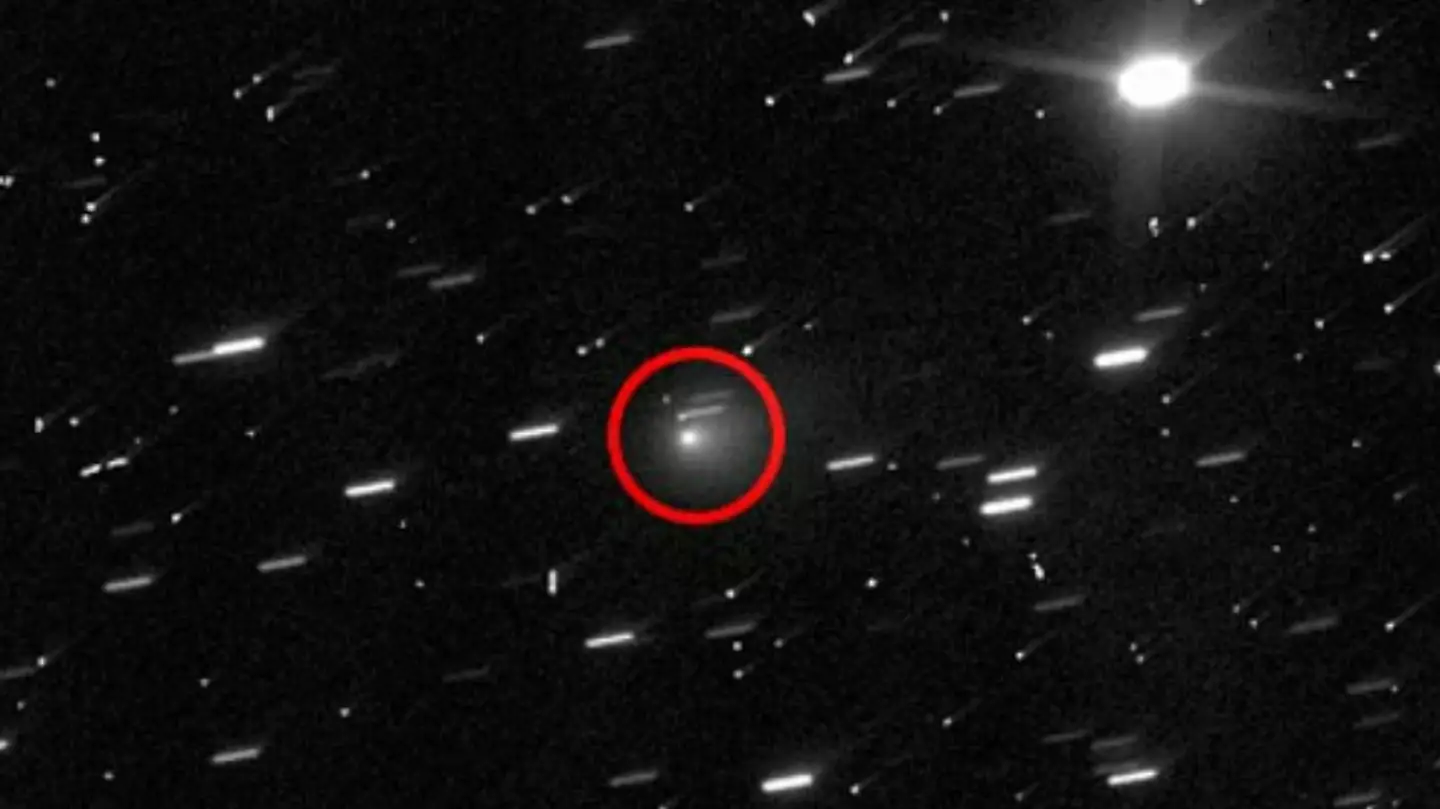
Harvard scientist says mysterious object aiming at Earth is ‘not natural’ after pointing out one major issue
A massive object heading for Earth has scientists in a pickle as they consider just what it could be.
Any time a large object flies through space and is seen lurking around our tiny planet, people immediately speculate whether it might be the work of extraterrestrial creatures.
Is it a UFO? Or perhaps an ordinary space rock? Usually, those are the only two answers people have for anything floating around in the abyss.
So, when NASA detected 3I/ATLAS, on July 1, people wanted to know what it was.
Sadly, the scientific world is at odds – for one key reason.
While some 200 researchers have come to the conclusion that it’s probably nothing more than a comet, one scientist doesn’t think so.
Harvard physicist Avi Loeb released his own paper on the matter, claiming that the ‘comet’ is missing one major marker.
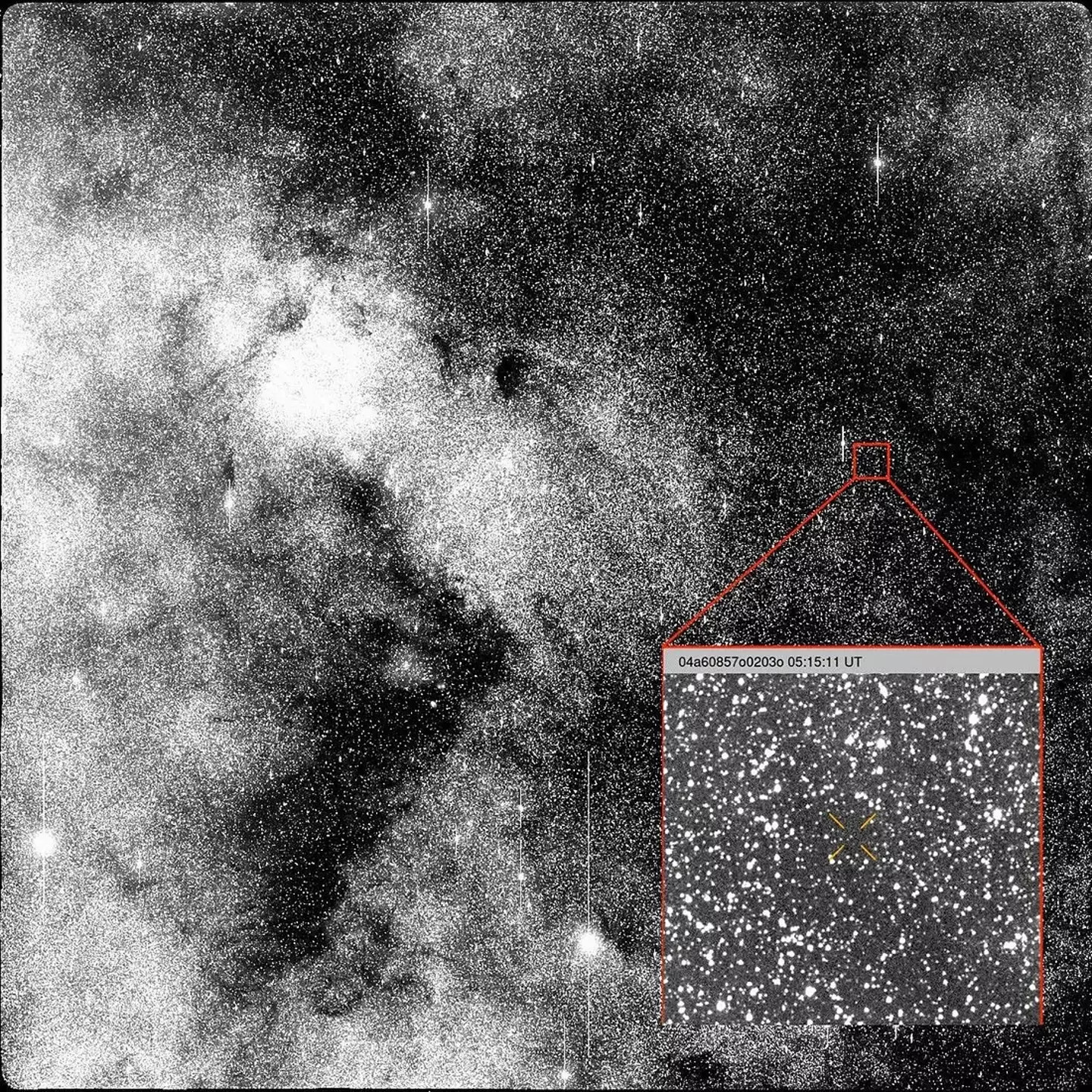
31/ATLAS’s origins have been questioned (ATLAS/University of Hawaii/NASA)
“There were claims of a tail,” Loeb said, adding: “But since 3I/ATLAS is accelerating and its current size is not much larger than the angular resolution of Earth-based telescopes, it is not easy to avoid fictitious elongation of the image as a result of the object’s motion.”
He then went to question its lack of gas emissions and its trajectory, which aligns too well within the solar system.
Using his own ‘Loeb Scale’ to evaluate whether something is natural or artificial, he ended up giving 3I/ATLAS a six out of ten.
This score means that it’s likely to have been engineered instead of being a naturally occurring force.
Taking to his Medium blog, the scientist said: “I suggested a `Loeb Scale’ for interstellar objects where `0’ is definitely a natural object (comet or asteroid) and `10’ is definitely a technological object (identified by maneuvers or emission of artificial light or signals). Currently, I give 3I/ATLAS a 6 on that scale, but my assessment will change as we get better data on it when it comes closer to the Sun.”

Scientist Avi Loeb thinks it could be a UFO (Anibal Martel/Anadolu Agency via Getty Images)
One of his more outlandish thoughts is that it’s a mothership of some sort, which has been sent to release probes to Earth.
“The more likely scenario from an engineering perspective involves a mothership that releases mini-probes which perform a reverse Oberth maneuver to slow down at perihelion and intercept Earth,” he wrote.
As for his calculations, if true, the probes could reach Earth between November 21 and December 5, 2025.
“It may come to save us or destroy us,” he said. “We’d better be ready for both options and check whether all interstellar objects are rocks.”
Images of 3I/ATLAS taken on July 4 and July 29 this year have shown no signs of a comet tail.
Loeb has proposed the use of NASA’s Juno spacecraft to intercept the object near Jupiter next year to find out what it is for once and for all.
He wrote on his blog: “The best we can do is monitor the sky with telescopes. It may well be that 3I/ATLAS is a natural comet. But even then, we have to check each and every interstellar object that the Rubin Observatory will find in the coming decade for anomalous characteristics, like non-gravitational acceleration with no cometary tail or artificial lights or unusual shape.”
He also thinks governments should be well underway with a plan of action if it turns out to be anything more than a space rock.
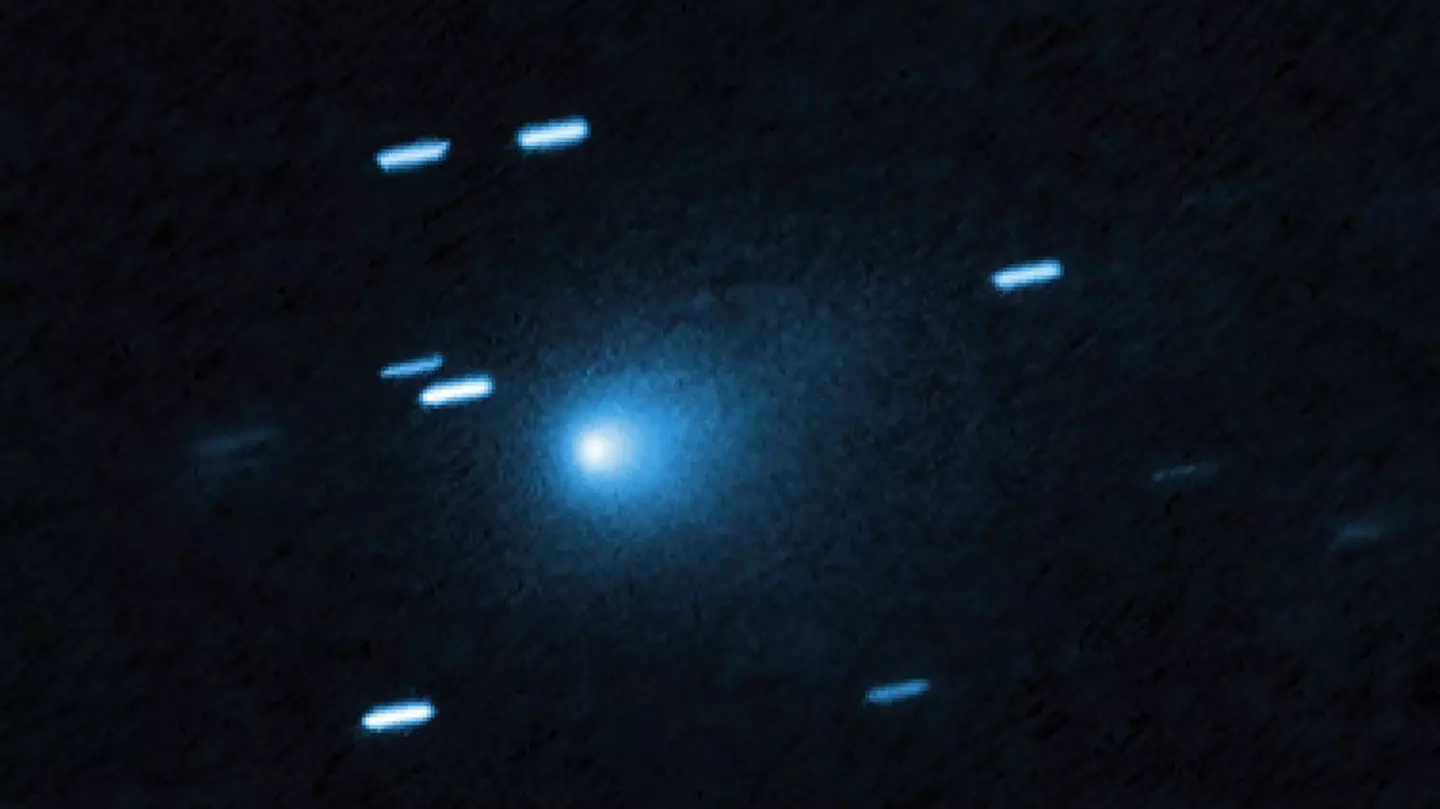
Terrifying update on mysterious object aiming at Earth that Harvard scientist claims is ‘not natural’
The massive rock heading toward Earth has received a significant update as scientists try to determine what it is.
The Manhattan-sized space rock is hurdling through space, and ever since it was detected on July 1, people have been puzzled by it.
NASA dubbed the rock 3I/ATLAS, and since its discovery, it hasn’t been acting as expected.
While many say it’s a comet, other scientists who have been following its movements have determined it’s behaving too strangely to be a normal object.
In particular, one scientist has claimed it could even be an ‘alien mothership’, with a few key differences which he claims are ‘not natural’, such as releasing a metal compound never seen before in nature, or the trajectory of its particles.
In a new paper on 3I/ATLAS, Harvard physicist Avi Loeb claims the ‘comet’ is missing one major marker that every comet shares.
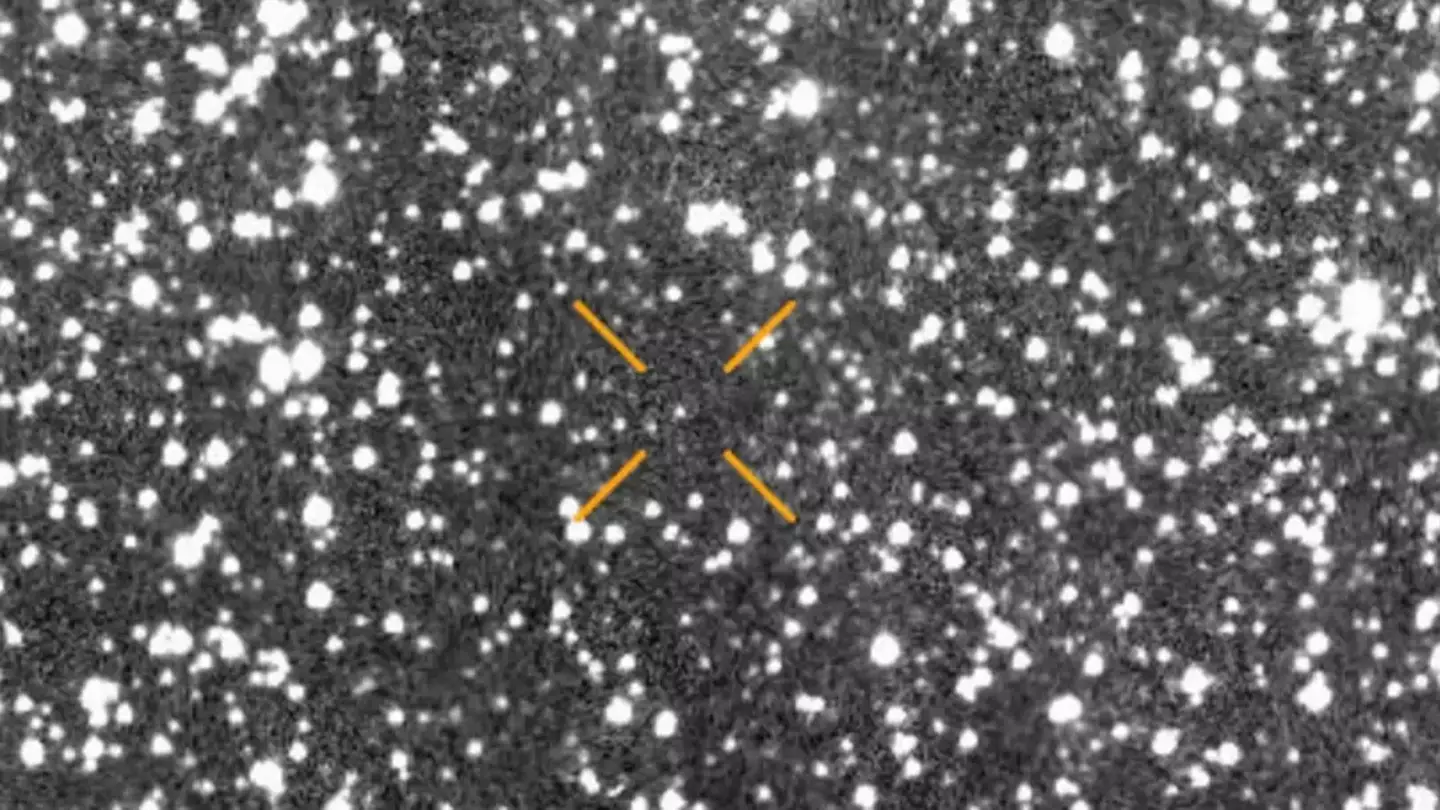
The object was first spotted in July (ATLAS/University of Hawaii/NASA)
“There were claims of a tail,” Loeb said, adding: “But since 3I/ATLAS is accelerating and its current size is not much larger than the angular resolution of Earth-based telescopes, it is not easy to avoid fictitious elongation of the image as a result of the object’s motion.”
However, while much of his speculation was based on the lack of a tail, which he dubbed an ‘anti-tail’ because it pushed particles towards the sun rather than away from it, it seems that 3I/ATLAS has decided to grow one.
Images taken by Spain’s Nordic Optical Telescope in the Canary Islands last month show the object with a tail. The tail is composed of carbon dioxide and water, with cyanide and a nickel alloy, which has only been seen in human engineering.
The new appearance of a tail could have been created to slow it down, says Loeb, writing that it would be evidence of it using a ‘braking thrust’ manoeuvre.
Taking to his Medium blog, he wrote: “I suggested a `Loeb Scale’ for interstellar objects where `0’ is definitely a natural object (comet or asteroid) and `10’ is definitely a technological object (identified by manoeuvres or emission of artificial light or signals).
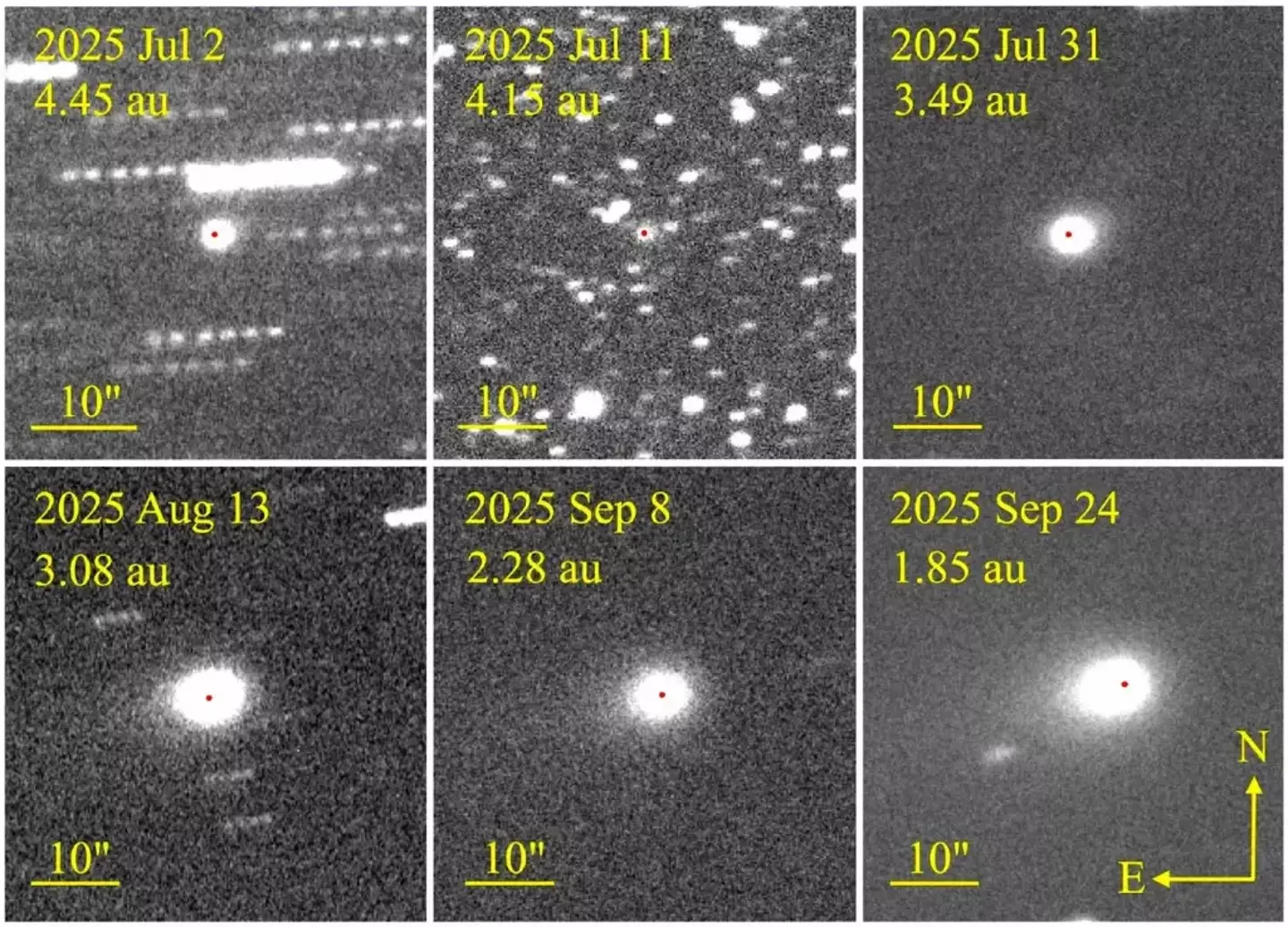
3I/ATLAS has made a very startling change by growing a tail (Jewitt and Luu 2025)
“Currently, I give 3I/ATLAS a 6 on that scale, but my assessment will change as we get better data on it when it comes closer to the Sun.”
But Loeb has now said this could be indicative of ‘controlled manoeuvring’ as well as the probability of a high-impact ‘Black Swan’ event through what he describes as an ‘Oberth manoeuvre’, where it uses the sun’s gravity to alter its course.
In a previous Q&A session, he said that ‘from an engineer’s perspective’ a ‘mothership that releases mini-probes’ would perform this manoeuvre to ‘slow down at perihelion and intercept Earth, taking advantage of the Sun’s gravitational assist’, though this would depend on the ‘mass of the mini-probe’.
“As of now, I assign a 30 to 40 per cent likelihood that 3I/ATLAS does not have a fully natural origin.” Loeb wrote on his blog.
“This low-probability scenario includes the possibility of a black swan event akin to a Trojan Horse, where a technological object masquerades as a natural comet.”
Regardless of what the object is, the International Asteroid Warning Network has added 3I/ATLAS to its list for further scientific monitoring, as they said on their website that while it ‘poses no threat’, it gives a ‘great opportunity’ for observation ‘due to its prolonged observability from Earth and its high interest to the scientific community’.
Harvard scientist warns ‘not natural’ object aiming at Earth ‘could be here by Christmas’
It’s an alarming thought…
A Harvard scientist reckons an unusual space object could reach Earth ‘by Christmas’.
Unless you’ve been living under a rock, you’ll have heard about 3I/ATLAS – an astronomical anomaly that’s had the whole world intrigued, and a little concerned.
Measuring around seven miles long, the unusual space object was first spotted in July by scientists at the NASA-funded ATLAS survey telescope in Chile.
Incredibly, this is only the third object ever discovered that’s believed to have come from interstellar space – meaning it didn’t originate in our Solar System at all. Scientists figured this out because it’s moving way too fast to be held back by the Sun’s gravity; over 41 miles per second.
At one point, it even raised eyebrows for being ‘possibly hostile’, with some worried it could cause serious problems if it came too close to Earth.
The space object has caused some concern in the scientific community (ATLAS/University of Hawaii/NASA)
Yet NASA has since dismissed this chatter, claiming 3I/ATLAS poses no threat to us. Scientists believe it’s an interstellar comet which could be made up of icy rock.
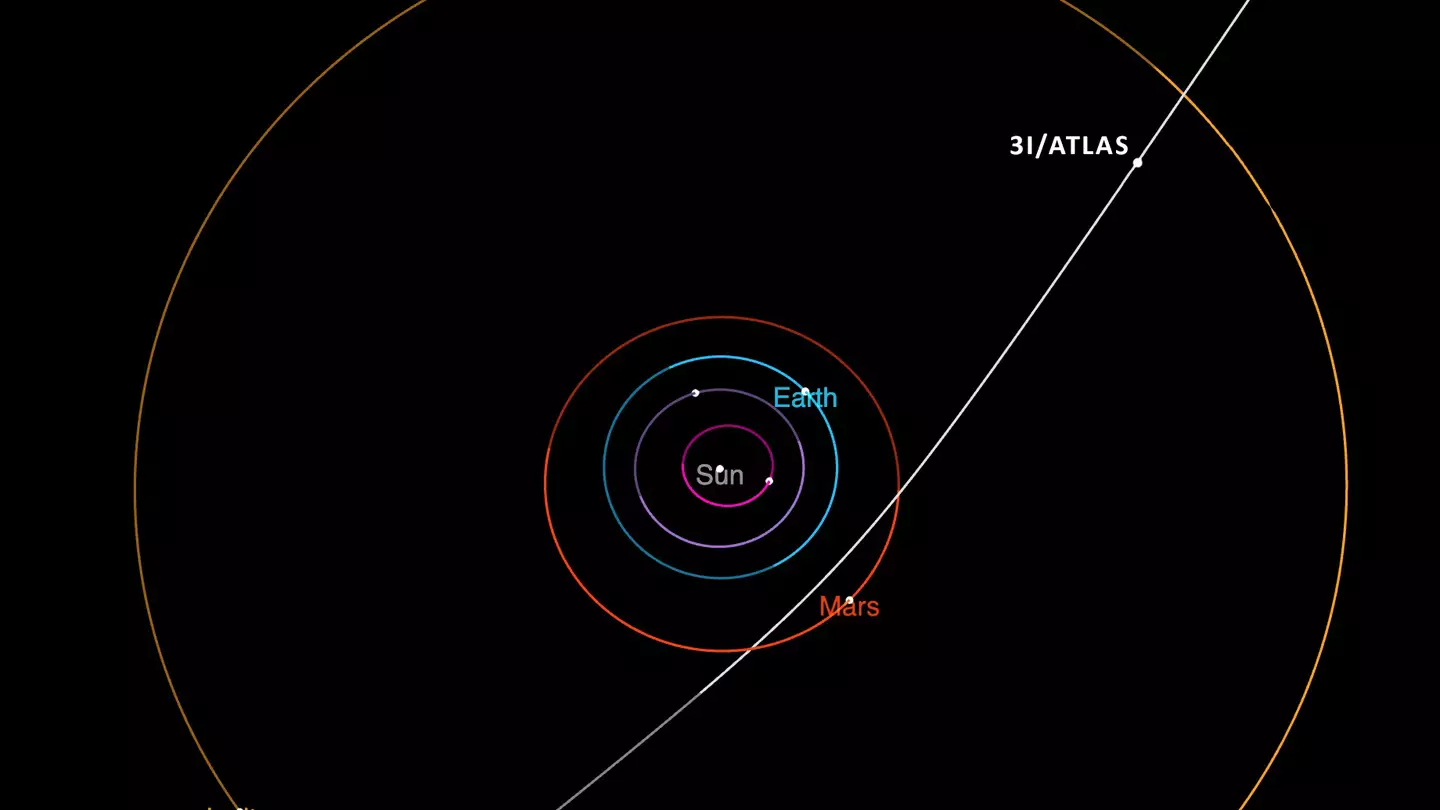
The US space agency even tracked the comet’s predicted movements; it should be making its closest pass to the Sun just before Halloween, as it continues on its trajectory into deep space, ‘never to be seen again’.
But one Harvard physicist digging into 3I/ATLAS has floated the idea of the fast-moving object not being ‘natural’ at all.
The man in question is Avi Loeb and, in a new Medium blog post, he’s even suggested should the mysterious object be some sort of alien ship, it could reach Earth ‘by Christmas’. Yikes.
Scientist Avi Loeb thinks the unusual object could be a UFO (Anibal Martel/Anadolu Agency via Getty Images)
In the post, Loeb discusses how no Earth-launched rocket could intercept the ‘comet’ before it reaches its nearest point to the Sun.
But, since it’s traveling at a speed far below that of light, we could feasibly send it a radio message. The big question is: should we?
Loeb argues that such a move only makes sense if 3I/ATLAS is more than just a rock – possibly even a technological spacecraft.
He highlights two key concerns that arise: is there any intelligence onboard to receive and understand our message? And could our message be seen as a threat?
Who’d have thought AI could really be standing for ‘alien intelligence’ all along!
Humans have sent signals out into deep space before; in 1974, the Arecibo radio telescope broadcast a message to a cluster of stars called Messier 13.
However, they are located 22.2 thousand light years away, whereas 3I/ATLAS is close enough to respond quickly, making potential contact more immediate – and possibly riskier.
Given all these uncertainties, Loeb suggests waiting until the object reaches its closest point to the Sun. If it behaves like a normal comet, it’s likely natural. If it performs a maneuver, we may be facing something far more advanced. And that’s when the panicking can really begin…