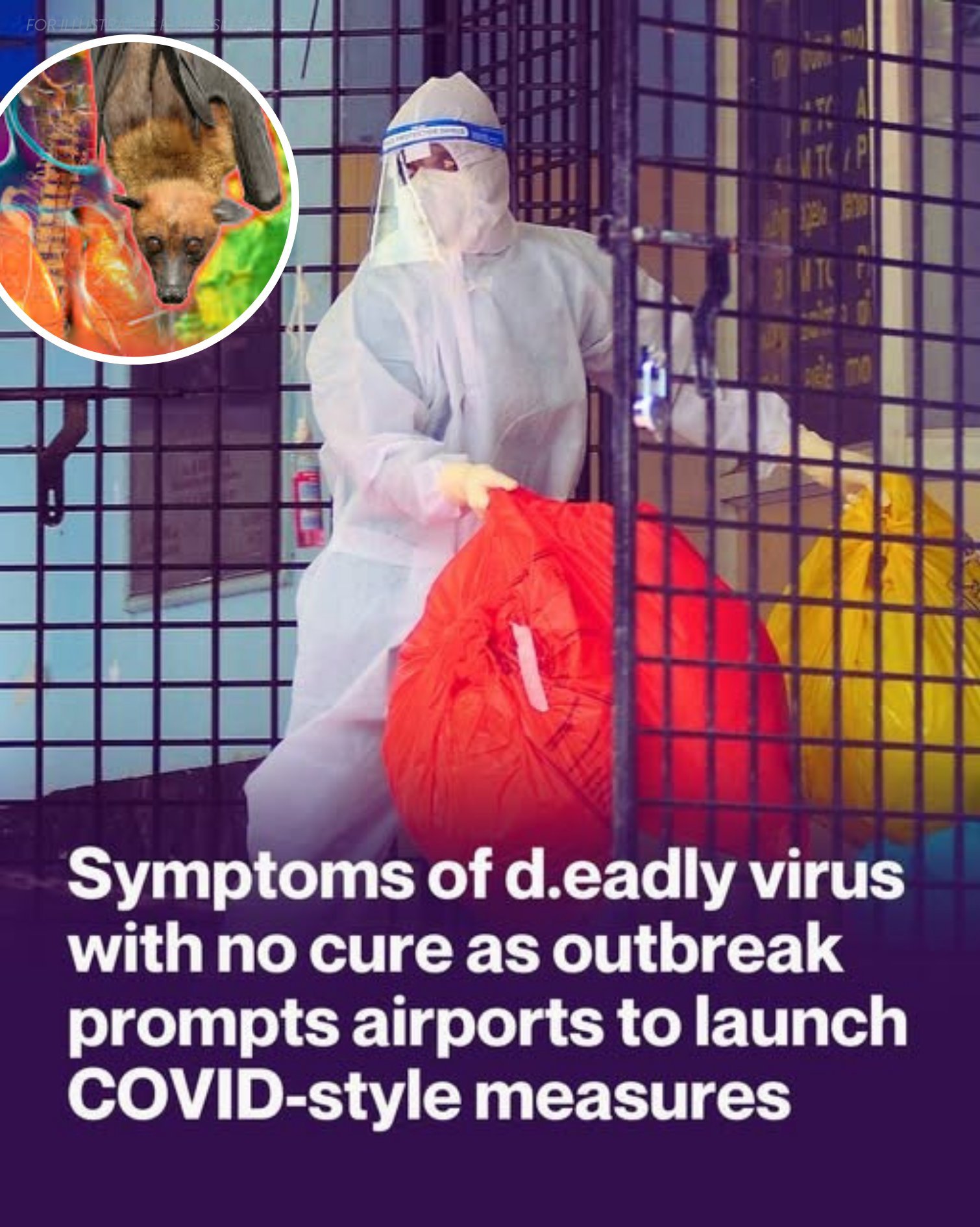
📌 What Is the Nipah Virus?
The Nipah virus is a rare but serious virus carried by animals — especially fruit bats — that can infect people through:
-
Contact with infected animals or their bodily fluids
-
Eating food contaminated by infected bats (like raw date palm sap)
-
Close contact with someone who is sick from the virus
It was first identified in Malaysia in 1999 and has caused outbreaks in South and Southeast Asia over the years.
🤒 Common Symptoms to Watch For
Symptoms usually appear 4–14 days after exposure and often start like the flu:
-
Fever
-
Headache
-
Muscle pain
-
Sore throat
-
Cough or breathing difficulties
If the infection becomes more severe, it can lead to:
-
Respiratory distress
-
Encephalitis (inflammation of the brain)
-
Confusion or altered consciousness
-
Seizures
-
Coma
❌ No Cure or Vaccine

Importantly:
-
There is no approved cure for Nipah virus infection.
-
There’s no licensed vaccine yet.
-
Treatment focuses on supportive care, meaning doctors manage symptoms like fever and breathing problems to give the body the best chance to recover.
💀 How Dangerous Is It?
Nipah is considered highly serious because:
-
The fatality rate can range roughly 40%–75%, and varies by outbreak and medical care.
This high fatality rate is far above that of many common viruses, so even small outbreaks prompt strong precautions.
✈️ Why Airports Are Using Covid-Style Measures
Although Nipah does not spread as easily as COVID-19, some countries have reintroduced health checks like temperature screening and health questionnaires at airports in Asia because:
-
Officials want to catch possible cases early.
-
Fever screenings and travel history checks help identify travelers with symptoms before they mingle with others.
These steps are similar to COVID-19 measures but are focused on spotting symptomatic individuals rather than testing everyone.

🦠 What This Means for Travelers
Health screening at airports doesn’t mean there’s a new global pandemic — it’s a precaution because of the seriousness of Nipah virus and its lack of a cure.
If traveling from regions with confirmed cases, travelers may be:
-
Screened for fever
-
Asked about symptoms and recent travel
-
Isolated if symptoms are present
Officials emphasize that the actual risk to most travelers remains low, but early detection helps keep outbreaks contained.