My in-laws tried to quietly push my father out of my wedding because he’s a sanitation worker. They said it was for “appearances,” the kind of word people use when they don’t want to admit they’re ashamed. I remember my hands shaking with anger when I realized what they were doing—until my dad calmly asked for the microphone. After what he said, the room was never the same again.
My name is Anna, and the man who raised me works for the city.
My father, Joe, has been a sanitation worker for as long as I can remember. My mother died when I was three, and from that moment on, it was just the two of us in a small apartment that always smelled faintly of coffee and laundry detergent. We didn’t have much, but we had what mattered: heat in the winter, food on the table, and the kind of stability that comes from knowing someone will always show up. He left for work before dawn every morning, came home exhausted and sore, and still never missed a parent-teacher meeting or my birthday. He never once apologized for his job. When people asked what he did, he said simply, “I work for the city. It’s honest work.”
I grew up proud of him.
I met Ethan during my medical residency, in a season of my life where everything felt overwhelming and fragile. When I told him what my father did for a living, I braced myself without even realizing it. Instead, he smiled and said, “That’s hard work,” like it was the most natural thing in the world. I think that was the moment I truly fell in love with him.
His family, however, did not share that respect.
They were comfortable, well-off, and polite in a way that always felt carefully measured. At first, the comments were subtle—questions about where my father lived, what kind of people I grew up around, whether I’d ever “felt limited.” Ethan pushed back whenever he noticed it, but the pressure never fully stopped. It intensified when they insisted on a large, elegant wedding to meet their “standards,” as if love needed chandeliers and linen napkins to be legitimate.
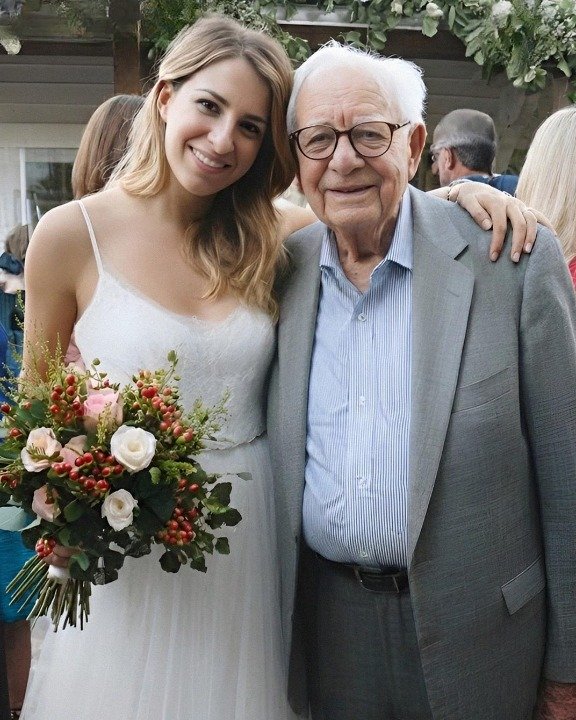
On the day of the wedding, my father arrived early. He wore the only suit he owned, freshly pressed, his shoes polished until they reflected the light. He looked nervous but proud, standing a little straighter than usual. Ethan hugged him warmly, like family should. Still, I noticed the looks—the quick glances, the whispers, the way the chairs around my dad’s table stayed conspicuously empty.
I told myself I was imagining it. I was wrong.

Partway through the reception, Ethan’s parents approached my father. Their voices were low, calm, almost gentle as they suggested he might want to leave early—just until things “settled down.” They explained that certain guests might feel uncomfortable, that it would be better for appearances.
I felt something inside me snap.
Before I could say a word, my father raised his hand.
“I understand,” he said evenly. “But before I go, may I say a few words? Just a toast to my daughter.”
There was no anger in his voice. No bitterness. Just quiet certainty.
He took the microphone and began talking about my mother—about losing her too young and suddenly having to learn how to be everything at once. He spoke about long shifts, cold mornings, and doing work that most people pretend not to see. He said he was proud that I became a doctor not because of the title, but because I care about people when they’re at their most vulnerable.
Then he paused.
Years earlier, after a major storm, he’d found a briefcase at a construction site while working overtime. Inside were permits, contracts, and documents important enough to destroy a business if they disappeared. He turned it in anonymously, never asking questions, never looking for credit. Much later, he realized those papers belonged to my in-laws’ company.
“I didn’t do it for recognition,” he said softly. “I did it because it was the right thing to do.”
The room went completely silent.
I stood up before I realized I was moving. “My father is staying,” I said, my voice steady despite everything I felt. “He’s not an embarrassment. He’s the reason I’m standing here today.”
Ethan stepped beside me without hesitation. “If anyone has a problem with that,” he said calmly, “they’re free to leave.”
Some guests did.
My father stayed—right there, beside me, exactly where he belonged.
And in that moment, I understood something clearly and permanently. You don’t get to judge someone by their job or where they come from. Dignity isn’t something you give or take away. It’s something you carry with you.
My father carried it every single day of his life—and he taught me how to do the same.