
One “fantastic” part of the internet is the fact that you can, at any time, see some of the worst opinions available to humankind. Everyone is entitled to their own opinion, but some folks really insist on takes so scorchingly untouchable that they almost become entertaining.
The “Hot Take Nobody Asked For” Facebook page is dedicated to sharing and shaming people who had strong, controversial opinions that really went nowhere. So get comfortable as you scroll through, upvote your favorite examples and be sure to add your own thoughts below.
Go On. Take Everything. Take Everything. I Want You To

> Lightning Crashes > A New Mother Cries

Imagine Publicly Calling A Third Of Your Residents Trash.
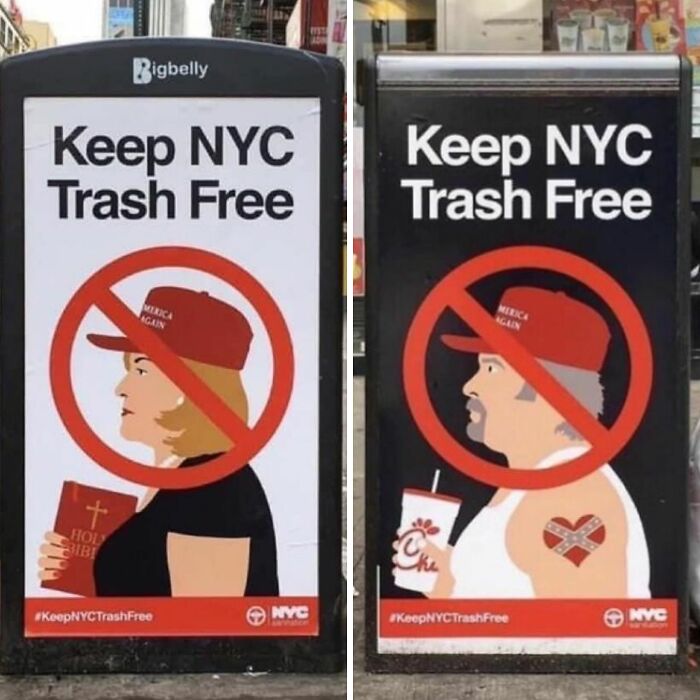
Some people insist on posting hot takes to the internet, even when their opinions might seem ill-informed or downright dumb, because the thrill of instant attention and validation often outweighs the need for careful thought. In an age of social media where reaction and engagement are currency, a controversial or off-the-cuff remark can quickly garner likes, shares, and heated debates, making it seem like a shortcut to popularity.
For many, the rush of being noticed in a crowded digital space is enough to push them to share opinions without fully considering the consequences or the nuances of the topic. After all, no such thing as bad publicity, unfortunately.
No, This Is Not Community Service
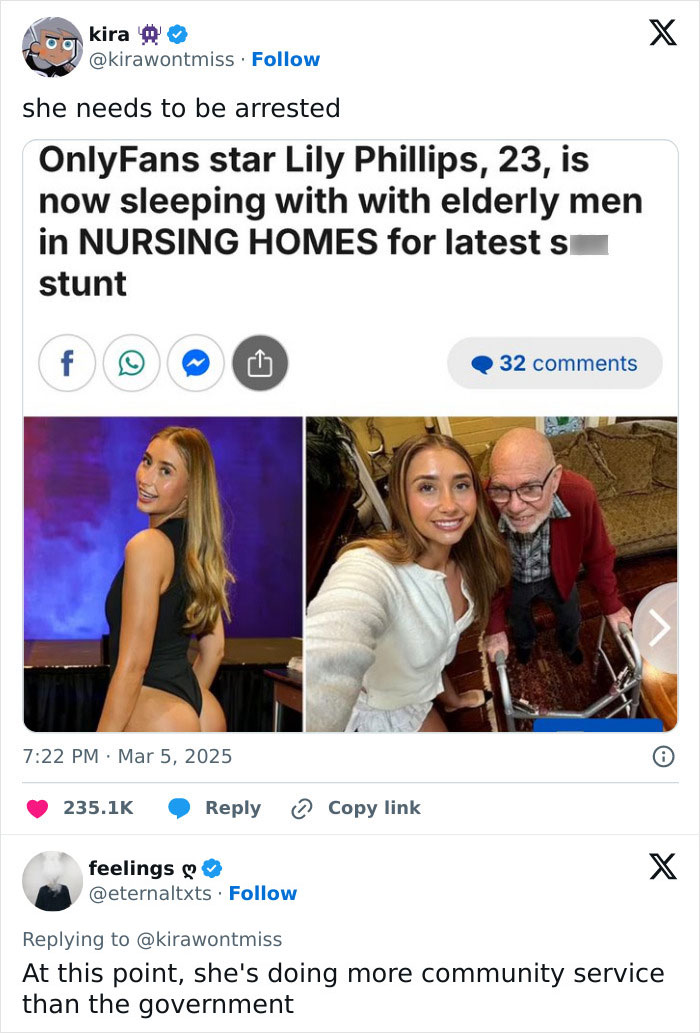
The Person Replying Better Not Be Upset About The Gulf Of America Then

I Don’t Think She Realizes That Nobody In America Cares

Bud Light Is My Vacseen

There’s Something A Little Unusual With This Toyota Truck In New Jersey

Matt Walsh Of The Daily Wire Is Really Not The Brightest Star In The Sky. The Ozone Was Indeed Depleting And It Was A Legitimate Concern. It Turned Out That A Major Cause Of This Was Cfc’s. The Use Of Cfc’s Was Then Heavily Reduced And Things Got Significantly Better
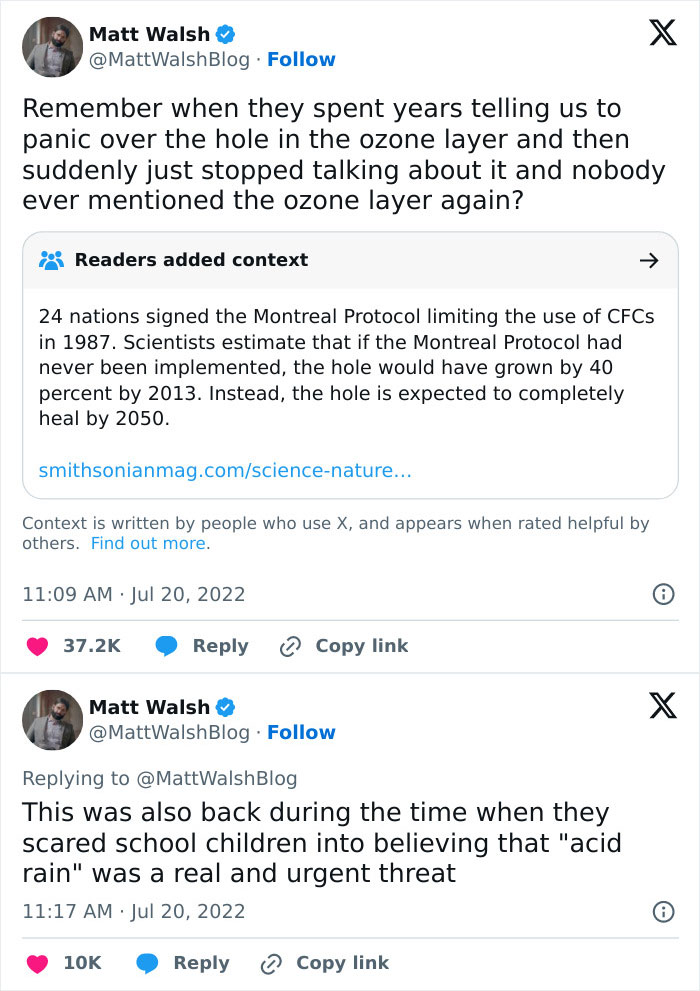
There is also an element of performative identity at play. In a world where social media profiles often serve as a reflection of one’s persona, posting a hot take can be a way for some to assert their individuality or align themselves with a perceived intellectual elite. Even if the content is shallow, the act of engaging in public debate or controversy can create a temporary feeling of belonging to a larger community of outspoken individuals.