What began as an unimaginable loss soon transformed into a powerful testament to compassion, solidarity, and the extraordinary capacity of strangers to care for one another. The story of Renee Nicole Good’s wife and children is not only one of tragedy, but of how collective empathy can rise from heartbreak and create something resembling hope.
Renee Nicole Good was more than a name in a headline. To those who loved her, she was a partner, a parent, a presence that anchored everyday life. Her sudden death shattered the quiet rhythm of her family’s world, leaving behind a spouse forced to confront grief while holding together the lives of children who could not yet fully understand why their mother would never come home.

In the immediate aftermath, there were no words that could adequately capture the weight of the loss. Friends and relatives gathered, offering comfort that felt fragile against the enormity of what had happened. Bills, funeral arrangements, and unanswered questions loomed, piling practical fears onto emotional devastation.
Like many families facing sudden loss, Renee’s loved ones found themselves grappling with an uncertain future. The grief was raw, but so were the realities of raising children without one parent, of explaining absence where love had once lived, of navigating life without the person who had been its emotional center.
It was during these early days that someone—whether a close friend or a family member—decided to create a GoFundMe campaign. At first, the goal was modest. The intention was simple: to help Renee’s wife and children survive the immediate financial strain while they tried to process the unthinkable.
No one expected what would happen next.
The fundraiser began circulating quietly, shared among friends, then friends of friends. Each share carried a short message: a memory, a sentence of heartbreak, a plea for support. Slowly, the campaign began to reach people who had never met Renee but felt compelled by the humanity of the story.
Donations trickled in at first—small amounts accompanied by heartfelt notes. Strangers wrote messages of sympathy, sharing their own experiences with loss, assuring the family they were not alone. With each contribution, the total crept upward, and something remarkable began to take shape.
The story struck a nerve far beyond its original circle. Social media amplified the campaign, turning personal grief into a shared moment of national attention. News outlets began to take notice, drawn not only by the tragedy but by the growing wave of generosity surrounding it.
Within days, the numbers climbed faster than anyone could have imagined. Tens of thousands turned into hundreds of thousands. People from across the country—and even beyond—gave what they could, driven by a simple desire to help children who had lost their mother and a partner left to carry on alone.
As the total crossed milestones, disbelief set in. Each refresh of the page brought a new figure, higher than the last. Messages poured in faster than the family could read them. What had begun as a lifeline had become something much larger—a collective act of compassion.
When the fundraiser surpassed one million dollars, it sent shockwaves through those following the story. The final total—$1.5 million—felt almost unreal. It was not just a number; it was evidence of thousands of people choosing kindness in the face of someone else’s pain.
For Renee’s wife, the overwhelming support was both comforting and surreal. Grief did not disappear because of generosity, but the burden became lighter. The fear of how to provide for the children, how to secure their future, how to manage the unknown—those fears softened, replaced by gratitude and relief.
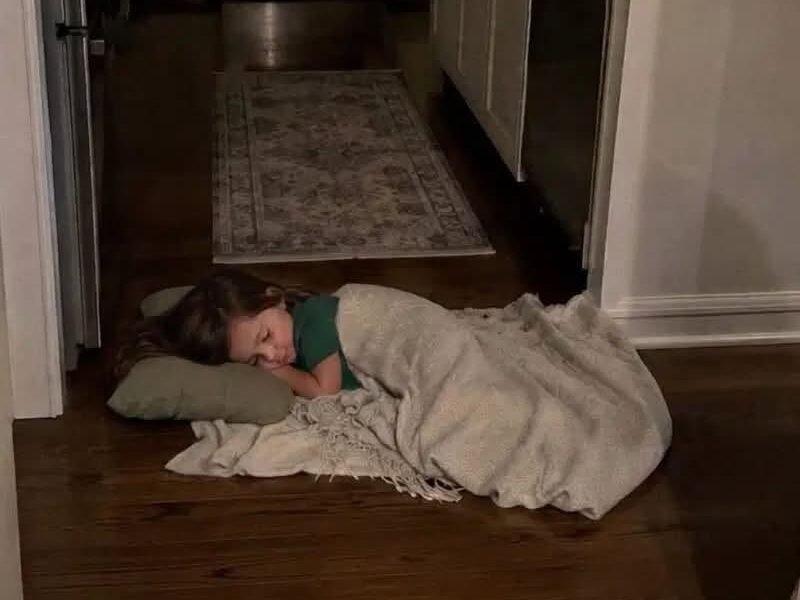
The children, too young to grasp the full scope of the loss, would one day learn what strangers did for them. They would learn that when their world fell apart, people they had never met stepped forward to help rebuild it, piece by piece.
The funds meant stability in a time of chaos. They meant the ability to remain in a home filled with memories, access counseling and support services, and the reassurance that education and basic needs would not be jeopardized by tragedy.
But beyond financial security, the campaign carried emotional weight. Each donation was a message: You matter. Your pain is seen. Your family is not forgotten. In moments when grief isolated the family, those messages reached out like hands across the darkness.
The story resonated because it reflected something universal. Everyone understands loss, even if they have not lived it yet. Everyone knows how fragile life can be, how quickly everything can change. In supporting Renee’s family, donors were also honoring their own loved ones, their own fears, their own hopes.
As coverage spread, people spoke not just about the money, but about what it represented. In a world often marked by division and cruelty, this outpouring of love stood as a reminder of what people are capable of when empathy takes the lead.
Friends of the family described Renee as someone who would have been deeply moved by the response. She was known for her warmth, her care for others, and her devotion to her family. In many ways, the generosity felt like an extension of the love she had given during her life.
The campaign also sparked conversations about community responsibility and the role of collective support in moments of crisis. It raised questions about how society cares for families after tragedy, and how informal networks can sometimes step in where systems fall short.
For Renee’s wife, gratitude became a daily practice. Though grief remained ever-present, it was now accompanied by the knowledge that she and her children were surrounded by an invisible community—one that had shown up without being asked.
There were moments of quiet reflection, moments when the magnitude of the support felt overwhelming. How could so many people care so deeply about a family they had never known? The answer, perhaps, lay in shared humanity.
The story did not erase the pain of loss. There were still nights filled with tears, still milestones that would forever feel incomplete. No amount of money could replace a mother’s presence or a partner’s love. But it could offer breathing room, a chance to heal without constant fear.
As time passed, the campaign became more than a fundraiser. It became a symbol. Proof that even in the darkest moments, light can come from unexpected places. That strangers can become allies. That compassion, when multiplied, can change lives.
For the children, the legacy of the campaign will follow them into the future. It will remind them that their mother mattered—not only to those who knew her, but to people who saw her story and chose to care.
For the nation that watched the total climb higher and higher, the story offered something rare: a sense of shared goodness. A reminder that despite everything that divides people, there remains a powerful instinct to help, to protect, to uplift.
Tragedy may have been the spark, but love became the outcome.
In the end, the $1.5 million raised was not just financial support. It was a collective promise—that Renee Nicole Good’s family would not face their future alone, and that even in loss, hope can still find a way to rise.