At ninety-one, I had come to terms with the idea that my life would fade quietly. No phone calls. No visitors. Just the steady tick of the clock keeping me company. I felt less alive than forgotten—like I was still breathing out of habit.
My husband had passed away many years ago. My children grew up, moved away, built their own lives. At first, they visited. Then they called. Then they sent messages. Eventually, even those stopped.
My birthdays became a single cupcake and whatever happened to be on television. Holidays were frozen meals eaten alone. Most days, the house creaked and sighed as if it were the only thing trying to speak to me.
That kind of loneliness makes you feel invisible.
Then a boy named Jack moved in next door.
He was twelve—awkwardly tall, all elbows and knees, with a backward cap and a skateboard that never left his side. Every evening I’d see him practicing tricks on the sidewalk. He’d fall, brush himself off, and try again.
Other kids would hear voices calling them home. Dinner. Homework. Warm lights turning on.
Jack never did.
His house stayed dark. No car. No lights. No voices.
I told myself I wasn’t prying—just noticing. That excuse worked until the night I heard him crying.
It was late. I woke to a sound that didn’t belong to the pipes or the television. It was quiet, broken sobbing. A child trying not to be heard.
I pulled on my robe, crept to the window, and parted the curtain just enough.
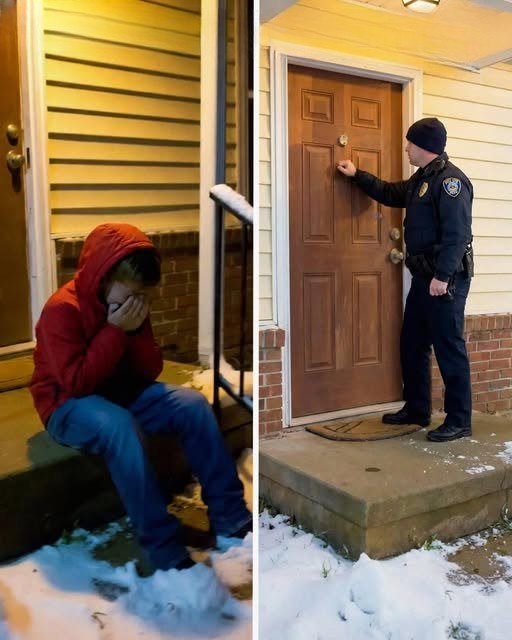
Jack sat alone on his porch, knees hugged to his chest, shoulders trembling. No light inside the house. No warmth. His hat lay beside him on the step.
Before fear could stop me, I stepped outside.
“Jack?” I called gently. “Sweetheart, are you alright? Are you cold? Is your mom home?”
He looked up, startled, tears streaking his face like I’d caught him committing a crime instead of being heartbroken.
“I’m fine,” he snapped, his voice breaking.
I moved closer. He stared at me, grabbed his hat, ran inside, and slammed the door so hard it echoed down the street.
I stood there, feeling ancient and useless, then shuffled back home.
I barely slept.
The next day, I watched his house constantly. He never came out after school. By evening, my stomach was tight with worry.
I baked an apple pie just to keep my hands busy. When it cooled, I carried it next door and knocked.
No answer.
I knocked again. Still nothing.
By morning, I knew what I had to do.
I took a taxi to the police station.
The young officer at the desk listened carefully as I explained—about the crying, the dark house, the unanswered door. He didn’t dismiss me.
“You did the right thing,” he said, calling over another officer—a calm, steady man named Murray who handled welfare checks.
I told the story again. He listened without interrupting.
“I’ll stop by this afternoon,” he said. “Would you like to come?”
I said yes before thinking.
That afternoon, he knocked on Jack’s door. Jack answered just enough for one wary eye to appear.
“Is your mom home?” the officer asked.
“She’s working,” Jack said.
When the officer asked to step inside, Jack hesitated. Then there was a loud cracking noise from deeper in the house.
Something felt wrong.
Inside, the home was nearly empty. No photos. No signs of adult life. Just a mattress on the floor, dirty dishes, trash overflowing, and silence.
Jack admitted he’d been alone for over a week.
My heart shattered.
The officer spoke gently, telling him this wasn’t something a child should handle alone. Jack begged not to be taken away. Not to get his mom in trouble.
That’s when the officer turned to me.
“If CPS approves,” he asked, “would you be willing to have Jack stay with you temporarily?”
“Yes,” I said immediately.
Jack couldn’t believe it.
“I’ve had too much quiet,” I told him. “I think we’ll manage.”
Paperwork followed. Calls. His mother—caring for her sick parents—cried when she realized how badly she’d misjudged the situation.
In the end, Jack moved into my guest room with his backpack and skateboard.
He started calling me Grandma Helen.
The house changed.
There was noise again. Laughter. Homework at the kitchen table. Movie nights. Burnt oatmeal and superhero debates.
The silence lifted.
Years passed. Jack grew taller, stronger. He carried my groceries and scolded me for climbing stools.
Then came my diagnosis.
Cancer.
The doctor spoke gently about comfort, not cures.
I went home and rewrote my will.
Everything I had went to Jack and his mother—the people who showed up.
When I told Jack why, he hugged me so tightly my ribs ached.
“You’re stuck with me,” he said.
And he was right.
I don’t know how much time I have left. But I know this: I won’t leave this world unnoticed.
This house will stay alive long after I’m gone—all because one night, I heard a child crying and chose not to look away.