People say time softens grief, but I never found that to be true. Just when I’d convinced myself there were no answers left to uncover, one ordinary afternoon changed everything I thought I knew.
Grief has a strange way of rearranging a life. Mine was rearranged at 61, the day a police officer stood on my porch and told me my daughter and her husband had been killed in a head-on collision.
Their daughter, Maya, was three and survived because they’d left her with me. She had a stuffed rabbit under one arm and no idea her whole world had just ended.
Mine was rearranged at 61.
***
I altered my quiet retirement plans and my house in the same month.
I moved Maya’s crib into my spare room, learned the names of cartoon characters I’d never heard of, and started sleeping with one ear open again. I did it all without a second thought.
My son, Daniel, was 21 then, but I braced myself to do it alone.
Instead, he surprised me.
I altered my quiet retirement plans.
Daniel showed up every weekend without being asked.
He taught Maya to ride a bike in my driveway, running behind her with one hand on the seat until his back cramped.
My son even sat in the front row of every school play. He held signs with her name that were so embarrassingly big they blocked the parents behind him!
Maya called him “Danny” and adored him.
Daniel showed up every weekend.
“He’s like my brother,” my granddaughter told her second-grade teacher once when asked about her family. “Except he’s old.”
***
By the summer Maya turned 11, the three of us had found our rhythm.
Daniel came by on Saturday mornings with grocery bags, and his niece would ambush him the second he crossed the threshold.
“He’s like my brother.”
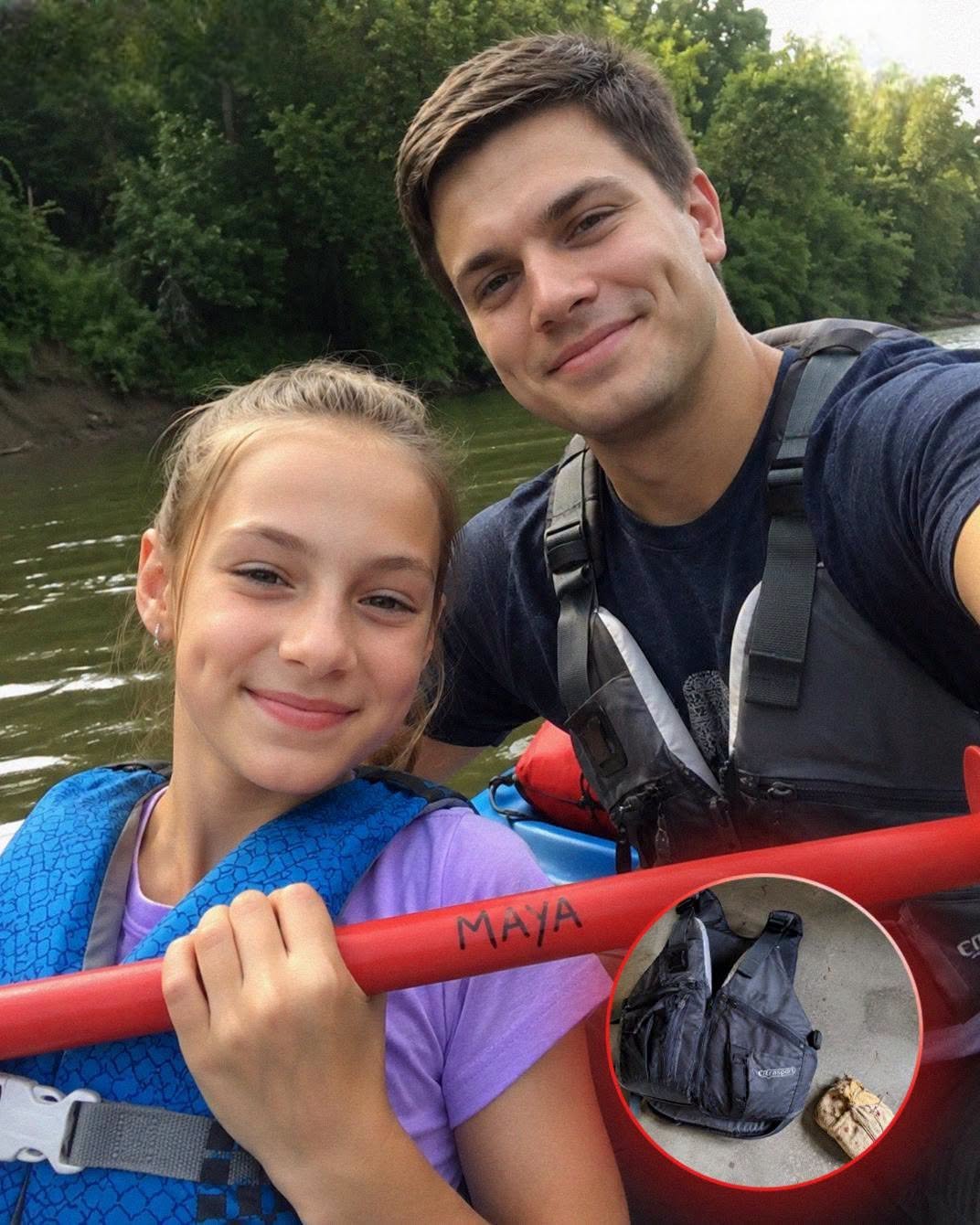
That June, she chased him around my kitchen table, waving the red paddle he’d bought her two summers earlier. Her name was written along the handle in permanent marker, already fading at the edges.
They’d gone kayaking a couple of times, and Maya enjoyed it.
“You said we’d go this weekend, Danny.”
Her name was written along the handle.
“I said if the weather holds,” my son replied.
“The weather is holding. I checked.”
Daniel laughed and set the bags down.
“She checked, Mom. Eleven years old, and she checked the forecast.”
I poured him some coffee. “You spoil her.”
“Somebody has to.”
“She checked, Mom.”
Maya sprinted off to find her water shoes, and for a moment it was just the two of us in the kitchen. That’s when I noticed Daniel’s phone buzzing on the counter for the third time.
He glanced at it, frowned, and stepped out onto the back porch to answer it.
He had been gone a long time.
When he returned, he wouldn’t quite meet my eyes.
I noticed Daniel’s phone buzzing on the counter.
“Everything okay, honey?” I asked.
“Just work stuff. You know how it gets.”
I did know. Or I thought I did.
I watched him lift Maya’s paddle from where she’d propped it against the wall and turn it slowly in his hands, as if he were reading something written there in a language only he could see.
“Everything okay, honey?”
“Dan?”
My son looked up and smiled, and it was the same smile he’d given me since he was a little boy.
“We’ll leave at 8 a.m., Mom. The river is 40 minutes away, so it’ll be a day trip. I’ve done it a dozen times.”
***
I waved from the porch as they pulled out of the driveway, Maya’s red paddle sticking up out of the back seat like a little flag.
I had no way of knowing Daniel would come home without her.
My son looked up and smiled.
***
Daniel returned at 4 p.m.
I was folding laundry in the living room when I heard the truck door slam too hard. Then nothing. No little voice. No screen door banging open.
I went to the window, and my knees almost gave out before I understood why.
My son was standing in the driveway soaking wet, shaking so badly he seemingly couldn’t walk. His life vest was still buckled across his chest. His hair was plastered flat.
My knees almost gave out before I understood why.
Maya wasn’t behind him.
I opened the front door.
“Daniel?!”
He looked up at me, and his whole face broke.
“She went under,” he said. “Mom, she went under! I tried! I tried to get her! I couldn’t find her!”
“What are you saying to me?!”
“The river. Maya, she was there, and then she wasn’t, and I dove, and I dove, and I couldn’t…”
“She went under.”
I collapsed into the chair on the porch.
I remember hearing my own voice from somewhere very far away, telling him to call 911, telling him to sit down, telling him to breathe.
My son sat on the floor at my feet and sobbed into his hands.
***
The police came within 30 minutes. Then more officers. Then divers, boats, and volunteers from three counties.
I collapsed.
For two weeks, they searched both banks of that river, mile by mile.
They never found my granddaughter.
They found her sun hat, snagged on a branch a quarter mile downstream. They found one of her flip-flops. But they didn’t find her.
The detective at the time was a kind man with tired eyes.
They searched both banks of that river.
He interviewed Daniel three times.
I sat in on the last one because my son asked me to.
“Walk me through it again, son.”
“We were in the shallow bend. She wanted to switch sides. She stood up in the kayak. I told her not to. She lost her balance.”
My son’s voice never wavered. His story never changed a single detail. Not once.
He interviewed Daniel three times.
“I believe him,” I told the detective in the hallway afterward. “He loved her as if she were his own.”
Besides, my son looked like a man who’d drowned alongside his niece and had forgotten to stop breathing.
The detective nodded slowly. “It happens. Rivers can be cruel.”
The case was closed as a tragic accident.
“I believe him.”
***
Daniel kept his life vest hanging on a hook in his garage, and it never came down.
I saw it every time I visited. Every single time.
I thought it was grief. I thought he couldn’t let go.
***
“You should take that thing down, honey,” I said to him once, maybe three years in.
“I can’t, Mom.”
“It’s not healthy.”
“I know. I still can’t.”
I saw it every time I visited.
I didn’t pry, because grief is a country where you learn not to ask too many questions of the people trapped there with you.
***
Seven years passed like that.
Then, last Saturday, I loaded a basket with tomatoes and zucchini from my garden and drove over to Daniel’s house while he was at work. I had a spare key he’d given me.
I had no idea I was about to walk into the end of the life I thought I was living.
Seven years passed like that.
***
The basket of fresh vegetables was heavier than I expected as I pushed open Daniel’s side door with my hip.
The house was empty and quiet; his truck had been gone since 7 a.m.
I called out anyway, out of habit.
“Dan? It’s just me.”
No answer.
The fridge in the kitchen was packed.
So I turned toward the garage to leave the vegetables on his workbench because it was cool inside.
I called out anyway.
***
The garage smelled of motor oil.
I crossed toward the bench, my shoulder grazing the life vest hanging by the door. It swayed on its hook, that awful orange thing he’d never taken down. I was about to look away, as I always did, but then something fell onto the floor.
I set the basket on the workbench.
It was a package wrapped in old blue cloth.
My shoulder grazing the life vest.
My hands started shaking before I even touched it.
I sat down on the bench and unwrapped it slowly.
Inside were a stack of postcards held together with a rubber band, a small black phone I’d never seen, and a photograph.
The photograph knocked the wind out of me!
Inside were a stack of postcards.
It was Maya. Older, 14 or maybe 15. She was standing in front of a small yellow house I didn’t recognize, one hand resting on the head of a big brown dog.
My granddaughter was smiling!
I flipped through the postcards with numb fingers. The handwriting on the earliest ones was round and childish.
The latter ones were slanted and more mature. Everyone was signed with a small red heart.
My granddaughter was smiling!
I read the top one twice.
“Please tell Grandma soon. I’m ready.”
I fell to my knees on that garage floor, and I screamed!
Seven years! Seven years of candles on her birthday. Seven years of a lie I had swallowed whole.
Then I called 911.
I fell to my knees.
***
The cruiser pulled up first, then Daniel’s truck.
He must have gotten the call from someone at the precinct because his face was already white before he stepped out.
My son saw the officer in his driveway. Then he saw me standing with the garage door open and the photograph in my hand.
His knees buckled against the truck door.
The cruiser pulled up first.
“Mom…”
“Don’t.” My voice didn’t sound like mine. “Don’t you dare address me like that right now!”
“I can explain,” Daniel said.
“You can explain how a dead child mails postcards, Daniel?”
My son was crying before I finished the sentence. A grown man of 28, sobbing into his hands in his own driveway while a police officer stood three feet away with a notepad.
“I can explain.”
“She’s alive,” Daniel choked out. “Mom, she’s alive. I swear to God, she’s alive, and she’s safe.”
I couldn’t feel my legs.
“Where?”
“With Colette. Dad’s sister. The one nobody talked about.”
“Colette?”
The name sounded strange. I hadn’t heard it in 15 years.
“The one nobody talked about.”
Maya had been asking about her dad’s side of the family, about anyone left. I’d brushed her off every time, telling her there was nobody worth knowing. She must have asked Daniel the minute I turned my back.
“Colette called me several times, including that Saturday. She told me Maya had been writing to her for months and was planning to go live with her. I went out on the river to talk Maya out of it, Mom, I swear. I thought I had until the end of the summer. But she jumped out of the kayak in the shallow bend, and she ran! I later discovered that Colette was waiting at the access road.”
I’d brushed her off every time.
“And you told me she drowned.”
“I panicked.” My son was shaking the way he had that afternoon in his wet life vest. I finally understood that he’d never stopped shaking. “I never had a chance to get to her. And I blamed myself, so I couldn’t tell you she’d chosen to leave. I thought a clean grief was kinder.”
“Kinder.” I laughed, and it came out like a sob. “Kinder, Daniel?!”
“I panicked.”
“Mom, I did my best! I sent her money every month. We communicated by postcard. I made her promise that she was safe. I hated myself every single day!”
The officer stepped closer, gently, and asked if I needed to sit down.
I ignored him. I stared at my son and asked the only question left in my heart.
“Where is she, Daniel? Where has she been?”
“Mom, I did my best!”
***
In Daniel’s living room, with Officer Ruiz sitting quietly beside us, my son shared everything else he knew.
“On the river, Maya told me that she wanted to meet her real family. She said you and I weren’t enough,” he said, staring at his hands.
My son swallowed hard.
“Colette was waiting downstream. They’d planned it by email, with Maya using the library’s computers.”
My voice cracked. “Seven years, Daniel! Seven birthdays I cried alone!”
My son shared everything else he knew.
“I’m so, so, sorry, Mom.”
I looked at Officer Ruiz, then back at my son.
“I need time before I can look at you again. But I need Maya first. Bring her home.”
***
A week later, I heard a car door close outside.
I’d already climbed to the attic that morning and pulled down the box, the stuffed rabbit on top, one ear worn thin from a decade of small hands.
I looked at Officer Ruiz, then back at my son.
I opened the front door, and there she stood.
Taller. Eighteen. Empty-handed and uncertain, as joy and grief fought for space on her face.
I froze on the threshold. I searched her face for the 11-year-old I’d buried and found only pieces, the shape of the mouth, the set of the eyes.
She looked like a stranger wearing my granddaughter’s bones.
There she stood.
“Grandma,” Maya said, and her voice broke on that one word.
That was what undid me. I opened my arms. She fell into them as if she were three years old again.
“I’m so sorry,” she whispered into my shoulder. “I was a stupid kid. I thought I knew what I wanted. Colette got into my head.”
“You’re home now,” I said. “That’s all that matters.”
Later, on the couch, I put the rabbit in her lap. She held it against her chest and cried without making a sound.
That was what undid me.
***
Daniel cooperated fully with the investigation and faced the consequences he’d earned.
Colette and I are learning to speak again, one careful conversation at a time. I discovered that she just wanted to be part of the family again, but chose the wrong approach.
I lost seven years I can’t get back.
But I got to hold my granddaughter again, and that’s a gift most people who lose a child never receive. I’ll spend whatever time I have left being grateful for it.