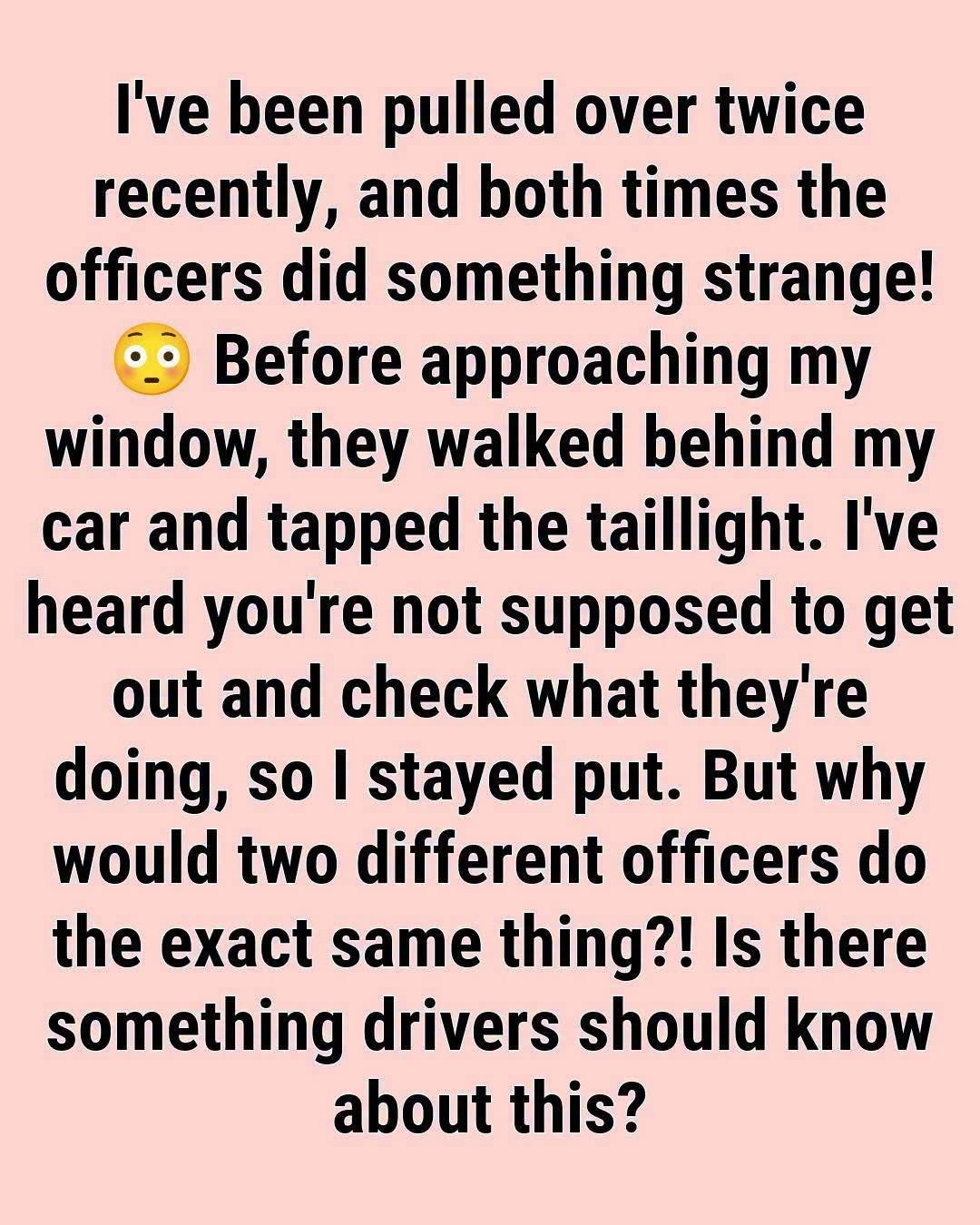
When a police officer approaches a vehicle during a traffic stop, you may notice something unusual: the officer briefly touches the rear of the car, sometimes near the tail light or trunk. Although this small gesture may seem insignificant, it has a historical explanation connected to police procedures, officer awareness, and documenting traffic encounters.
One commonly discussed reason for this practice is the possibility of leaving a fingerprint on the vehicle. In earlier decades, before modern recording equipment became widely available, officers sometimes used this approach as an additional precaution. If an encounter later required investigation, a fingerprint could potentially help establish that a particular officer had made physical contact with the vehicle. It was one of several practices intended to provide an additional point of reference during an uncertain situation.
However, it is important to understand what this fingerprint actually represents. It belongs to the officer who touched the vehicle, not the driver or any passenger. It does not automatically identify the person operating the car, establish what happened during the stop, or prove that a particular incident occurred. At most, under suitable circumstances, it might provide supporting information that an officer had been in contact with that vehicle.
The practice also has practical limitations. A fingerprint does not necessarily remain clear or recoverable after someone touches a vehicle. Rain, dust, road dirt, sunlight, surface materials, and subsequent contact can all affect the quality of a fingerprint. Even when a print is present, recovering it and establishing its significance may require specialized examination. For these reasons, touching a vehicle should never be considered a guaranteed method of collecting useful evidence.
Another important consideration is how police procedures have changed over time. Today, many law enforcement agencies use body-worn cameras, dashboard cameras, electronic reporting systems, and other documentation methods. These technologies can provide additional information about traffic stops, including the sequence of events and interactions between officers and drivers.
Nevertheless, modern technology does not mean every department follows exactly the same procedures. Training, local policies, available equipment, and individual officer practices can differ considerably. Some officers may still touch a vehicle as they approach it, while others may not. The gesture is not necessarily performed during every traffic stop, and its absence does not indicate that an officer has overlooked an important safety step.
There are also broader reasons why officers approach vehicles carefully. During a traffic stop, an officer generally needs to remain aware of the surrounding environment, the position of the vehicle, nearby traffic, and the movements of people inside. Maintaining awareness helps officers manage the encounter in an organized manner. Every traffic stop has its own circumstances, which is why officers may use different approaches depending on the situation.
For drivers, the best response is simply to remain calm, keep hands visible, and follow lawful instructions. If an officer asks questions or requests documents, responding respectfully and clearly can help keep the interaction straightforward. Drivers who are unsure about a request can ask polite questions rather than making assumptions about an officer’s actions.
Ultimately, the familiar tail light tap is best understood as a traditional practice associated with documenting vehicle contact and maintaining awareness during traffic stops. It is not a secret signal, an indication of wrongdoing, or a guarantee that evidence has been collected. Although modern policing has introduced many new tools, certain older habits continue to be discussed because of their historical connection to everyday police work.
The next time you notice an officer briefly touching a vehicle during a traffic stop, you will have a better understanding of the possible reasons behind this small but interesting detail of police procedure.