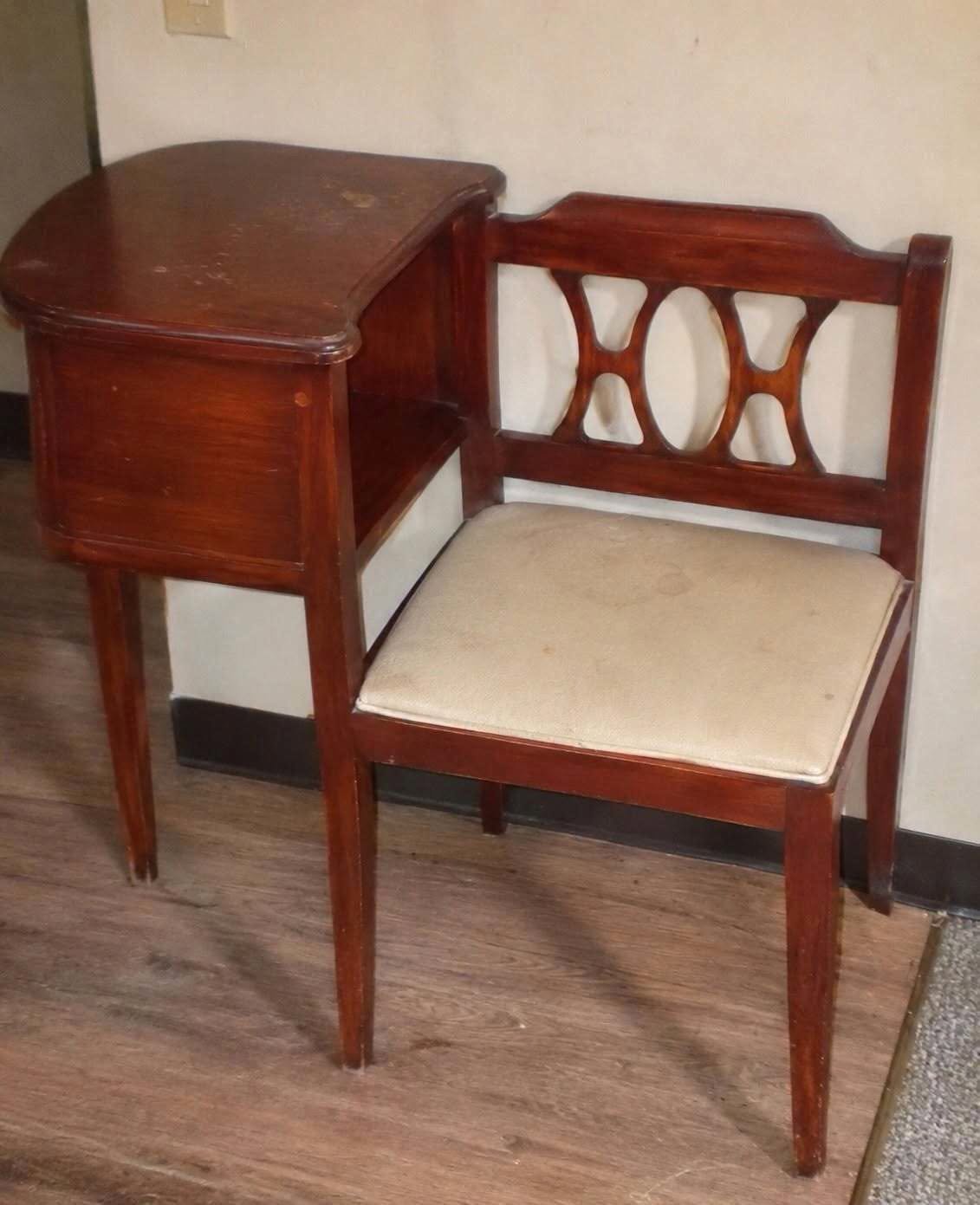
When I first brought this unusual piece of furniture home, I wasn’t entirely sure what I had purchased. At first glance, it appeared to be an ordinary wooden chair with a decorative backrest, a comfortable cream-colored seat, and an attractive traditional design. However, one particular feature immediately caught my attention: a raised wooden tabletop attached to one side, with a small storage compartment underneath.
It was certainly not an ordinary chair. The additional wooden surface seemed too carefully designed to be merely decorative, and its unusual position made me wonder what purpose it originally served. I examined the furniture from different angles, trying to understand why someone would combine a chair and a small table into one piece. It looked like something that belonged in a much older home, but its practical design suggested that it had once served an everyday purpose.
My first thought was that it might have been designed for someone who needed a convenient place to sit while putting on shoes. Perhaps the small table was intended for keeping personal belongings nearby. However, the height and arrangement of the wooden surface made that explanation seem less convincing.
Then another possibility came to mind. Could it have been an old-fashioned telephone chair?
That explanation immediately seemed more reasonable. Before smartphones and wireless devices became part of everyday life, household telephones occupied an important place in family homes. Making a phone call was often a more organized activity than it is today. People usually had a designated telephone in the hallway, living room, kitchen, or another convenient location.
The unusual furniture was designed around precisely that everyday habit. It is commonly known as a telephone chair, sometimes called a telephone table and chair combination. These distinctive pieces became popular during the late nineteenth and early twentieth centuries, with many variations appearing throughout the middle decades of the twentieth century.
Unlike an ordinary chair, a telephone chair combined several practical features into one compact piece of furniture. The seat provided a comfortable place for someone to sit while talking, while the attached tabletop offered a convenient surface for placing a telephone. Its raised position allowed the telephone to remain within easy reach without requiring a separate table.
The small compartment underneath was another thoughtful feature. It could be used to store telephone directories, address books, pencils, writing paper, and other household items. This arrangement made it easier to find important information while speaking with someone.
Telephone conversations often required people to write things down. They might record an appointment, note an address, save a phone number, or leave a message for another family member. Having paper and pencils nearby made the process considerably more convenient.
Some telephone chairs featured additional drawers, shelves, or decorative wooden details. Others were made with simple lines and practical storage spaces. Their appearance varied depending on the period, manufacturer, materials, and interior design trends of the time.
Wood was a particularly common material, with manufacturers producing examples from different types of timber. Some pieces featured polished finishes, curved legs, carved backrests, and carefully shaped armrests. Others had simpler designs that blended easily into everyday household interiors.
Their popularity also reflected how homes were organized before modern communication technology changed daily routines. A telephone was often shared by an entire household, rather than carried individually by each family member. Placing it in a convenient location made communication easier for everyone.
Today, these unusual furniture pieces have found a different purpose. Although most households no longer need a dedicated chair for making telephone calls, vintage telephone chairs remain interesting examples of practical furniture design.
Collectors and vintage furniture enthusiasts appreciate them for their craftsmanship, compact construction, and connection to an earlier period of domestic life. Some owners restore them carefully, while others preserve their original finishes and use them as decorative accents.
They can also serve practical purposes in modern homes. A telephone chair can become a small reading corner, an attractive hallway feature, or a convenient place to display decorative objects. Its attached tabletop and storage compartment still offer useful functionality.
What makes this furniture particularly interesting is how easily its original purpose can be overlooked today. Without knowing its history, someone might assume that the unusual combination of a chair and tabletop was simply an experiment in furniture design.
In reality, it was created to solve an everyday household need. Its thoughtful arrangement brought seating, storage, and communication together in one compact piece.
Sometimes, the most unusual vintage discoveries are also the most practical. This charming telephone chair is a wonderful reminder that even ordinary household activities once inspired furniture with surprisingly clever designs.