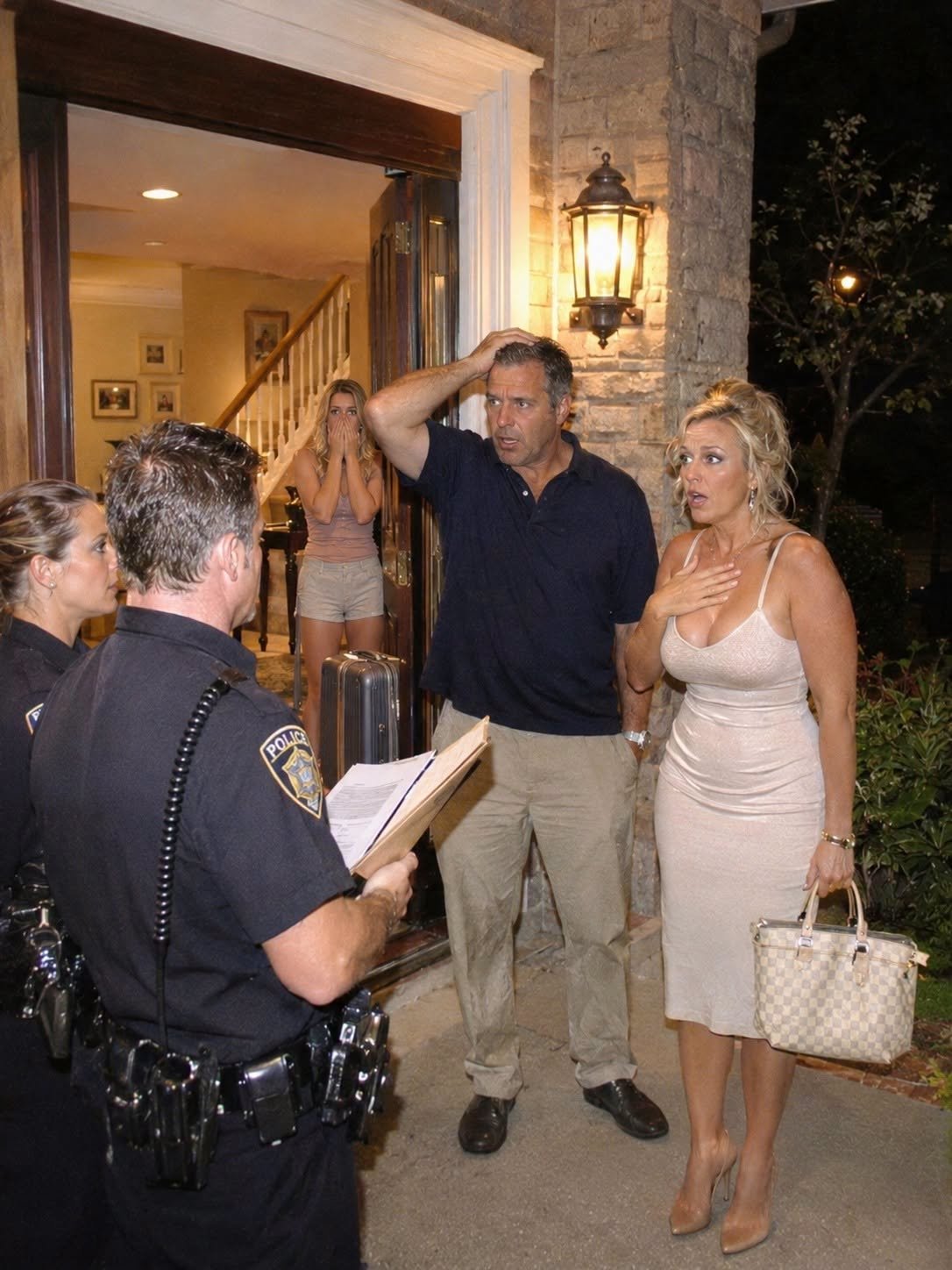
At 6:12 on a Thursday evening, my mother called me with the kind of excitement usually reserved for wonderful family news. I was standing outside the elevator at my office in Seattle, preparing to go home after a long day. When I answered, she was already laughing.
“Are you sitting down?” she asked.
I frowned. “Why?”
“Because your sister finally got the vacation she deserves. Hawaii was wonderful, sweetheart. First-class flights, a beautiful resort, shopping, dinners. Everything!”
I waited for her to explain.
Then she gave me a number that made my stomach tighten.
“Ninety-nine thousand dollars. We spent almost everything on your American Express card.”
For a moment, I couldn’t find the words.
My name was on that account. It belonged to my small design business, and I used it for professional expenses, client travel, software subscriptions, and other necessary purchases.
“What are you talking about?” I finally asked.
My mother laughed again.
“Don’t pretend you don’t know. We have your information. We know your birthday and your Social Security number. We’re family.”
Then she added something I had heard throughout much of my childhood.
“That’s what you get, worthless girl.”
I ended the call without arguing.
My name is Claire Donovan, and I was thirty-one years old. I had spent most of my adult life trying to build a stable future while quietly helping relatives who never seemed to recognize the cost of their requests.
This time, however, the situation was different.
I opened my American Express application and examined the transactions. There were airline tickets, hotel reservations, restaurant bills, designer purchases, transportation expenses, and several expensive vacation activities.
The total was $99,037.42.
I immediately locked the card.
My hands were shaking, but I knew I needed to approach the situation carefully. I took screenshots of the transactions, downloaded the account statement, and contacted the card company to report unauthorized activity.
The representative reviewed my account and discovered something even more concerning.
Eleven days earlier, someone had contacted customer service pretending to be me. Using my personal information, the caller had requested an additional card for my younger sister, Brianna.
The card had been mailed to my parents’ home in Tacoma.
I had never authorized it.
That explained how my family had obtained access to the account. It also confirmed that this wasn’t simply a misunderstanding about an old card.
I explained everything to the representative, who opened a fraud investigation and advised me to preserve all relevant messages, documents, and transaction records.
Before ending the conversation, he recommended contacting the appropriate authorities and protecting my other financial accounts.
I followed his advice.
What made the situation particularly difficult was that this wasn’t the first time my family had used my personal information or financial resources without properly asking.
When I was nineteen, my father suggested adding me to the family phone plan. He said it would save everyone money.
Six months later, I received a collection notice for unpaid bills covering four telephone lines.
The account was in my name.
My parents promised to reimburse me, but I eventually paid the entire balance myself.
At twenty-four, I discovered that my mother’s hospital expenses had been associated with my personal information. She explained that the hospital needed someone with better credit and insisted that I could simply arrange monthly payments.
I was uncomfortable, but I agreed to help resolve the situation.
It took years to finish paying the balance.
Then, when I was twenty-eight, my younger sister contacted me about an insurance payment. She said she was having financial difficulties and needed immediate assistance.
I transferred $1,400.
The following morning, she posted photographs from an expensive brunch with friends.
I never confronted her about it.
For years, I had convinced myself that helping my family was simply part of being responsible. I didn’t realize how often my willingness to help had become an expectation.
In March, I discovered another problem.
Someone had submitted a financing application for approximately $7,000 worth of furniture using my personal information. The application included my sister’s telephone number.
When I called her, she denied knowing anything about it.
My mother became angry and accused me of creating unnecessary family conflict.
That incident finally convinced me to consult a financial attorney.
His name was Marcus Webb. After reviewing the documents, he explained that the repeated use of my personal information could raise serious identity theft concerns.
He recommended freezing my credit reports, contacting the relevant financial institutions, and reporting suspicious applications.
I followed several of his recommendations, although I delayed filing the earlier reports because I was uncomfortable involving authorities in a family matter.
I also moved into a new apartment and changed my mailing arrangements.
I thought those steps would protect me.
Now I understood that I needed to do more.
At 7:31 that evening, I called Marcus and explained what had happened.
He listened carefully before asking whether I had preserved the earlier documents.
I told him I had.
“Good,” he replied. “Keep everything organized. Don’t delete messages or attempt to negotiate with anyone while you’re upset. Let the financial institution and the appropriate investigators handle the process.”
He also recommended documenting my mother’s telephone call while the details were fresh.
I wrote down the time, the statements she made, and the names of the people I heard in the background.
That evening, I submitted reports concerning the unauthorized card and the earlier financial incidents.
I also contacted the Federal Trade Commission and followed its identity theft reporting guidance.
For the first time, I was no longer trying to solve everything through private conversations with my relatives.
Over the next several days, the financial institution continued its investigation.
A fraud investigator named Patricia Lund contacted me and confirmed that the additional card had been requested through a telephone call originating from my parents’ household.
The investigator explained that the company had retained information about the request and was reviewing the associated transactions.
She also informed me that the disputed charges were being evaluated under its fraud procedures.
I felt relieved, although I knew the investigation would take time.
Meanwhile, my sister continued posting vacation photographs.
There were pictures of the beach, hotel, shopping bags, and expensive meals. My mother appeared in several photographs, smiling as though everything was perfectly normal.
I saved the public posts because they showed the dates and locations associated with the vacation.
I didn’t leave comments or contact them.
A few days later, Detective Renée Castillo contacted me. She was reviewing the identity theft report and wanted to understand how the additional card had been obtained.
I provided the documentation and explained the earlier incidents.
She told me that investigators might need to coordinate with authorities in Tacoma because my parents lived in a different jurisdiction.
She also explained that the investigation would determine each person’s involvement rather than automatically assuming everyone had the same knowledge.
That distinction became important.
My parents returned from Hawaii the following Saturday.
At approximately 6:15 that evening, I parked across the street from their home. Detective Ingrid Halvorsen from Tacoma’s financial crimes unit had arranged to speak with them.
I wasn’t required to participate in the interview, but I wanted to be nearby in case investigators needed clarification.
A gray vehicle stopped outside the house.
Detective Halvorsen approached the front door and introduced herself.
My father answered.
When my mother appeared behind him, her expression changed as soon as she heard why the detective had come.
“Is this about Claire?” my father asked.
The detective explained that she wanted to discuss the unauthorized American Express card and the transactions associated with it.
My mother initially dismissed the situation as a private family disagreement.
However, the detective calmly explained that the investigation involved an account opened in someone else’s name and potentially unauthorized financial activity.
Eventually, my mother agreed to speak with her.
I remained in my car.
About an hour later, my father came outside.
He walked slowly toward my vehicle and stopped beside the window.
“Hi, Claire,” he said.
“Hi, Dad.”
His expression was different from what I remembered. He looked tired and uncomfortable.
“She wants you to come inside,” he said.
“Does Mom want that?”
He looked away.
“Not really.”
I waited.
Then he surprised me.
“I need to tell you something. I knew your mother was using your information. I was there when she requested the additional card. I didn’t stop her.”
I stared at him.
For years, my father had remained silent whenever my mother made decisions that affected me.
Now he was finally acknowledging his part in the situation.
“I should have spoken up,” he continued. “I knew it wasn’t right.”
I got out of the car and followed him inside.
The living room was filled with shopping bags from the vacation. My mother sat on the couch, looking uncomfortable. Detective Halvorsen was reviewing her notes.
My sister, Brianna, was upstairs.
The detective explained that the additional card had been issued using my identity and that the company was investigating the transactions.
My mother insisted that she had only wanted to give Brianna a special vacation.
“She deserved something nice,” she said.
I looked at her.
“What about asking me first?”
She didn’t answer.
Then she tried to explain that she believed I could afford the expenses and that the family would eventually work out a repayment arrangement.
I reminded her that I had never agreed to finance the trip.
The conversation became even more difficult when Brianna came downstairs.
She looked confused.
“Claire, is it true that the card was yours?” she asked.
I nodded.
She explained that our mother had told her the vacation was being paid for with money from our father’s previous employment settlement. She believed the additional card had been arranged as a family gift.
“I thought you knew,” she said quietly.
I told her I had never approved the vacation or authorized the card.
Brianna looked toward our mother.
“Why didn’t you tell me?”
My mother remained silent.
Brianna then explained that she had used the card throughout the vacation, believing the expenses had been approved.
The detective told her that investigators would need to speak with her separately to establish what she knew and when she learned about the situation.
For the first time, I realized that my sister might also have been misled.
That didn’t automatically resolve her responsibility, but it meant the investigation needed to examine the facts carefully.
My mother eventually admitted that she had arranged the card without my permission.
“I just wanted Brianna to have something special,” she said.
I looked around the room at the shopping bags.
“You could have helped her without taking something from me.”
Nobody responded.
The detective explained the next steps, including additional interviews, financial documentation, and possible review by the prosecutor’s office.
No immediate decision was made that evening.
I left the house shortly afterward.
The following months were difficult. Some relatives contacted me and suggested I should resolve everything privately because we were family.
I explained that the financial situation needed to be addressed properly.
I also stopped responding to messages that blamed me for reporting the unauthorized activity.
Meanwhile, investigators continued reviewing the records.
My sister eventually cooperated with the investigation and provided a statement explaining what she had been told about the vacation.
My father also provided information about the circumstances surrounding the additional card.
My mother faced legal proceedings related to the unauthorized use of my personal information. The case resulted in a guilty plea and a financial restitution agreement.
The disputed vacation charges were reversed through the financial institution’s investigation, and the company pursued the appropriate recovery process.
The earlier hospital-related debt was also reviewed separately.
My parents eventually sold their house to help meet their financial obligations and moved into a smaller apartment.
It was a difficult change for everyone, but it also marked the beginning of a different arrangement.
I began rebuilding my relationship with my sister slowly.
We started meeting for coffee once a month. She found a new job and began managing her own finances.
One afternoon, she showed me a spreadsheet containing her monthly expenses.
“I’m trying to save fifty dollars every month,” she said.
I smiled.
“That’s a good start.”
She looked down at the spreadsheet.
“I should have understood that money doesn’t just appear,” she said.
I didn’t argue.
My father also began calling regularly. Our conversations were usually simple. We talked about work, the weather, and everyday things.
He apologized for remaining silent when he should have supported me.
I appreciated the apology, although rebuilding trust took time.
My mother eventually contacted me as well.
She said she had been reflecting on her decisions and wanted to apologize.
I listened, but I didn’t promise that everything would immediately return to normal.
Forgiveness, I learned, didn’t require ignoring what had happened or abandoning reasonable boundaries.
Today, I still keep the documents from that difficult period. They remind me of the importance of protecting personal information, reviewing financial accounts, and making sure that assistance is always voluntary.
My sister and I continue meeting for coffee. My father calls on Sundays, and my mother is gradually learning that rebuilding a relationship requires patience and accountability.
I also changed the name of the folder on my computer.
It used to be called Emergency.
Now it is called Proof.
Not proof that my family was entirely bad, or that every relationship had to end.
Proof that I could stand up for myself, protect what I had worked for, and make difficult decisions even when other people disagreed.
For years, I believed being a good daughter meant saying yes whenever someone needed help.
I understand something different now.
Helping family can be meaningful, but it should never require sacrificing your financial security or personal dignity.