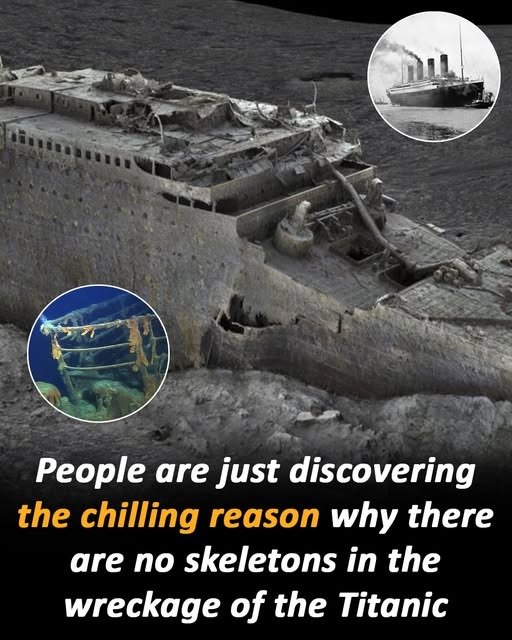
While the loss of the RMS Titanic in 1912 on its maiden voyage, or April 15, remains an unbelievable naval tragedy. The “unsinkable” Titanic sank on its maiden voyage from Southampton to New York after hitting an iceberg – causing more than 1,500 passengers to lose their lives. Thousands of lives lost later, it seemed odd that nothing could be found at the wreckage site.
It was in September of 1985 that the wreckage of the Titanic was discovered at depths just before 12 thousand feet under the Atlantic Ocean. Using his technique for tracing debris, deep-sea explorer Robert Ballard discovered the sunken ship. Before discovering the Titanic, Ballard was using a similar technology to find the Scorpion, the nuclear sub that had sunk in 1968. The bow of the Titanic was remarkably preserved after having spent more than 70 years beneath the Atlantic surface but it also was divided in two when it was found by Ballard’s team. Radiating away from the wreckage, the debris field, therefore, spanned 15 square miles. Lush piles of artifacts including furniture, tableware, and personal belongings; covered the ocean floor.

Surprisingly, no human remains were found in the wreck. James Cameron, the director of Titanic and 33-time visitor to the region, said, “I have not found any human remains during these visits”.<< We have observed clothing. Pairs of shoes have been found by witnesses indicative of bodies at one time. No human remains were ever found. The difficult environment around the site of the crash explains why no bodies were found. The surrounding pressure is enormous coupled with ocean water that ranges around freezing temperatures. In such a situation marine beings and micro-organisms decay bodies.

In depths of 3000 feet from the surface, seawater contains inadequate calcium carbonate which is essential for bone maintenance. Owing to the presence of soft tissues, eaten by marine animals, it becomes impossible to find any evidence because the bones deteriorate. Bones begin to dissolve as soon as they are left uncovered after the soft tissue is consumed, according to Robert Ballard. Although the environment of Black Sea mummifies bones through a process devoid of marine life, it is not so in open waters.

Finding out about ship-wreck of Titanic and the place of the debris around it evokes the feeling of curiosity and terror. Many people are strongly shaken by the mourning of the enormous human loss and by the fact that nature absorbs the dead. Numerous commentators find some comfort in the fact that the victims were ultimately assimilated by nature. Another issue pertains to the slowly deteriorating Titanic; Experts say that the ship can completely disintegrate in the next half-century, leaving very little behind except rust and parts of its once opulent cabins.
The horror of the sinking of the Titanic makes us realize the amount of power that nature possesses and the upset such disasters cause. The questions surrounding where the survivors are defines the wreckage as a touching monument to the accident and a testament to the Titanic’s ongoing popularity.