I was over 1,000 miles away in a Tampa hotel when my phone buzzed.
Motion detected. Living room.

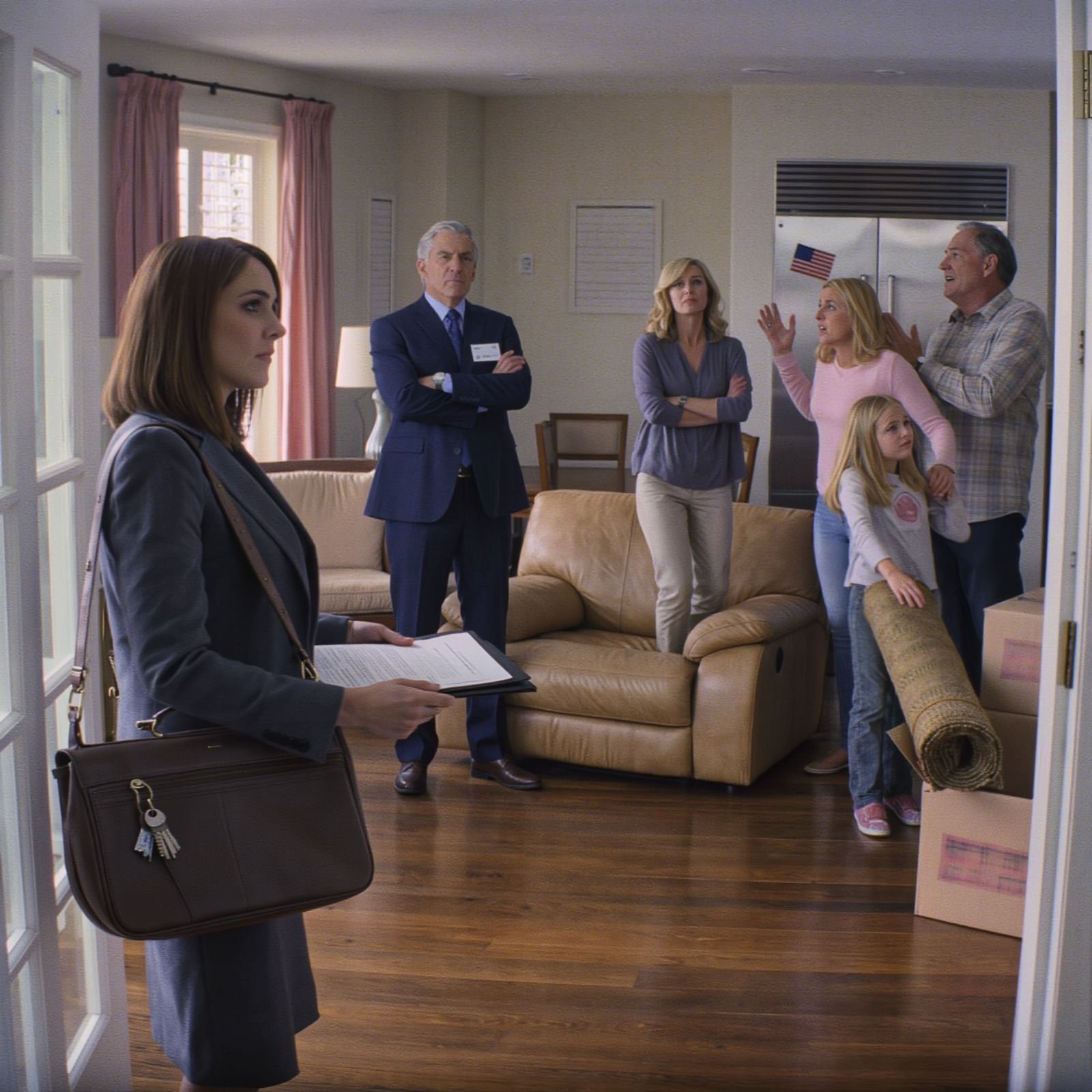
I opened the app to see my mother hanging curtains in my condo like she owned it. Then my father hauled in a carton marked “Cara’s stuff.” Before I could breathe, my mother’s voice cut through the audio feed saying, “Just get it done, because when she gets back, she will not dare say no.”
My name is Cassidy Thomas. I am 34 years old, and I am the internal finance manager for Astralline Systems, a corporate data firm that prides itself on security and structure. My life is built on columns and rows, on assets and liabilities, on the clean, sharp lines of a spreadsheet where everything has a place and every variance can be explained.

I like control.
I worked hard for it.
I bought my condo in Cleveland precisely because it was a fortress of solitude, a place where I paid the mortgage and I decided who walked through the front door.
Or so I thought.

I was currently 1,000 miles away from that sanctuary, sitting in a generic hotel room in Tampa, Florida. It was day five of a seven‑day business trip. The air conditioning in the room was humming a low, monotonous drone that usually helped me sleep. But tonight, the humidity of the Gulf Coast felt like it was seeping through the glass, making the air heavy.
I had just finished reviewing the quarterly budget reports for our Southeast Division. My eyes were tired. My brain was fuzzy. I was looking forward to a glass of wine and eight hours of uninterrupted sleep before my flight back to the Midwest in forty‑eight hours.
 100vw, 992px” data-lazy-src=”https://i0.wp.com/middleagedclub.com/wp-content/uploads/2026/02/image-489.png?resize=992%2C661&ssl=1″ /></figure>
<p class=) Then my phone vibrated against the nightstand. It was a sharp, aggressive buzz that cut through the silence.
Then my phone vibrated against the nightstand. It was a sharp, aggressive buzz that cut through the silence.
I glanced over, expecting a late‑night email from my boss or perhaps a spam notification.
Instead, the screen lit up with a banner from my home security app.

Motion detected. Living room.
My stomach dropped.
I lived alone. I did not have a pet. I did not have a cleaning lady scheduled for this week. The only people who had a spare key were my parents—and that was strictly for emergencies like a burst pipe or a fire.
I unlocked my phone, my fingers trembling slightly—not from fear of a burglar, but from a gut instinct that told me this was something far more personal.
I tapped the notification.
The screen went black for a second as it buffered, the spinning wheel mocking my rising panic.
Then the feed clicked into focus.
It was not a thief.
It was my mother.
She was standing in the center of my living room. She was wearing her gardening clothes, a pair of worn denim jeans and a floral shirt, looking entirely too comfortable. She was pointing at something off‑camera, directing traffic.
The camera angle shifted slightly as the motion sensor tracked movement.
My father walked into the frame. He was struggling under the weight of a large brown cardboard box. Even on the small screen of my phone, the black marker scrawled across the side was legible.
“Cara’s stuff. Fragile.”

My breath hitched in my throat. I sat up on the edge of the hotel bed, the sheets tangling around my legs. I brought the phone closer to my face, squinting, trying to make sense of the pixelated reality unfolding 1,000 miles away.
They were not checking on my plants. They were not checking for a gas leak. They were moving things in.
I switched the camera view. I tapped the icon for the office camera.
This was my workspace. It was a second bedroom that I had converted into a dedicated home office. It had my mahogany desk, my dual monitors, my framed CPA certification, and a small reading nook.
It was the room where I built my career.

On the screen, my office was gone.
In its place was chaos.
My desk had been shoved aggressively into the corner. The monitors unplugged and stacked precariously on the floor like trash. My ergonomic chair was missing entirely.
In the center of the room, taking up the space where I usually paced while taking conference calls, was a bed frame. It was not fully assembled yet, just the metal skeleton, but a mattress was leaning against the wall—a twin mattress that looked suspiciously like the one from my childhood home.

My mother walked into the office view. She was holding a bundle of curtains.
Not my curtains.
These were pink. A soft, dusty, juvenile pink that I detested.
She stepped up onto a chair—my dining‑room chair, which she had dragged in from the other room—and began unhooking my slate‑gray blinds.
I watched, paralyzed.

I wanted to scream. I wanted to tap the microphone button on the app and yell at them to stop, to get out, to explain what the hell they thought they were doing.
But my thumb hovered over the button and froze.
If I yelled now, they would spin it.
They always spun it.
They would say I was hysterical. They would say they were just helping. They would say I was being dramatic and ungrateful.
I needed to know the full scope of this before I made a sound.
I needed to know exactly what they were planning.

I turned the volume up on my phone to the maximum level.
The audio feed crackled with static, then settled into the ambient noise of the room. I could hear the scrape of the metal bed frame against my hardwood floors.
I winced. I had spent $3,000 refinishing those floors last year.
“Be careful with the wall, Frank,” my mother said. Her voice was clear, calm, authoritative.
“Do not scratch the paint. I do not want to hear her complain about the paint.”
“I am trying, Linda,” my father grunted. He dropped a box onto the floor with a heavy thud. “This is heavy. How much clothes does she have?”
“She is going through a hard time,” my mother said, stepping down from the chair. She smoothed the pink curtains. “She needs her things around her.”
Then came the sentence that made the blood run cold in my veins. My father wiped his forehead with the back of his hand. “Cassidy is going to flip when she sees the desk moved. You know how she is about her workspace.” My mother turned to face him, hands on her hips. She looked straight past the camera, unaware that the small black lens on the bookshelf was recording every micro‑expression. “Just get it done,” she said. Her voice dropped an octave, losing its motherly warmth and becoming pure steel. “Once it is done, she cannot refuse. When she gets back and sees Cara is already settled, she will not dare say no. She will not kick her sister out on the street.”
I sat there in the hotel room, the air conditioning blasting cold air onto my sweating skin. She will not dare say no. It was not a request. It was an ambush. They knew I was in Tampa. I had sent them my itinerary two weeks ago because my mother insisted on knowing when I was flying “for safety reasons.” They knew exactly when I left and exactly when I was returning. They had calculated this window. Seven days was enough time to move an entire life into my apartment.
I switched cameras again. I needed to see the extent of the invasion. I tapped on the kitchen view. My granite countertops, usually bare and pristine, were covered in grocery bags. Not my groceries. I saw boxes of sugary cereal, bags of chips, diet sodas—the diet of my younger sister, Cara. My refrigerator door was open, and I saw my father shoving my meal‑prep containers aside to make room for a twelve‑pack of energy drinks.
I tapped on the hallway view. There were boxes lined up against the wall. One. Two. Three. Four. I counted twelve boxes. This was not a weekend stay. This was not a “crash on the couch for a few days” situation. This was a relocation. They were moving Cara into my home, into the sanctuary I had paid for with my own salary, without asking me a single question. A notification popped up at the top of my screen. It was a text message from Mom. I stared at the name. The audacity of it made me dizzy. I swiped down to read the preview without opening the message, keeping the camera feed live in the background.
Hi honey. Hope the trip is going well. Just wanted to say we miss you. Can’t wait for you to come home. We are planning a little surprise for you to cheer you up. Love you. A surprise. I felt a bitter laugh bubble up in my throat, but it died before it reached my lips. The surprise was not a gift. It was a trap. It was a weaponized guilt trip wrapped in a bow of “family togetherness.” If I came home and found Cara sleeping in a bed in my office, surrounded by her boxes, with my parents smiling and holding a casserole, I would be the villain if I told her to leave. They were banking on my social conditioning. They were banking on the fact that Cassidy Thomas was the good daughter, the responsible one, the one who never caused a scene. They were banking on the fact that I would be too embarrassed to drag my sister out of my house, too polite to scream at my parents in the hallway.
They were right about the old Cassidy. The Cassidy who sought their approval. The Cassidy who thought that if she just achieved enough, earned enough, and was perfect enough, they would respect her boundaries. But they did not know about the Cassidy who was sitting in a hotel room in Tampa, watching them violate her trust in high‑definition pixels. I watched my father drag another item into the office. It was a rug—a shag rug. It looked cheap and shed fibers as he unrolled it over my expensive hardwood. He kicked it flat with his foot. “Is this going to fit with the desk in here?” he asked, looking at the corner where my workspace had been banished. “We will move the desk to the basement storage if we have to,” my mother replied dismissively. “Cara needs the space for her yoga mat. She is trying to get into wellness again.” My desk. My basement storage. My house. They were discussing the layout of my home as if I were a tenant they were evicting or a child whose room they were redecorating while she was away at summer camp. But I was 34 years old. I paid the mortgage. I paid the property taxes. I paid the HOA fees. I looked at the timestamp on the camera feed. It was 9:45 in the evening. They had been there for at least an hour, based on the amount of stuff moved. I could call the police. I could call the building security. I could call them right now and scream until my voice gave out. But then I remembered my mother’s words. She will not dare say no. If I called now, they would gaslight me. My mother would switch into her “poor me” voice. She would say, “Oh, Cassidy, we were just trying to help. Cara has nowhere to go. Why are you so cruel?” She would make me feel like a monster for protecting my own property. They would stop moving things for tonight, but they would leave everything there. They would guilt me into submission before I even stepped foot in Ohio. No. I needed more than just a reaction. I needed leverage. I took a deep breath, forcing my heart rate to slow down. I needed to think like a finance manager. I needed to assess the liability, gather the data, and execute a strategy. I did not close the app. Instead, I reached for the notepad on the hotel nightstand and a pen. I began to log everything. 9:47 p.m. Father moves large TV into the living room, places it on my coffee table. 9:49 p.m. Mother enters master bedroom code (how does she have that?) and opens my linen closet, removes my guest towels. 9:52 p.m. Cara enters the frame. I froze. I had not seen Cara yet, but there she was, walking into my living room. My sister, 29 years old, acting 19. She was wearing a hoodie and pajama pants, holding a bag of fast food. She looked around my living room, not with gratitude, but with appraisal. “Did you bring the HDMI cable?” she asked my father, ignoring the fact that he was sweating from moving her heavy boxes. “It is in the bag,” he huffed. Cara flopped onto my sofa—my Italian leather sofa that I treated with special conditioner every three months. She put her feet up on the coffee table, shoes still on. “I hope the internet here is faster than the old place,” she said, pulling out her phone. “I need to stream tonight.” “Cassidy has the fastest package available,” my mother said from the office, her voice muffled. “It will be fine.” “She better not have blocked any sites,” Cara muttered. I watched my sister make herself at home in the house I worked sixty‑hour weeks to afford. She did not look like someone in crisis. She did not look like someone who needed a helping hand. She looked like someone who had just upgraded her accommodation for free. My mother walked back into the living room, wiping her hands on her jeans. She looked at Cara with a softness she rarely showed me. “Do you like the room setup, honey?” my mother asked. “I put the bed by the window so you get the morning light.” “It’s okay,” Cara said, not looking up from her phone. “The desk is kind of in the way, though.” “We will move it,” my mother promised instantly. “Do not worry about the desk.”
I gripped the pen so hard my knuckles turned white. They were going to dismantle my livelihood to give Cara more room to do yoga. I watched for another hour. I watched them eat dinner on my table without using coasters. I watched my father use my bathroom. I watched my mother reorganize my pantry to put Cara’s snacks at eye level. I hit the record button on the app interface. I saved every clip. I took screenshots of every box, every piece of furniture, every unauthorized modification. I zoomed in on the boxes again. There was a label I had missed earlier on a smaller box near the door. It did not just say “Cara’s stuff.” It read: CARA IMPORTANT DOCUMENTS / MAIL. And next to it, a stack of envelopes. I zoomed in as much as the 4K camera allowed. I could not read the text, but I recognized the logo on the top envelope. It was a change‑of‑address confirmation form from the post office. The cold feeling in my stomach turned into ice. This was not just a crash pad. They were establishing residency. They were trying to make it legally difficult for me to kick her out. In the state of Ohio, if someone receives mail and has their belongings in a property for a certain amount of time, they can claim tenancy rights. They knew this. Or at least someone had told them this. My mother’s text flashed in my mind again. We are planning a little surprise for you. The surprise was not that Cara was visiting. The surprise was that by the time I landed in Cleveland in two days, I would legally be my sister’s landlord, unable to evict her without a court order that could take months.
I set the phone down on the bedspread. The screen glowed in the dark room, a portal to the violation of my life. I did not reply to my mother’s text. I did not call my father. I did not scream. I stood up and walked to the hotel mini‑bar. I opened a bottle of water and drank it in one long, steady gulp. Then I sat back down at the small hotel desk, opened my laptop, and created a new folder on my desktop. I named the folder EVIDENCE. I dragged the first video file into it. Then the second. Then the third. “Okay,” I whispered to the empty hotel room. My voice sounded strange to my own ears—calm, detached, terrifyingly steady. “You want to play house? Let us see who actually owns the keys.” I looked at the calendar on my laptop screen. My flight was scheduled for Friday. Today was Wednesday. They thought they had forty‑eight hours to entrench Cara in my life. They thought I was the passive, dutiful daughter who would cry and then eventually submit to the “family first” narrative. They had no idea that the daughter they raised to be a pushover had grown up to be a risk analyst. And I had just identified a major security breach. I was not going to give them forty‑eight hours. I picked up my phone again, but not to call them. I opened my airline app. I was going to change my flight.
I was going home. But not before I gathered every single second of footage they were so generously providing me. On the screen, my mother was fluffing a pillow on the bed in my office. She looked satisfied. She looked triumphant. “She will be so surprised,” my mother said to the empty room, a smile playing on her lips. “Yes,” I said to the screen. “She certainly will be.” I sat in that sterilized hotel room and watched the digital feed of my life being dismantled. But the sick feeling in my stomach was not new. It was ancient. It was a familiar heavy stone that I had been carrying in my gut since I was six years old. It was the weight of a lifetime of being the daughter who understood, the daughter who stepped back, the daughter who made herself small so her sister could take up all the room. My sister, Cara Thomas, is 29 years old. In the last five years alone, she has had seven different jobs, four serious boyfriends, and three different life‑altering crises that required financial bailouts. There is a pattern to Cara’s disasters. They are not random acts of God. They are precision strikes that always seem to land exactly when I’m about to have a moment of my own. I remember the day I graduated from college with honors. We were supposed to go to a nice Italian dinner to celebrate. I had been looking forward to the lobster ravioli for a month. Two hours before the reservation, Cara called. She was locked out of her apartment because she had lost her keys for the third time that month and was having a panic attack in the hallway. My parents looked at me, their faces already arranging themselves into that familiar expression of apologetic demand. “We have to go get her, Cassidy,” my mother had said. “You understand, right? We can do dinner another night.” We never did dinner another night. We spent my graduation night in a locksmith’s parking lot, eating cold fast food while Cara cried about how hard her life was. I sat in the back seat, clutching my diploma, and said nothing. I said nothing because I had been trained to believe that my silence was a virtue. That was the dynamic. I was the sturdy oak tree and Cara was the ivy that choked it. Growing up, the labels were assigned early and stuck fast with the glue of parental reinforcement. Cassidy is the mature one. Cassidy is the low‑maintenance one. Cassidy is the rock. They said these things like they were compliments, pinning them to my chest like medals. But they were not medals. They were warning labels. They meant: do not ask us for anything, because we have nothing left to give after dealing with your sister. Being “mature” meant I was not allowed to have needs. Being mature meant that when Cara stole $40 from my piggy bank to buy makeup, I was told to “be understanding” because she had “self‑esteem issues.”
Being mature meant that when I saved up $2,000 from my high school summer job to buy a used car, my father asked to borrow it to pay for Cara’s legal fees after she got caught shoplifting. I never saw that money again. When I asked about it a year later, my mother sighed and said, “Cassidy, why do you have to be so transactional? We are a family.” Transactional. That word stung. It enrages me now. I looked at the screen of my phone, watching Cara pick up one of my decorative ceramic vases—a piece I had brought back from a trip to Portugal—and inspect it carelessly before tossing it onto the sofa. I bought my condo three years ago. It was the first thing in my life that was entirely, unequivocally mine. It was not just a financial investment. It was a declaration of independence. It was two bedrooms and two bathrooms of boundaries. I remember the day I signed the closing papers. My hand shook as I held the pen. I felt a surge of pride so intense it almost brought me to tears. I had done this alone. No help, no handouts. Just my own hard work and discipline. But even then, the encroachment began immediately. The first time my parents came to see the place, my mother walked into the second bedroom—my future office—and smiled. “This is perfect,” she had said. “It is so spacious. Cara could stay here if she ever needs to get back on her feet.” I had laughed it off then. I thought it was a joke. I thought, “Surely they see that this is my home, not a halfway house for wayward siblings.” I was wrong.
Two years ago, Cara had a “bad breakup.” The guy was a drummer who stole her debit card. Or so the story went. She needed a place to stay for “just a week” until she found a new apartment. My parents called me, putting me on speakerphone, their voices a synchronized chorus of guilt. “She just needs a safe space, Cassidy,” my father had said. “She is your sister. You have that extra room just sitting there.” I said, “Yes, of course.” I said, “Yes.” I was the good daughter. The week turned into a month. Then six weeks. During those six weeks, my sanctuary was desecrated. I would come home from a ten‑hour day at the office to find my living room littered with her clothes. The air smelled of her cheap vanilla vape smoke, even though I had a strict no‑smoking rule. She ate the meal‑prep lunches I made for the week. She used my expensive salon shampoo until the bottles were empty and filled them back up with water so I wouldn’t notice immediately. But the breaking point came when I found her wearing my black silk blazer—the one I wore for board meetings—to a dive bar.
When I confronted her, she rolled her eyes and said, “God, you are so uptight. It is just a jacket. You have plenty of money to buy another one.” My mother’s reaction when I finally asked Cara to leave was not to scold Cara for disrespecting my home. It was to scold me for my lack of empathy. “She looks up to you, Cassidy,” my mother had said, her voice trembling with disappointed martyrdom. “She just wants to be like you. Why can’t you be a mentor to her instead of a landlord?” I realized then that in their eyes, my success was not something for me to enjoy. It was a reservoir for them to tap into whenever Cara ran dry. My stability was a resource they felt entitled to distribute. They did not see me as an individual with my own life. They saw me as an extension of the family infrastructure, the backup generator that kicked in when the main power grid failed. That realization had hurt. It had hurt so much that I buried it under layers of work and distance. I stopped visiting as often. I stopped sharing details about my bonuses or my promotions. I tried to build a wall of professional detachment. But watching the live feed from Tampa, seeing the bed frame being assembled in my office, seeing the boxes stacked against my walls, I realized that my wall was made of paper. This was not a request for help. This was a hostile takeover. They were not moving Cara in because she was in danger. They were moving her in because they were tired of dealing with her. They were outsourcing their parental duties to me. They wanted to retire from the exhausting job of being Cara’s parents, and they had decided that I was the new manager. I zoomed in on the camera feed in the kitchen. My father was opening a bottle of wine. My wine—a vintage Cabernet I had been saving for a special occasion.
He poured a glass for my mother and one for himself. They clinked glasses. A toast. A toast to a job well done. A toast to solving the Cara problem by dumping it in my lap while I was a thousand miles away. The anger that rose in me was different this time. In the past, my anger had been hot, tearful, and desperate for validation. I would cry and ask them why they treated me this way, begging them to see my side. That kind of anger is weak. It burns out. It leaves you exhausted and open to manipulation. This anger was cold. It was quiet. It was the temperature of deep space. I looked at the notepad where I had written the timestamp of every violation. I was done being the “good daughter.” The good daughter was a doormat. The good daughter was a victim. The good daughter would come home on Friday, see the “surprise,” force a smile, and accept her fate because she didn’t want to cause a scene. I was not going to be that person anymore. I thought about the legal definition of tenancy. I thought about the lease agreements I reviewed at work. I thought about the clear, black‑and‑white lines of a contract. My family operated in the gray areas. They thrived in the murky waters of emotional obligation and unwritten rules. They relied on the fact that I loved them to get away with things that would get anyone else arrested.
“You want to play games?” I whispered, my finger tracing the edge of the laptop. “Fine, but we are not playing by your rules anymore. We are playing by mine.” I remembered a conversation I had with a therapist years ago after the silk blazer incident. She had told me, “Cassidy, you cannot set a boundary and then hand the other person the scissors to cut it.” For thirty‑four years, I had been handing them the scissors. I had handed them the scissors every time I said, “It’s okay,” when it was not okay. I had handed them the scissors every time I apologized for being upset. Not this time. This time, I was keeping the scissors. I watched Cara open a box marked “decor.” She pulled out a string of fairy lights and began draping them over my dual monitors. She was humming. She looked happy. Why wouldn’t she be? She had just acquired a luxury condo in a prime location for $0 a month. My mother walked in and adjusted the lights. “Oh, that looks so cozy, honey,” she cooed. “Much less sterile than how Cassidy had it.” Sterile.
That was their word for my organized, peaceful life. They called it sterile because it didn’t have their mess in it. I closed my eyes for a second, letting the image of them in my house burn into my retinas. I needed to remember this feeling. I needed to bottle this violation and keep it on the shelf next to my resolve. When I opened my eyes, I felt a strange sense of clarity. The grief over the family I wished I had was still there, but it was being pushed aside by the necessity of dealing with the family I actually had. I did not love them less. But I finally loved myself enough to stop setting myself on fire just to keep them warm. I turned back to my laptop. I had screenshots. I had video clips. I had audio of them conspiring to “force my hand.” But I needed more. I needed to be undeniable. I opened a new tab on my browser and typed in the name of a man I hadn’t spoken to in three years. Derek Halloway. He was a shark of a lawyer. A man who didn’t understand the word “feelings” but understood the word “statute” very well. He had helped me with a dispute with a contractor when I first bought the condo. I hesitated for only a fraction of a second. Calling a lawyer on your own parents is the nuclear option. It is the point of no return. Once you bring the law into the living room, the illusion of the “happy family” is shattered forever.
I looked at the screen one last time. My father was now sitting in my favorite armchair, the leather groaning under his weight, watching my television with his shoes on my coffee table. They had already shattered the illusion. They had broken the lock. They had invaded the sanctuary. I was just the one who was going to sweep up the glass. I picked up my phone and dialed the number for the airline. “I need to change my flight,” I said to the automated voice system. “I need the earliest flight to Cleveland. Tomorrow morning. Yes, I will pay the difference.” I hung up and looked at the timestamp. It was almost midnight. I had work to do. And for the first time in my life, that work wasn’t about pleasing them. It was about evicting them. I did not scream. I did not throw my phone across the hotel room. I did not call my best friend to sob into the receiver about how unfair my family was. Those were the reactions of the old Cassidy. The emotional Cassidy. The daughter who thought that if she just cried loud enough, her parents would finally hear her. The Cassidy sitting in room 304 of the Tampa Bay Marriott was different. She was a forensic auditor conducting an investigation.
I sat at the small round table by the window, my laptop open, my phone propped up against the ice bucket. The air conditioner hummed a low, steady bass note. I had opened a new spreadsheet. In my line of work, we have a saying: “If it is not documented, it did not happen.” My parents were counting on that. They were banking on the informal nature of family. They operated on the assumption that memory is fluid, that conversations can be reinterpreted, and that intentions can be rewritten after the fact. They were about to learn that video files are immutable. I began the process of systematic extraction. I was not just watching a live stream anymore. I was building a repository. I downloaded the clip of my mother standing on the chair. I renamed the file: UNAUTHORIZED ENTRY – BEDROOM MODIFICATION – 19:45. I scrubbed the timeline back to the moment my mother said the sentence that had severed the last thread of my loyalty. Once it is done, she cannot refuse. I played it three times. The audio was crisp. I saved it. I flagged it as high importance. This was not just evidence of intrusion. It was evidence of premeditation. It proved that they knew I would say no and they had conspired to remove my ability to consent. I watched the live feed continue. It was now approaching 11:00 at night in Ohio. Most people would be winding down. My parents were speeding up. I checked my calendar. My original flight was Sunday morning. Today was Wednesday. They thought they had three full days to cement this occupation.
They were moving with the frantic, sweaty energy of people who knew they were racing against a clock, but they thought the clock was set to my schedule. They did not know I had already reset the time. On the screen, my father reappeared in the hallway. He was dragging something heavy. His face was red with exertion. It was not a box. It was a piece of furniture wrapped in plastic. I squinted at the screen. It was a loveseat—a small gray fabric loveseat, the kind you buy at a discount furniture warehouse for a college dorm room. He maneuvered it through the doorway of my office—now “Cara’s room”—and shoved it against the wall where my bookshelf used to be. My bookshelf, I noticed with a jolt of cold rage, had been dismantled. The boards were stacked in the hallway like firewood. A loveseat. You do not bring a loveseat for a guest who is staying for a week. You do not buy furniture for a temporary crash pad. A loveseat is for receiving guests. A loveseat is for reading on Sunday mornings. A loveseat says, “I live here.” But it did not stop there. My mother followed him in, carrying a long, flat box. She set it down and ripped open the cardboard. It was a shoe rack. A three‑tier bamboo shoe rack. I felt a muscle twitch in my jaw. This detail, small as it was, felt more invasive than the bed. A guest keeps their shoes in their suitcase or by the door.
A resident needs a rack. A resident needs a system for their footwear because they have too many pairs to leave on the mat. They were not just moving her in. They were building her an infrastructure. They were creating a life for her inside the shell of mine. I took a screenshot. EVIDENCE – PERMANENT FIXTURE INSTALLATION – 23:10. Then the camera in the office caught something that made me sit up straight, my spine stiffening against the uncomfortable hotel chair. My father left the room to get more boxes, but my mother stayed behind. She stood in the center of the room, hands on her hips, surveying the transformation. Then her eyes drifted to the corner of the room—to my filing cabinet. It was a sleek black metal cabinet tucked behind the door. I kept it locked. I always kept it locked. Inside were my tax returns for the last seven years, my employment contracts, my 401(k) statements, and most importantly, the deed to the condo and the original mortgage paperwork. My mother walked over to it. I held my breath. Surely this was a line they would not cross. Moving furniture was one thing. Invading my financial privacy was a felony. She tried the handle. It was locked. I let out a small exhale. Good. Then I watched her reach into her pocket.
She pulled out a small silver key. My blood ran cold. I stared at the screen, my mind racing. How? How did she have a key to my filing cabinet? I had never given them one. The spare house key was for emergencies. The filing‑cabinet key was on my personal ring, which was currently in my purse in Tampa. Then I remembered. Three years ago, when I moved in, I had left a box of junk at their house to sort through later. Old yearbooks, college knickknacks. There was a spare key ring in there from an old apartment. Had I left the spare cabinet key on it by mistake, and had she kept it, labeled it, and saved it for a moment exactly like this? The level of calculation required was nauseating. She inserted the key. It turned. The drawer slid open with a smooth, silent glide. My mother did not hesitate. She did not look guilty. She began flipping through the hanging folders with the efficiency of a secretary. She bypassed the tax returns. She bypassed the manuals for my appliances.
She stopped at the folder labeled CONDO DOCUMENTS. She pulled out the deed. She opened it, reading the cover page. Then she pulled out a utility bill—my electric bill—that was paperclipped to the front. “Frank,” she called out. Her voice was muffled but audible through the camera’s microphone. My father walked back in. “What?” “I found the utility account number,” she said, waving the paper. “We need to call them tomorrow. We should put Cara’s name on the internet bill at least. It helps with establishing residency if she has a utility in her name.” “Good thinking,” my father said. He sounded tired but approving. “Get a picture of it.” My mother pulled out her cell phone and snapped a photo of my electric bill. I slammed my hand down on the table. The sound was like a gunshot in the quiet hotel room. This was not “helping a struggling sister.” This was identity theft. This was fraud. They were actively conspiring to create a paper trail that would grant Cara tenant’s rights in my home. In Ohio, if a person receives mail at an address and has a utility bill in their name, evicting them becomes a nightmare that can take six months. They knew this. They were not just moving her in. They were digging a moat and filling it with legal alligators. They were weaponizing the law against me. I looked at the clock. 11:15 at night. I could not wait anymore.
I had enough footage to paint a masterpiece of betrayal. But I needed to establish one crucial legal fact before I boarded that plane tomorrow. I needed to establish non‑consent. If I stayed silent until I arrived, a lawyer could argue that my silence was tacit approval. They could argue that I saw them on the camera and did nothing, implying I was okay with it. I needed to disrupt that narrative. I needed a timestamped objection. I picked up my phone. My hands were steady. I did not open my email. I did not open the phone app to call. I opened the messaging app. I typed a message to a group chat that included my mother, my father, and Cara. I did not ask, “What are you doing?” I did not write, “I am so hurt.” I did not write, “Please stop.” “Please” implies they have a choice. “Please” implies I am begging. I wrote seven words. Stop. Get out of my house now. I hit send. Then I looked up at the laptop screen. I waited. The delay was about three seconds.
In the living‑room view, I saw Cara’s phone light up on the coffee table. She picked it up. I saw her frown. Then her eyes went wide. “Mom!” she yelled. There was panic in her voice. “Mom!” My mother came rushing out of the office, still holding my electric bill. “What is it? What is wrong?” “Cassidy,” Cara said, holding up the phone. “She just texted.” My father walked in, wiping his hands on a rag. “What did she say?” Cara read it out loud, her voice wavering. “Stop. Get out of my house now.” The silence that followed was heavy. I watched them. I watched the gears turning in their heads. They looked at each other.
Then they looked around the room, as if they suddenly remembered the cameras existed. My father looked directly at the little black lens on the bookshelf. He looked guilty. But my mother—my mother did not look guilty. She looked annoyed. She looked like a general whose battle plan had hit a minor snag. She pulled out her own phone. I saw the typing bubble appear on my screen. Ping. I looked down at my phone. Mom: Cassidy, honey, calm down. You are misunderstanding everything. We are just organizing a few things for you while we are here. Cara needed a place to crash for a night or two. Do not be so dramatic. Gaslighting. Textbook, vintage, grade‑A gaslighting. She was trying to rewrite the reality I was seeing with my own eyes. She was trying to create a written record that I was the one who was confused, that I was the one reacting irrationally to a “simple” act of kindness. Organizing, I said aloud, my voice dripping with ice. You are organizing a bed into my office. You are organizing my deed into your pocket. A normal person would reply. A normal daughter would type back in all caps: “I can see you. I saw you move the bed. I saw you steal the bill.” But I was not playing a normal game anymore. I was playing chess. If I argued with her, I gave her content. If I listed what I saw, she would have a chance to come up with specific excuses for each item. “Oh, the bed is just for storage.” “Oh, the bill was just to check if you were overpaying.” Arguments are fuel for narcissists. They burn your words to keep their own reality warm. I needed to starve the fire. I did not reply. I watched them on the screen. They were waiting. They were staring at their phones, expecting the barrage of angry texts. They were ready for the fight. They had their scripts rehearsed. They were ready to call me selfish, to call me ungrateful, to wear me down with a thousand cuts of guilt. But the text did not come. One minute passed. Two minutes passed. On the screen, the atmosphere shifted from defensive to uneasy. “Why isn’t she answering?” Cara asked, shifting her weight from one foot to the other. “She read it. It says ‘read.’” “She is just sulking,” my mother said, though she sounded less confident than before. “She is trying to make us feel bad. Just ignore it. She is in Tampa. What can she do? Fly home tonight?” My father looked at the camera again. He looked nervous. “Maybe we should stop for tonight, Linda. If she is watching, if we stop now, we admit we’re doing something wrong.” “We finish the room,” my mother snapped. “When she gets here on Sunday, it will be a fait accompli. She will get over it. She always gets over it.” “She always gets over it.” I took a screenshot of my mother’s face as she said that.
The disdain was palpable. She turned back to the boxes. “Come on, let us get the curtains up. Pink helps soften the room.” I set my phone down. I did not send another message. I did not call. I let them think that my silence was submission. I let them think that I was sitting in my hotel room, pouting, defeated, accepting that I had lost. I let them continue to dig their own grave, one pink curtain at a time. I watched them work for another hour. I recorded every second. I cataloged every item. I built a dossier that was thicker than the quarterly reports I submitted to the board of directors. At 12:30 in the morning, they finally turned off the lights in the living room. Cara retreated into my office—her “new bedroom”—and closed the door. My parents made themselves comfortable on the air mattress they had set up in the living room, since I had locked my master‑bedroom door and they miraculously did not have that key. The feed went into night‑vision mode. The room was bathed in a ghostly green and black. I closed my laptop. I was exhausted. But my mind was razor sharp. I had the evidence.
I had the intent. I had the proof of non‑consent. And now I had the element of surprise. They thought they were dealing with a daughter who was thousands of miles away, paralyzed by emotion. They did not know that I had already checked out of the hotel. They did not know that my bag was packed. They did not know that in four hours, I would be on a flight that would land in Cleveland at 8:00 in the morning. I stood up and walked to the window, looking out at the dark Tampa skyline. “You’re right, Mom,” I whispered to the glass. “I always get over it. But this time I am getting over it by getting even.” I turned off the light, grabbed my suitcase, and walked out the door. The game was set. It was time to make my move. I was sitting at Gate C14 in the Tampa International Airport. It was 4:30 in the morning. The terminal was in that strange suspended state of animation where the air smells of floor wax and stale coffee, and the only people awake are the cleaners and the desperate. I was the desperate. I had a boarding pass in my hand for a 6:00 flight to Cleveland, bought at a premium that would have made the old, frugal Cassidy wince, but I was not counting pennies anymore. I was counting the minutes until I could physically reclaim my territory. I had been watching the camera feed on my laptop for the last three hours, fueled by a cup of bitter airport espresso and pure adrenaline. The house—my house—was quiet now. The lights were off in the living room, but I knew they were awake. The motion sensor in the hallway had triggered two minutes ago. Someone was pacing. I picked up my phone. My thumb hovered over my mother’s contact photo. It was a picture of us from five years ago, smiling at a cousin’s wedding. We looked happy. We looked like a family that did not sue each other. It felt like looking at a photograph of a ghost. I pressed Call.
It rang four times. I knew they were screening it. They were probably looking at the phone, whispering, deciding which strategy to deploy. Finally, the line clicked open. “Cassidy.” My mother’s voice was bright, airy, and completely fake. It was her “everything is fine” voice. The one she used when neighbors asked why the police were at our house for Cara again. “Honey, it is so late. Is everything okay? Why are you up?” “I could ask you the same thing,” I said. My voice was steady, stripped of any warmth. “What are you doing in my house, Mom?” There was a pause, a beat of silence where a truthful person would have stumbled. My mother did not stumble. She pirouetted. “Oh, we just popped by to water your plants,” she exclaimed. “You know how hot it gets in the apartment when the AC is off. We didn’t want them to die while you were away.” I stared at the gray carpet of the airport terminal. I felt a vein throb in my temple. “Mom,” I said, cutting through her cheerfulness like a scalpel. “I do not have plants. I have three plastic succulents from Target on the windowsill. They are made of polyvinyl chloride. They do not need water.” The silence on the other end was longer this time. The plant excuse was a reflex. A lie so lazy it was almost insulting. It showed how little she actually knew about my daily life. She was watering a version of me that did not exist, a version that needed her help, a version that couldn’t keep things alive without her intervention. “Well,” she pivoted, dropping the cheerfulness instantly. Her tone shifted to defensive indignation. “We are just checking on things, making sure the pipes didn’t burst. You should be thanking us instead of interrogating us at four in the morning.” “I am interrogating you because I am looking at you,” I said. “I have the camera app open. Mom, I have been watching you for six hours. I saw you move the bed. I saw the shoe rack. I saw the curtains. I saw you break into my filing cabinet.” I heard a sharp intake of breath on the other end. The jig was up. The curtain had been pulled back. There was no more room for “watering plants.” “You are spying on us,” it was my father’s voice now. He must have been listening on speakerphone. He sounded appalled, as if I were the one who had violated a social contract. “That is a violation of privacy, Cassidy. Watching people without them knowing. That is sick.” “It is my house,” I snapped, my voice rising slightly, causing a businessman sleeping two seats away to stir. I lowered my volume, hissing into the phone.
“You are in my house, moving furniture into my office without my permission. Do not talk to me about privacy when you are literally going through my mortgage papers.” “We had to.” My mother’s voice came back, trembling now, vibrating with that weaponized fragility she mastered years ago. “Your sister is in trouble, Cassidy. She is suffering. She has nowhere else to go. Her roommate kicked her out—unjustly, I might add—and she has been sleeping in her car for two nights. In her car. Do you want your sister sleeping in a parking lot while you have a two‑bedroom condo sitting empty?” “It is not empty,” I said. “It is my office. I work there.” “It is a spare room,” my father shouted. “It is a room with a desk in it. You can put the laptop on the kitchen table. You live alone, Cassidy. You have twelve hundred square feet for one person. Do you have any idea how selfish that looks? Hoarding all that space while your sister is destitute?” Hoarding space. As if my home were a communal resource I was unjustly monopolizing. As if my hard work was a moral failing because it highlighted Cara’s lack of it. “I am not hoarding space,” I said, gripping the phone so tight my hand cramped. “I am living in the home I pay for. And Cara is not destitute. She is 29. She has a degree. She had a job three months ago.” “She lost that job because of her anxiety,” my mother cried. “You know how sensitive she is. She cannot handle the pressure. You can. She needs a landing pad. She needs family. I did not know you didn’t agree.” A new voice chimed in. It was Cara. She sounded small. She sounded like the victim. “Cassidy, seriously, if I knew you were going to be such a…about it, I wouldn’t have come. Mom said you wouldn’t mind. I didn’t know.” I closed my eyes. This was the performance. The innocent bystander. “Stop it, Cara,” I said. “I have the recording. I have the recording from four hours ago where you stood in the living room and said, and I quote, ‘She better not have blocked any streaming sites.’ You didn’t ask if I was okay with it. You asked if the internet was fast enough.”
“I was joking,” Cara wailed. “God, you take everything so literally. You have no sense of humor. You are so cold, Cassidy. You have always been cold.” “And you have always been a liar,” I said. “How dare you?” my mother screamed, the sound distorting the speaker. “How dare you speak to your sister that way? She is vulnerable right now. We are a family, Cassidy. Families help each other. We do not keep score. We do not cite property rights when someone is drowning. We help.” “Help means asking,” I said. “Help means a temporary stay with an agreed‑upon exit date. Help does not mean moving in a twin bed, painting the walls, and changing the mailing address before the owner even knows you are there. That is not help, Mom. That is an occupation. That is a hostile takeover.” “We are not occupying anything,” my father blustered. “We are setting her up so she can get back on her feet. It is efficient. We did not want to bother you while you were on your big, important business trip. We wanted it to be a nice surprise that your sister was safe.” “A surprise,” I repeated. “You thought if you did it all before I got back, I would be too polite to kick her out. You said that, Mom. I heard you. ‘Once it is done, she cannot refuse.’ That is what you said.” Dead silence. I had quoted her own words back to her. Words she thought were private. Words that revealed the manipulation at the core of their plan. “You are taking things out of context,” my mother said finally, her voice low and dangerous. “You are twisting my words to make me look like a villain. I am a mother trying to protect her child. One day, if you ever have children—though with this attitude, God knows if that will happen—you will understand.” The insult landed, but it didn’t pierce the skin. I was too armored by the facts. “I understand perfectly,” I said. “And here is what is going to happen. You are going to pack those boxes back up. You are going to take that bed apart, and you are going to leave.” “We are not doing that at four in the morning,” my father shouted. “We are tired. We are old. Cassidy, you are asking your parents to haul furniture in the middle of the night. Where is your respect?” “Then do it at six in the morning,” I said. “But do not get comfortable because I am not agreeing to this.” “We will talk about this when you get home,” my mother said dismissively. It was her shutting‑down tone, the tone that meant the discussion was over because she had decided it was over. “You are clearly hysterical. You are tired from your trip. You are not thinking clearly. We will sit down like civilized people on Sunday and work out a schedule.” “I am not waiting until Sunday,” I said. “We will talk Sunday,” she repeated over me. “Go to sleep, Cassidy. Stop watching the cameras. It is creepy. Good night.”
Click. They hung up on me. They actually hung up on me. I sat there, the phone screen turning black in my hand. My heart was hammering against my ribs, a frantic bird‑like rhythm. The anger was so physical it felt like heat radiating from my skin. They had dismissed me. They had invalidated my reality, insulted my character, and then simply refused to engage further because they held the physical ground. They were in the house. Possession is nine‑tenths of the law, right? That was what they were banking on. I looked back at the laptop. The call had ended, but the camera feed was still live. They thought the conversation was over. They thought they had successfully delayed the confrontation until Sunday, giving them three more days to dig in. My mother put her phone down on the kitchen counter. She looked at my father. She did not look worried. She looked annoyed, like she had just dealt with a telemarketer. I turned the volume up on my laptop, pressing my ear toward the speaker, ignoring the announcements for Flight 492 to Atlanta blaring over the airport intercom. “She is unbelievable,” my father grumbled, opening the fridge and taking out another one of my beers. “Spying on us. Who does that?” “She is just jealous,” Cara said, picking at her fingernails. “She hates that you guys are helping me. She wants to be the only one who has anything.” “Don’t worry about her,” my mother said. She walked over to the sink and filled a glass of water. She took a sip, looking calm, composed, and utterly unbothered by the fact that her daughter had just caught her in a massive betrayal.
“She is just hot‑headed right now,” my mother said to the room. “She is tired and she is lonely and she is lashing out, but she will cool down.” She turned to Cara and smiled—a conspiratorial, knowing smile. “She will fume for a few days,” my mother continued. “But she won’t actually do anything. She never does. She needs our approval too much. She will submit by the time she gets here Sunday. She will have accepted it. We just have to hold our ground. She will submit.” The words hit me harder than the insults, harder than the lies. She will submit. It was not just a prediction. It was a strategy. Their entire plan relied on my psychological weakness. They had weaponized my love for them. They had monetized my desire to be a “good daughter.” They looked at my kindness and saw only a flaw to be exploited. They looked at my patience and saw submission. I stared at my mother’s face on the screen. She looked so confident. She was so sure that she knew the architecture of my soul. She thought she had built me. So she knew exactly where the buttons were. But she was pressing buttons on a machine that didn’t exist anymore. Something inside me clicked. It was not a snap. It was a quiet, heavy locking mechanism sliding into place. The pain vanished. The hurt vanished. The stinging in my eyes from the unshed tears evaporated. I looked at the boarding pass in my hand. Boarding time: 5:30. Arrival time: 8:15. They thought they were waiting for the Sunday version of Cassidy. The Sunday Cassidy would have had three days to cool off, to rationalize, to let the guilt seep in. The Sunday Cassidy would have walked in, seen the bed made up, seen her sister looking pathetic, and swallowed her rage to keep the peace. But they were not getting the Sunday Cassidy. They were getting the Wednesday‑morning Cassidy. They were getting the Cassidy who had just been told she would submit like a trained dog. I opened my laptop again. I went to the folder marked EVIDENCE. I opened a new document. I began to type a list. It was not a list of arguments. It was a list of assets. Condo deed – sole owner: Cassidy Thomas. Mortgage – sole payer: Cassidy Thomas. Arguments imply that a compromise is the goal. There would be no compromise. I checked my watch. 5:15. The gate agent picked up the microphone. “Ladies and gentlemen, we are now ready to begin boarding for Flight 712 to Cleveland.” I stood up. I smoothed my skirt. I picked up my laptop bag. My mother was right about one thing. I was cold. I felt absolutely freezing. I felt the kind of cold that burns. I walked toward the jet bridge. I was coming home. And I wasn’t coming to talk. I was coming to collect. I sat in seat 4A, watching the clouds beneath the wing of the airplane turn from gray to a bruised purple as the sun began to rise. The cabin was quiet, filled only with the low, steady roar of the engines and the occasional clink of the beverage cart. Most people were sleeping, their mouths open, heads lolling against the windows. They were traveling for vacations, for meetings, for weddings. I was traveling to a crime scene. As soon as the flight attendant announced that we had reached cruising altitude and it was safe to use electronic devices, I paid the $25 for the in‑flight Wi‑Fi. It was slow and spotty, but it was a lifeline. I was not opening Netflix. I was opening my encrypted email client. I had sent a priority message to Derek Halloway twenty minutes before boarding.
Derek was the real‑estate attorney who had handled the closing on my condo three years ago. He was not a warm man. He was a man who wore three‑piece suits in July and looked at human emotions as inefficient variables in a contract. When I bought my place, the seller had tried to hide a lien on the property. Derek had destroyed them with three phone calls and a single, terrifyingly polite letter. He was exactly the kind of shark I needed in my tank. My inbox pinged. He was awake. Of course he was awake. Sharks do not sleep. Subject: RE: Urgent – Unauthorized Occupancy / Trespass Issue. I opened the email. Derek did not waste time with pleasantries like “I hope you are well.” He went straight to the jugular. Cassidy, I have reviewed the attachments. The video footage is compelling, but the text message you sent at 11:15 p.m. is the lynchpin. By explicitly stating “stop” and “get out,” you successfully revoke their license to be on the premises. Anything they do after that timestamp is technically trespassing. However, we are walking a very fine line between criminal trespass and a civil tenancy dispute. We need to be surgical. I read on, my eyes scanning the legal strategy he had laid out. It was brilliant, cold, and terrifying. Derek explained that the law in Ohio, like many states, is frustratingly vague when it comes to family. If you invite someone in, the police are often reluctant to remove them, labeling it “a civil matter.” This was the loophole my parents were exploiting, whether they knew the legal terminology or not. They were banking on the police looking at a mother, a father, and a sister with a key and saying, “Work it out amongst yourselves.”
But Derek had a plan to bypass the civil‑matter shrug. We need to prevent them from establishing what we call indicia of residency, Derek wrote. The courts look for three main things to determine if a guest has become a tenant: Do they have a key? I typed back furiously, my fingers flying across the laptop keys. They have a key. I gave it to them for emergencies. And last night, I saw my mother take a photo of my electric bill. She explicitly said she wanted to put the internet or electricity in Cara’s name. The reply from Derek came two minutes later. That is the danger zone. If they manage to change a utility bill into her name, or if she receives a single piece of government‑official mail—like a change‑of‑address confirmation or a bank statement—the police will not touch her. You would have to file for a formal eviction. An eviction takes 30–60 days. During that time, she would have the legal right to stay in your home, and you would likely be liable for her legal fees if you tried to lock her out. Thirty to sixty days. I imagined Cara living in my house for two months. I imagined the smell of her vape smoke seeping into my drywall. I imagined my parents coming over every day to “support” her, turning my sanctuary into their retirement clubhouse. I imagined paying the mortgage on a home I was terrified to enter. No. That was not happening. What do I do? I typed. Derek’s instructions were precise. Step One: Do not lose your temper. If you scream, if you throw their bags into the hall, if you threaten them physically, they can call the police on you for creating a disturbance or for an illegal “self‑help” eviction. You must be the calmest person in the room. Step Two: You need a third‑party witness with authority. Do not go in alone. You need someone who can verify that you are the sole owner and that these people are violating building regulations. Step Three: Serve them the papers I’m attaching to this email. Print them out, hand them over. This is a Notice to Quit for trespassing. It informs them that their license to occupy has been revoked and that they are liable for daily damages. I downloaded the attachment. It was a single page, dense with legal jargon, but the message was clear. GET OUT OR PAY UP. I needed a witness. I needed someone who had authority, someone who was not emotionally compromised, and someone who hated rule breakers as much as I did. I closed my email and opened the portal for my building’s homeowners association. Marissa Cole. Marissa was the property manager for our building. She was a woman in her fifties with a haircut that looked like a helmet and a personality to match.
She once fined me $50 because I left a cardboard box in the recycling room that was not flattened correctly. I had hated her for it at the time. Now…now I wanted to kiss her. Marissa treated the building bylaws like religious scripture. I composed a message to her. Dear Marissa, I am returning from a business trip early due to a security emergency. I have unauthorized individuals in my unit (4B) who are attempting to move in, in violation of the HOA bylaws regarding long‑term guests and occupancy limits. They are family members, but they do not have my permission to reside there. I need to request an immediate inspection upon my arrival at roughly 9:00 a.m. to document the violation so I can avoid being fined by the board. I would appreciate your presence. Best, Cassidy Thomas I hit send. I knew exactly which button to press with Marissa. I did not appeal to her sympathy. I appealed to her desire to enforce rules. The threat of an unauthorized occupant was her worst nightmare. It meant liability. It meant noise complaints. It meant parking violations. She would meet me. I was certain of it. I leaned back in my seat, the leather digging into my shoulder blades. The plane hit a pocket of turbulence, shaking the cabin, but I barely felt it. My focus was entirely on the screen in front of me. I pulled up the camera feed again. It was now 7:30 in the morning in Cleveland. The sun was streaming through the windows of my living room, the same windows my mother had covered with those hideous pink curtains. The house was awake.
My father was in the kitchen making coffee. He was using my French press. He was doing it wrong, forcing the plunger down too hard. I winced, but I forced myself to catalog the damage rather than feel it. Cara was sitting at the kitchen island. She was wearing one of my oversized t‑shirts. She was eating a bagel—my bagel, from the freezer stash I kept for Sundays. But it was the conversation that made my blood freeze. “We need to go to the hardware store when it opens,” my father said, pouring the muddy coffee into a mug. “The key you have for the front door sticks a little. I want to get copies made for Cara anyway. She should have her own set so she does not have to rely on ours.” “Get three copies,” my mother called out from the living room. She was out of frame, but her voice was sharp. “One for her purse, one for her keychain, and a spare to hide under the mat.” Three keys. They were not just visiting. They were multiplying access points. “And we need to fix the mailbox situation,” Cara said, her mouth full of bagel. “I ordered some clothes from Amazon last night using this address, but I was worried the mailman won’t deliver it if my name isn’t on the box.” “I will print a label,” my mother said, walking into the frame. She was holding a label maker—my label maker—the one I use to organize my tax files. “We will just stick it over Cassidy’s name inside the box door. ‘Cara Thomas.’ It will look official.” “What about the room?” Cara asked. “It feels weird calling it ‘the office’ when I’m sleeping in there.” “It is not the office anymore,” my mother said firmly. She peeled a label off the machine and stuck it onto a Tupperware container of cookies she had brought. “It is the guest suite for now, but eventually it is just ‘Cara’s room.’ We will paint it next weekend. That gray color Cassidy chose is so depressing. A nice soft yellow would be better for your energy.” I stared at the screen, my mouth slightly open. “Cara’s room.” They were erasing me. They were literally planning to paint over my existence. They were discussing replacing my name on the mailbox with a label maker I paid for. It was so casual. It was so mundane. They were discussing the complete usurpation of my property with the same tone one uses to discuss what to have for dinner.
They did not fear me. That was the root of it. They did not fear my reaction because they had spent thirty‑four years training me to be compliant. They assumed that even if I was angry, I would eventually fold because I valued peace over justice. They were right about the old Cassidy. The old Cassidy would have heard this and cried. She would have felt betrayed. She would have wondered why she wasn’t enough for them. But the Cassidy on Flight 712 felt something else entirely. I felt the cold, hard click of a trap snapping shut. By using my label maker, by discussing the keys, by ordering packages, they were providing me with the exact evidence Derek needed to prove intent to occupy. They were documenting their own trespass. I switched tabs back to my email with Derek. Update, I typed. They are planning to duplicate keys at the hardware store this morning. They are printing labels to put over my name on the mailbox. They have already ordered packages to the address. Derek’s response was immediate. That changes the timeline. We cannot wait for a civil discussion. If they change the lock or the mailbox label, the police might view them as established residents. You need to intercept this immediately. Do not let them leave the premises with your keys. If they leave to go to the hardware store, they might come back with a locksmith. I checked the time. We were beginning our descent. The pilot announced that we would be on the ground in twenty minutes. I looked at the image of my mother holding the label maker. She looked happy. She looked like she was nesting. She thought she was building a home for her wayward daughter. She didn’t realize she was building a case for the plaintiff. I closed my laptop and slid it into my bag. My hands were trembling—not from fear, but from a surplus of energy. I needed to move. I needed to be on the ground. I thought about Marissa Cole. I hoped she had checked her email. I hoped she was awake. I closed my eyes and rehearsed the next hour in my head. Step One: Meet Marissa. Step Two: Enter the unit. Step Three: Serve the papers. Step Four: Watch their faces when they realize that “family” is not a legal defense in court. The wheels of the plane touched the tarmac with a screech of rubber and a heavy thud. The force pushed me forward against my seat belt. “Welcome to Cleveland,” the flight attendant said over the intercom. “The local time is 8:15 a.m.” I unbuckled my seat belt the second the light went off. I was the first person standing in the aisle. “Excuse me,” I said to the man trying to get his bag from the overhead bin. My voice was polite, but it had an edge that made him step back immediately. “I have to get off this plane.” I had a meeting to attend. And I was bringing the agenda. The Cleveland sky was a flat slate gray when the Uber pulled up to the curb of the Avery Condominiums. It was 8:45 in the morning. The air was biting, a sharp contrast to the humid, suffocating blanket of Florida heat I had left behind only hours ago. I stepped out of the car, gripping the handle of my small leather weekender bag. That was all I had brought. My large suitcase, full of my business suits and toiletries, was still in the trunk of a rental car in Tampa. I had abandoned it. I did not need clothes. I needed mobility. I smoothed down the front of my blazer. I had not slept in twenty‑four hours, but I had touched up my makeup in the airport bathroom—foundation to hide the dark circles, red lipstick to serve as war paint. I looked composed.
I looked like a woman coming home from a successful merger, not a daughter coming home to evict her own flesh and blood. I walked through the automatic glass doors of the lobby. Marissa Cole was waiting for me by the security desk. Marissa was a woman who seemed to be carved out of granite. She was in her late fifties with steel‑gray hair cut into a sharp, angular bob that did not move when she turned her head. She wore a charcoal suit that looked like it had been ironed while she was wearing it. As the property manager for the Avery, she was feared by everyone who tried to skirt the rules on guest parking or trash disposal. To most, she was a tyrant. To me, in this moment, she was the cavalry. “Ms. Thomas,” Marissa said. She did not smile. Marissa regarded smiles as inefficient. “Marissa,” I replied, nodding my head. “Thank you for meeting me on such short notice.” “I take occupancy violations very seriously,” she said, her voice clipping the ends of her words. She held a thick manila envelope in her left hand. “I reviewed your email and the attached bylaws. You are correct. Unauthorized long‑term residency establishes a liability for the building insurance. If they are not on the lease and they have keys, we have a security breach.” “They have keys,” I confirmed. “And they are currently attempting to change the mailbox labeling.” Marissa’s eyes narrowed behind her rimless glasses. “Not on my watch.” She turned and marched toward the elevators.
I followed her. The click‑clack of her sensible heels on the marble floor sounded like the ticking of a countdown clock. We stepped into the elevator. Marissa pressed the button for the fourth floor. The door slid shut, sealing us in a box of polished steel and mirrors. The ride up was silent. I watched the digital numbers light up one by one. My heart was hammering against my ribs. It was a violent, physical thumping that I felt in my throat and in my fingertips. I felt a wave of nausea roll over me. This was it. This was the moment I blew up the bridge. Once those doors opened, there was no going back to the way things were. There would be no more Sunday dinners. No more pretending. I looked at my reflection in the elevator door. My face was a mask. My eyes were cold. I took a deep breath, holding it for four seconds, then exhaling for four. It was a technique I used before board presentations. Do not let them see you shake, I told myself. You are the owner. They are the intruders. The elevator chimed. Four. The doors opened. Marissa stepped out first. I followed, keeping half a step behind her. We walked down the carpeted hallway. It was quiet. Most of my neighbors were at work. The hallway smelled of lemon cleaner and recycled air. We reached Unit 4B. My unit.
I stopped. I could hear them through the heavy wood of the door. I could hear the muffled sounds of life. I heard the clatter of silverware against ceramic. I heard the low drone of the television, probably a morning talk show. I smelled bacon—thick, greasy bacon. I never cooked bacon in the house because the smell lingered in the curtains for days. The smell made me gag. It was the scent of occupation. They were eating breakfast. They were sitting at my table, drinking my coffee, watching my TV, completely comfortable in the knowledge that I was a thousand miles away, powerless to stop them. They were so sure of themselves. I reached into my bag and pulled out my keys. My hand hovered over the lock. “Ready?” Marissa asked softly. It was the only time her voice dropped below a professional volume. “Yes,” I said. I slid the key into the lock. I turned it. The deadbolt slid back with a heavy, metallic thunk. I pushed the door open. The scene inside was almost comically domestic. My father was sitting at the kitchen island. The newspaper was spread out in front of him. He was wearing his bathrobe. My bathrobe. The white waffle‑weave one I kept for guests. My mother was standing at the stove, spatula in hand. She was flipping pancakes. She was wearing an apron that I didn’t even own—one she must have brought with her. Cara was on the sofa, her legs draped over the armrest. She was scrolling on her phone, laughing at something on the screen. The pink curtains were drawn, casting a sickly, rosy glow over the entire living room. The sound of the door opening made them all freeze. My father looked up from the paper. My mother turned from the stove. Cara lowered her phone. For three seconds, there was absolute silence. The only sound was the sizzling of batter in the pan. They stared at me. They blinked as if their brains were struggling to process the visual data. Cassidy was in Florida. Cassidy was not due back until Sunday. Cassidy was safe, distant, and managed. Then my mother recovered. Her face, which had been slack with shock, instantly arranged itself into a bright, welcoming smile. It was a terrifying transformation.
“Cassidy!” she exclaimed, wiping her hands on the apron and stepping forward as if she were the hostess welcoming a guest to a party. “Oh my goodness, you are home early! Why didn’t you call? We would have picked you up from the airport.” She moved toward me, arms open for a hug, completely ignoring the fact that I was standing there with a face like thunder. She was trying to reset the frame. She was trying to act like this was a delightful surprise, not an ambush. “Look, Frank,” she chirped, glancing at my dad. “She missed us. She came home early.” My father stood up, clutching the robe closed. He looked less confident. He looked guilty. “Uh…hi, honey. We…we were just making breakfast.” “I see that,” I said. My voice was low. I did not step into the room. I stood in the doorway, blocking the exit. I did not hug my mother. I did not smile. My mother stopped a few feet away from me, her smile faltering slightly when she realized I wasn’t moving to embrace her. “Well, come in. Come in,” she said, a nervous edge creeping into her voice. “Don’t let the heat out. Are you hungry? I made blueberry pancakes. Cara’s favorite.” “I am not hungry,” I said. “And I am not alone.” I took a step to the side. Marissa Cole stepped into the frame. The effect was instantaneous. My mother’s smile vanished. My father took a step back, bumping into the island stool. Cara sat up straight on the sofa, dropping her feet to the floor. Marissa did not look like a friend. She did not look like a neighbor. She looked like an auditor. She stood tall, her hands clasped over the manila envelope, her eyes sweeping the room with a look of profound disapproval. She looked at the pink curtains. She looked at the boxes stacked against the wall. She looked at the unwashed dishes in the sink. “Good morning,” Marissa said, her voice projected clearly across the room. “I am Marissa Cole. I am the property manager for the Avery Condominium Association.” The air left the room. My mother looked from me to Marissa, then back to me. Her eyes darted around, calculating. She laughed—a high, brittle sound. “Oh, the property manager. Well, this is just a family visit. We are Cassidy’s parents. Is there a problem with the parking? We parked in the guest spot.” “This is not about parking, Mrs. Thomas,” Marissa said. She walked past me, stepping fully into the living room. She did not take off her shoes.
She owned the floor she walked on. “I am here to serve notice regarding a violation of the building’s occupancy bylaws and to witness the delivery of a Notice to Quit for trespassing,” Marissa stated. She held out the envelope to my father. My father stared at it like it was a bomb. He did not take it. “Trespassing?” my father sputtered, his face turning a blotchy red. “Now hold on a minute. We are not trespassing. We are family.” “Your daughter,” I said, speaking for the first time since the introduction, “revoked your permission to be here at 11:15 last night via text message, which you read and ignored.” My mother spun around to face me. “Cassidy, what is this? You brought a stranger here to embarrass us. We are your parents.” “And I am the homeowner,” I said. “And this is not a social call. This is a legal notification.” Marissa placed the envelope on the kitchen island, right on top of the newspaper. “The bylaws state that any guest staying longer than three days must be registered with the front desk,” Marissa recited from memory. “Furthermore, any individual moving furniture, changing locks, or altering the unit’s fixtures without board approval is considered an unauthorized tenant. We have video evidence of furniture being moved. We have evidence of intent to alter the mailbox. This constitutes a breach of Ms. Thomas’s deed restrictions.” My mother looked at the envelope, then at me. The confidence was draining out of her face, replaced by a look of sheer, unadulterated panic. She realized that her usual weapons—guilt, tears, gaslighting—did not work on Marissa Cole. Marissa Cole did not care if she was a “good mother.” Marissa Cole cared about the code. “You recorded us,” my mother whispered. She looked at the little black camera lens on the bookshelf. “You were watching every second,” I said. “I saw the bed. I saw the shoe rack. I saw you break into my filing cabinet. Mom, I saw you take a picture of my electric bill.” My father went pale. He slumped back onto the stool. He knew what that meant. He knew that breaking into a locked cabinet was not something you could explain away as “tidying up.” That was— “We were just looking for a pen,” my mother lied. But her voice lacked its usual force. It was thin and reedy.
“Do not lie to me,” I cut her off. “I have it in 4K resolution and so does my lawyer. And so does the police department if I choose to send it to them.” At the mention of the police, Cara stood up. My sister, who had been watching the scene unfold with a look of bored annoyance, suddenly looked terrified. She looked at the uniform‑like suit of the property manager. She looked at the grim expression on my face. She realized, for the first time, that this was not a game. This was not a misunderstanding that Dad could fix with a check or Mom could fix with a casserole. “Cassidy,” Cara said, her voice trembling. “What is going on? Are you…are you evicting us?” “I am not evicting you, Cara,” I said calmly. “Because you do not live here. You are a guest who has overstayed her welcome and now you are a trespasser.” “But I have nowhere to go,” Cara wailed. The tears started instantly. “Mom said I could stay. Mom said it was fine.” “Mom does not own this house,” I said, pointing to the floor. “I do.” Marissa cleared her throat. “The Notice to Quit gives you two hours to vacate the premises and remove all personal belongings,” she said. “If you are not gone by 11:00, I will be forced to call the building security to escort you out, and I will file a formal complaint with the local precinct for criminal trespass.” My father looked at the clock on the microwave. It was 9:10. “Two hours?” he shouted. “We have boxes. We have a bed. We can’t move a bed in two hours.” “Then I suggest you start unscrewing it now,” I said. The room was silent again. The smell of the burning pancakes suddenly filled the air—my mother had forgotten to turn off the stove. Smoke began to curl up from the pan. “The pancakes,” Marissa noted dryly. “Are burning.” My mother scrambled to turn off the knob, her hands shaking so badly she missed it twice. The spatula clattered to the floor. She looked at me, her eyes wide, pleading, shocked. She looked at the daughter she thought she could control. The daughter she thought would never dare to cause a scene. She saw a stranger.
“Cassidy,” she said, her voice breaking. “Please don’t do this. Think about the neighbors.” “I am thinking about the neighbors,” I said, nodding at Marissa. “That is why I brought the property manager—to make sure you leave quietly.” I walked over to the island, picked up the envelope, and held it out to my father again. “Take it,” I said. My father looked at me with a mixture of anger and fear he had never directed at me before. He snatched the envelope from my hand. “Fine,” he spat. “Fine. If you want to be this way, if you want to treat your family like criminals—” “I am treating you like adults,” I said. “Adults who broke the law.” I looked at Cara. She was hugging herself, looking small and defeated. “Get your boxes, Cara,” I said. “You have an hour and fifty minutes.” Marissa checked her watch. “I will be waiting in the lobby,” she said. “If I do not see you walk out those doors by 11, I am calling the police. Have a nice day.” Marissa turned and walked out, her heels clicking on the hardwood. I stayed. I stood by the door, my hands still on the knob.
“Well,” I said to my family. “You heard the lady. Start packing.” Marissa did not leave the room immediately. She stood in the doorway, a sentinel in a charcoal suit, and she opened the folder she was holding to a specific page. The paper made a sharp, crisp sound in the silent apartment. It was the sound of authority. “Before I go,” Marissa said, her voice devoid of any warmth, “I want to be explicitly clear about the financial ramifications of your continued presence here. “According to Section 4, Paragraph B of the homeowners association bylaws, any unauthorized tenant—which is what you are classified as right now—incurs a daily penalty fee charged to the unit owner.” She looked over her glasses at my father. “That fee is $500 per day,” she stated. “And since the violation has been documented starting from the moment you moved furniture in yesterday, you already owe one day’s worth. If you are not out by 11:00, that fee doubles to $1,000 for a willful violation of the community standards.” My father’s jaw dropped. “One thousand dollars for visiting my daughter?” “For running an illegal boarding house in a residential unit,” Marissa corrected him. “And Ms. Thomas has indicated that she will be passing these fines directly to you. If they are unpaid, the association places a lien on the unit, and Ms. Thomas sues you for damages. Do I make myself clear?” She did not wait for an answer. She simply closed the folder.
“11:00,” she repeated. “I will have the service elevator held for you. Do not make me call the police.” Then she turned and walked out. The door clicked shut behind her, but the heavy silence she left behind was louder than a scream. The air in the room had changed. Before Marissa walked in, my parents were dealing with a rebellious daughter. They were dealing with Cassidy, the girl they had potty‑trained, the girl they had grounded, the girl they had molded into a compliant accessory to their lives. They thought they could out‑talk me. They thought they could guilt‑trip me. But Marissa Cole was not their daughter. The law was not their family. And suddenly, the walls of the condo didn’t look like a cozy shelter for Cara anymore. They looked like the walls of a courtroom. My mother was the first to break the silence. She did what she always did when cornered by logic. She retreated into emotion. She looked at me, her eyes filling with tears that seemed to appear on command. Her lower lip trembled. She reached out a hand toward me, palm up—the universal gesture of a victim pleading for mercy. “Cassidy,” she whispered, her voice shaking. “Are you really going to do this to your mother? To your own flesh and blood?” It was a powerful performance. Ten years ago, it would have worked. Ten years ago, I would have crumbled. I would have apologized. I would have said, “No, Mom, don’t cry. I will fix it. I will pay the fine. Just stop crying.” But I was looking at her through the lens of the camera I had watched all night. I saw the woman who had laughed while she broke into my filing cabinet. I saw the woman who had mocked me for being “sterile” and “cold” while she was rearranging my furniture. I did not feel guilt. I felt exhaustion.
“I am not doing anything to you,” I said. My voice was flat. “You did this to yourselves. You broke into my home. You tried to defraud the utility company. I am just the one stopping you.” “We were helping,” she sobbed, the tears flowing freely now. “We were trying to help your sister. Why do you hate her so much? Why do you hate us?” “I do not hate you,” I said. “But you are leaving. Today.” “You are throwing us out on the street,” she wailed. “Like dogs. After everything we sacrificed for you. We paid for your piano lessons. We drove you to soccer practice, and this is how you repay us? With a lawyer and a fine?” “The piano lessons were twenty years ago, Mom,” I said. “And they do not give you the right to occupy my house.” My father slammed his hand down on the countertop. The noise made Cara jump. “That is enough,” he roared. He was using his “Dad” voice—the voice that used to make me freeze in my tracks when I was a teenager. He pointed a finger at me, his face turning a deep, dangerous shade of purple. “You are making a mountain out of a molehill, Cassidy,” he shouted. “You are blowing this completely out of proportion. It is a room. A stupid, empty room, and you are treating it like a federal crime. You are acting like a lunatic.” I looked at his finger. I looked at his angry, contorted face. I waited for the fear to come. I waited for that old familiar urge to shrink back and apologize for taking up space. But it did not come. I pulled my phone out of my pocket. I unlocked it and tapped the screen. “I am not blowing anything up,” I said calmly. “I am doing the right thing. And just so we are clear on how right I am, I want you to hear something.” I hit the speakerphone button. I had Derek on speed dial, but I didn’t need to call him. I had a voicemail from him that he had sent me while I was in the Uber, confirming the filing. Derek’s voice filled the kitchen. It was crisp, professional, and terrifyingly detached.
“Cassidy, this is Derek. The Notice to Quit has been drafted, and a copy has been sent to the local precinct to be kept on file. If they are not off the premises by the deadline, we proceed immediately to a civil suit for damages and an emergency injunction. Also, regarding the filing cabinet, if anything is missing, that is a separate criminal matter for theft. I will be by your phone if you need the police dispatched. Let me know.” I hit stop. My father’s hand dropped to his side. The color drained from his face. “Theft,” he whispered. “We didn’t steal anything.” “You used a key you were not supposed to have to open a lock I secured,” I said. “You handled my deed. You took photos of my financial documents. In the eyes of the law, that is not ‘checking on things.’ That is a breach.” I looked my father in the eye. “You say I am making this a big deal,” I said. “No, Dad. I am making it a legal deal because you proved last night that you do not respect my word. You ignored my text. You laughed at my boundaries. So now you have to deal with my lawyer’s boundaries, and he does not have a family discount.” Cara, who had been sitting on the sofa looking terrified, suddenly stood up. She wiped her eyes with the sleeve of her oversized sweatshirt. She walked toward me, trying a different tactic. She didn’t yell like Dad. She didn’t guilt‑trip like Mom. She tried to be the pitiful little sister. “Cass,” she said softly, her voice trembling. “Please, I really don’t have anywhere to go. My roommate changed the locks. I have negative $40 in my bank account. Just give me a few weeks. Two weeks. I will sleep on the floor. I won’t be in your way. Please.” She looked so small. She looked exactly like the little sister I used to protect on the playground. But then I remembered the video. I remembered her laughing about the internet speed. I remembered her saying, “She better not have blocked any sites.” I walked over to the kitchen island where my laptop was sitting in my bag. I pulled it out, opened it, and spun it around so they could all see the screen. I clicked play on a video file from last night. It was the clip of Cara standing in the living room, holding the bag of fast food. Video Cara: “Yeah, it’s a luxury condo downtown. Two bedrooms. No, no roommates. Just me. Yeah, I own it. Well, family money, you know. You should come see it this weekend. It’s totally private.” I hit pause.
The silence in the room was absolute. Even the refrigerator seemed to stop humming. I turned slowly to face my sister. She was no longer pale. She was a deep, blotchy crimson. “You told him you own this place,” I said. It wasn’t a question. “You’re not just looking for a place to sleep, Cara. You are playing a character. You are using my home as a stage set to impress some guy.” Cara burst into tears. But this time, they were real. They were the ugly, gasping tears of humiliation. “He is a producer,” she wailed, collapsing onto the bare mattress. “He is really successful, Cassidy. He has a studio in Tremont. He drives a Porsche. I couldn’t tell him I was sleeping on my parents’ couch. I couldn’t tell him I was broke. So I…so I—” “So you stole my life,” I said. “You stole my condo, my address, my privacy, just to catfish a boyfriend.” “I needed to look stable,” she screamed at me. “He likes women who are independent. He likes women who have their act together. I just needed a few months—just until we made it official. Then I could have moved in with him. I just needed a bridge.” A bridge. I was the bridge. My mortgage, my credit score, my sanctuary—it was all just plywood for her to walk over to get to her next target. My mother rushed into the room and wrapped her arms around Cara. She looked up at me with a fierce, protective glare. “She is trying to better herself, Cassidy,” my mother spat. “She is trying to marry well. Is that a crime? If she lands this man, she will be set for life. She won’t need our help anymore. We were trying to help her secure a future.” I looked at my mother and then at my father, who was standing in the hallway, looking down at his shoes. “You knew,” I said to them. It was a realization that hit me harder than the initial break‑in. “You knew she was lying to this man,” I said. “You knew she was posing as the owner of my condo. That is why you wanted the mailbox label changed. That is why you wanted the utility bill in her name. It wasn’t just for residency rights. It was for the performance. You were helping her build a fake identity using my assets.”
My father sighed. He looked old and tired. “He is a good prospect, Cassidy,” he said quietly. “He has money. Cara needs someone to take care of her. We can’t do it forever. And you made it clear you wouldn’t do it.” “So you served me up,” I said. “You decided that my hard work was just a dowry for Cara’s con‑artist scheme.” “It is not a con,” my mother insisted. “It is dating. Everyone embellishes a little bit when they start dating.” “Embellishing is saying you ‘like hiking’ when you don’t,” I said. “Embellishing is not hijacking a $400,000 property and pretending you hold the deed. That is fraud, Mom. It is fraud against me, and it is fraud against him.” I looked at Cara, who was still sobbing into our mother’s shoulder. “And here’s the best part,” I said, my voice dripping with ice. “I saw another clip from last night while I was watching you from Tampa.” I scrolled to another timestamp. I didn’t play it. I just narrated it. “You were sitting on the sofa,” I said, looking at Cara. “Dad asked if you were worried I would come back early, and you laughed. You said, ‘She won’t do anything. She’s too desperate for us to like her. She will just mope and then go sleep in the guest room.’” Cara stopped crying. She looked up at me, fear in her eyes. “You didn’t think I was generous,” I said. “You thought I was weak. You thought I was pathetic. You banked your entire future on the assumption that I was a doormat.” “I didn’t mean it,” Cara whispered. “You meant every word,” I said. “And that is why you are leaving. Right now.” I walked over to the desk and picked up the spare key my father had slammed onto the kitchen counter earlier.
“I have one condition,” I said. “One condition for not calling the boyfriend right now and sending him the video of you admitting this is all a lie.” Cara’s eyes went wide. “No, Cassidy,” she sobbed. “Please don’t tell him. He will dump me.” “Then listen carefully,” I said. “You leave now. You take every single box. You take every single piece of trash. And you never, ever use this address again. If I see one piece of mail, one package, or one bank statement with your name on it, I forward it to him with a note explaining exactly who owns this unit.” “You wouldn’t,” my mother gasped. “That is cruel.” “Try me,” I said. “I am recording this conversation, too. I have you on record admitting the scheme. I have the leverage now.” My mother stood up, her face twisted into a mask of pure, unadulterated rage. She realized that the guilt trip hadn’t worked, the tears hadn’t worked, and the “family loyalty” card had been declined. She had one weapon left: public shame. “You are a monster,” she screamed. Her voice was loud, shrill, designed to carry through the thin drywall of the condo complex. “After all we did for you. We raised you. We loved you. And you treat your sister like a criminal over a stupid apartment. You are a selfish, cold‑hearted witch, Cassidy. No wonder you are alone. No wonder no one loves you.” She was screaming at the top of her lungs. I knew exactly what she was doing. She wanted the neighbors to hear. She wanted Mrs. Gable next door and the young couple across the hall to open their doors and hear the poor, distraught mother crying over her heartless, greedy daughter. She wanted to poison my well. She wanted to destroy my reputation in the building since she couldn’t take the unit itself.
My father joined in, his voice booming. “I am ashamed of you,” he shouted. “I am ashamed to call you my daughter. Turning your back on family for what? For money. You are sick.” Cara was wailing, a high‑pitched keen that sounded like a siren. It was a cacophony of abuse. A symphony of gaslighting. I stood in the center of it, letting the waves of their anger wash over me. My heart was pounding, but my hands were steady. I waited for them to take a breath. When my mother finally paused to inhale for another scream, I spoke. I didn’t yell. I lowered my voice, forcing them to strain to hear me. “Are you done?” I asked. “We will never be done,” my mother shrieked. “I’m going to tell everyone. I’m going to tell the whole family what you did.” “Go ahead,” I said. I pointed to the ceiling corner of the living room, then to the kitchen, then to the hallway. “There is a camera there,” I said. “There is a camera there, and there is a camera right behind you. They record audio and video. They have been recording for the last ten minutes.” My mother froze, her mouth snapped shut. “So, please,” I continued, my voice calm and pleasant. “Keep screaming. Keep calling me names. Keep admitting that you only wanted to use me to help Cara defraud a wealthy man. Because if you try to tell anyone in the family that I am the bad guy, I will just email them the link to this video. I will let them see the real you. The you that screams at your daughter because she won’t let you steal her home.” I looked at my father. “And Dad,” I said, “if you want the neighbors to hear, we can invite them in. I can show them the footage of you breaking into my filing cabinet. I am sure Mrs. Gable would love to know that her neighbor’s father is a petty thief.”
The silence that fell over the room was instant and heavy. It was the silence of a vacuum. The hysterical family drama had evaporated. In its place was the cold, hard reality of potential litigation. They weren’t fighting a daughter anymore. They were fighting a surveillance state. My mother looked at the camera lens. She looked terrified. She realized that her weapon—her ability to control the narrative—had been neutralized. She couldn’t spin this. The tape didn’t lie. “Would you send that to your aunts?” she whispered. “In a heartbeat,” I said. I checked the time on my phone. “You have twenty minutes left before Marissa comes back up with the security guard,” I said. “And I think she mentioned something about a $500 fine for noise complaints.” My mother looked at my father. My father looked at the boxes. “Let’s go,” my father said, his voice a whisper. “Just…let’s go.” “But my makeup,” Cara cried. “I haven’t packed my makeup—” “Leave it,” my father snapped. “Just get the bag.” They moved with a new urgency now. It wasn’t the leisurely pace of people who thought they could negotiate. It was the frantic scramble of people who realized the walls were closing in. I walked back to the kitchen island and sat on a stool. I watched them scurry. I watched them haul the last of their entitlement out into the hallway. I felt a strange sensation in my chest. It wasn’t happiness. It was lighter than that. It was the feeling of a heavy weight being lifted. A weight I hadn’t realized I was carrying until it was gone. The victim act was over. The play had ended, and I was the only one left on stage. The digital clock on the microwave read 10:45. Fifteen minutes remained. The air in the apartment was brittle, charged with a static electricity that made the hair on my arms stand up. My parents were moving, but they were moving with the sluggish, resentful drag of people who still believed that a last‑minute miracle or a last‑minute explosion of guilt would save them. They were waiting for me to crack. They were waiting for the “good daughter” to resurface, look at the pile of boxes, and say, “Okay, stop. This is too much. Just stay for the weekend.” I needed to kill that hope. I needed to sever the head of the snake so it would stop thrashing. I pulled my phone out of my pocket and tapped the speed dial for Derek Halloway. “I am putting you on speaker,” I said to the room. My father paused, holding a stack of books. My mother looked up from the floor, where she was aggressively jamming throw pillows into a garbage bag. Derek’s voice filled the room, amplified by the silence. It was not a warm voice. It was the voice of a man who billed by the six‑minute increment and did not enjoy having his time wasted. “Cassidy,” Derek said. “I am assuming you are calling for the status update on the injunction.” “We are at a standstill, Derek,” I said, staring directly at my father. “They are packing, but they are arguing that they have a right to be here because they are family. They claim that my verbal invitation from three years ago, when I said they could visit, constitutes a permanent open‑door policy.” “That is incorrect,” Derek said. His voice was sharp, cutting through the room like a wire. “Let me speak to them. Can they hear me?” “We can hear you,” my father grunted. “And we know our rights. We are her parents.” “Mr. Thomas,” Derek replied. “In the state of Ohio, familial status is not a defense against criminal trespass. Unless you have a written lease, a deed title, or a current written invitation from the homeowner specifying the dates of your stay, you have no legal standing. Do you have any of those documents?”
My father opened his mouth, but no sound came out. He looked at my mother. My mother looked at the floor. “No,” Derek continued, answering his own question. “You do not. Which means that as of 11:15 last night, when Cassidy revoked her consent via text message, you became trespassers. Every minute you remain on the premises increases your liability. If the police arrive at 11:00 and you are still there, I have instructed Cassidy to press charges. This will not be a warning. It will be an arrest record. Do you understand?” “We are leaving,” my mother shrieked, her voice cracking. “You do not have to threaten us with jail. We are going.” “Good,” Derek said. “I will stay on the line until the premises are vacated.” The pressure in the room ratcheted up another notch. But my mother was not done. She was a fighter, a street brawler when it came to emotional manipulation, and she had one move left. She stood up, brushing dust off her knees. She walked over to me, her face twisting into a mask of desperate compromise. “Fine,” she said, breathing hard. “Fine. You want it in writing? Is that what this is about? You want to be official?” She grabbed a notepad from the counter and a pen. Her hand was shaking, but she scribbled furiously. “Here,” she yelled, shoving the paper at me. “I am writing it down. Cara has permission to stay for two weeks. There. I signed it. Now you sign it. If we have a paper, the lawyer shuts up. Right? Just sign it, Cassidy. Stop this madness and just sign the paper so your sister doesn’t have to be homeless tonight.” It was the final gambit—the Hail Mary.
She was banking on the fact that in a moment of high stress, simply signing a piece of paper to make the screaming stop would feel like the path of least resistance. She thought I just wanted the formality, not the eviction. I looked at the handwritten scrawl. “Cara has permission to stay.” I looked at Cara, who was watching me with baited breath, her eyes wide, hoping that this magic piece of paper would turn the clock back. I smiled. It was not a nice smile. It was the smile of someone who had anticipated this exact move. “You want a contract?” I asked. “Okay. I agree. A contract is a great idea.” My mother let out a loud exhale of relief. “Thank you. Oh, thank God. Finally, you are being reasonable. Just sign it.” “No,” I said. “I do not sign napkins. I sign legal documents.” I reached into my bag—the bag I had carried from the airport—and pulled out a blue folder. Derek had emailed me the file at 4:00 in the morning, and I had printed it in the hotel business center before I left Tampa. I slapped the document onto the kitchen island. It was ten pages thick. The title at the top was printed in bold, black letters: TEMPORARY OCCUPANCY AND GUEST AGREEMENT. “This,” I said, sliding it toward my father, “is the standard agreement my lawyer prepared for this specific situation. If you want Cara to stay, you sign this and I sign this.”
My father looked at the document suspiciously. “What is it?” “Read it,” I said. He picked it up. My mother leaned over his shoulder. Cara stepped closer. I watched their eyes scan the first page. I watched the relief drain from their faces, replaced by shock and then outrage. “Rent,” my father sputtered. “Two hundred dollars a night?” “That is the market rate for a furnished corporate suite in this building,” I said calmly. “Actually, it is a discount. Derek wanted to charge $250.” “Five thousand dollar security deposit,” my mother shrieked, reading paragraph three. “Payable immediately via cashier’s check,” I said, “to cover potential damages. Like the scratches on the floor from the bed frame you dragged in, or the cost of repainting the walls if you decide to change the color to yellow, or the cost of legal fees if you refuse to leave.” “This is insane,” Cara yelled, reading over their shoulders. “Strict quiet hours from 8:00 p.m. to 8:00 a.m. No guests allowed. No use of the owner’s food or toiletries. Immediate eviction for any violation.” “Those are the terms,” I said, crossing my arms. “You want to be a tenant. You want legal standing. Then you pay rent. You follow the rules. You respect the property. That’s how the real world works, Cara. You don’t get a lease just because you share my last name.” “I can’t pay this,” Cara cried. “I have no money. You know I have no money.” “Then you can’t afford to live here,” I said. My mother snatched the contract from my father’s hands and threw it on the floor. “We are not signing this!” she screamed. “This is a trap. You are trying to bankrupt your own sister.” “It is not a trap,” I said. “It is a choice. And here is the reality of your choice.” I stepped forward, looking from my mother to my father. “If you sign it,” I said, “you admit that you are entering a financial contract, which means you acknowledge that you had no prior right to be here. You agree to pay. You agree to the rules.” I paused. “And if you do not sign it,” I continued, “then you are admitting that you refuse the terms of occupancy, which means you have no agreement. Which means, as Derek just explained, you are trespassing.” I pointed to the door. “So sign the check for $5,000 right now,” I said, “or get out. Those are the only two options on the table. There is no Option C where you stay for free and I say ‘thank you’ for the abuse.” My father looked at the contract on the floor. He looked at me. He looked at the clock. 10:55. He realized he had walked into a corner that had been painted wet with logic. I had removed the gray area. I had removed the “family favor” defense. I had monetized their entitlement, and the price was higher than they were willing to pay. “We can’t sign it,” my father whispered. He sounded defeated. He sounded small. “Then you are leaving,” I said. Cara let out a scream of pure frustration. She kicked the contract across the floor. “You hate me!” she screamed. Her face was twisted, ugly, raw. “You have always hated me. You think you are so much better than me just because you have a job. Just because you have a house, you think you are perfect and I’m just a screw‑up.” “Cara,” my mother tried to soothe her, but Cara pushed her away. “No!” Cara yelled, pointing a finger at my face. “She loves this. Look at her. She loves kicking me out. She loves seeing me fail. She wants me to be homeless so she can feel superior. You are a narcissist, Cassidy. You are the selfish one. You have everything and you won’t give me anything.” The words hung in the air, vibrating with the intensity of her jealousy. It was the truth, finally stripped of the “poor victim” disguise. She didn’t want my help. She wanted my life. She didn’t want to be my sister. She wanted to be me—but without the work. My parents looked at her, shocked. They had spent years protecting her, coddling her, telling themselves she was just unlucky or “sensitive.” But in that moment, seeing the venom in her eyes, seeing the naked entitlement, they saw what I had seen for years. They saw a 30‑year‑old woman who believed the world owed her a living. I looked at my sister. I didn’t feel angry anymore. I felt a profound sense of pity. “I do not think I am better than you, Cara,” I said. My voice was quiet, steady, and it carried more weight than her screaming. “Then why are you doing this?” she sobbed. “I just think I am a person, too,” I said. The room went silent. “I am a person,” I repeated. “I am not a resource. I am not a backup plan. I am not a bank account. I am a human being who has a right to her own home, her own life, and her own peace. And for thirty years, you guys have treated me like a utility. You turn me on when you need something, and you turn me off when you are done. But I am not a utility. I am a person. And today, I am treating myself like one.” Cara stared at me. She didn’t have a comeback. There is no comeback to someone reclaiming their humanity. A sharp knock echoed from the front door. Three hard, authoritative raps. We all turned. The door opened. Marissa Cole stood there. Beside her was a large man in a security uniform. Behind them, I could see the curious faces of Mrs. Gable and the guy from 4C peeking out of their doorways. “It is 11:00,” Marissa announced. She checked her clipboard. “The service elevator is holding. The U‑Haul is in the loading dock. I assumed you would need it, given the volume of items.” She looked at the boxes still on the floor. “Officer Davis can assist you in removing the remaining items to the curb,” Marissa said. “But you must vacate the unit now.” My father looked at the security guard. He looked at the neighbors watching from the hallway, the witnesses to his shame. He realized that if he argued now, it would be a public spectacle. He picked up the last box. “Let’s go,” he said to my mother. His voice was hollow. My mother looked at me one last time. She opened her mouth to speak—maybe to curse me, maybe to beg—but she looked at my face and saw the stone wall I had built. She closed her mouth. She picked up her purse. Cara grabbed her duffel bag. She walked past me without looking at me. She walked past Marissa. She walked out into the hallway, head down, shrinking under the gaze of the neighbors she had planned to impress. My parents followed. “The keys,” Marissa said as my father passed her. “All copies.” My father stopped. He dug into his pocket. He pulled out the key I had given him. He pulled out the two shiny new copies he had made at the hardware store that morning. He dropped them into Marissa’s open palm. They made a heavy jangling sound. He walked out. I stood in the center of my living room. I watched them walk down the hallway toward the freight elevator. I watched the neighbors whispering as the procession of failure passed them. Marissa nodded to me. “I will ensure the lobby door is secured and that their fob access is deactivated immediately.” “Thank you, Marissa,” I said. And I meant it. “Just doing my job, Ms. Thomas,” she said. She pulled the door shut. The click of the latch was the loudest sound I had ever heard. I was alone. The apartment was a mess. There were scuff marks on the floor. There were holes in the wall where they had tried to hang the curtains. The air still smelled faintly of bacon and lies. But it was empty. I walked to the door. I turned the deadbolt. Click. I engaged the security bar I had installed a year ago—the one my mother said was “paranoid.” Clunk. I walked back to the kitchen island. The laptop was still there. The camera feed was still live. I looked at the image on the screen. It showed the living room I was standing in. It showed me—a woman in a wrinkled blazer with dark circles under her eyes, standing in the ruins of her family relationships. But I was standing. I looked directly into the camera lens, making eye contact with myself. “I did not give in,” I whispered. I reached out and closed the laptop. The screen went black. And for the first time in my life, the silence wasn’t lonely. It was mine. Thank you so much for listening to this story. I would love to hear where you are tuning in from, so please drop a comment below and share your thoughts on Cassidy’s decision. Did she go too far, or did she do exactly what she had to do? Do not forget to subscribe to the Maya Revenge Stories channel, like this video, and hit the like button so we can share this story with even more people. Your support means the world. 100vw, 992px” data-lazy-src=”https://i0.wp.com/middleagedclub.com/wp-content/uploads/2026/02/image-496.png?resize=992%2C819&ssl=1″ /></figure>
<p class=)

HOA regulations – Section 4, Paragraph B – guest limitations.
Ohio Revised Code on tenancy at will.
I was not going to argue with them when I walked through that door. Arguments imply that there are two valid sides to consider.
Do they receive mail at the address?
Do they have utilities or services in their name?
I felt a cold sweat prickle on my neck.