Santa Ana, California — A violent confrontation outside a federal building in Santa Ana has ignited a national argument over protest, policing, and accountability after an anti-ICE demonstrator said he was left blind in one eye when struck by a so-called “non-lethal” round fired by federal officers.
The protester claims he was acting peacefully and holding a loudspeaker when officers seized him and fired. The Department of Homeland Security (DHS) tells a sharply different story, describing a riot involving roughly 60 people who allegedly hurled rocks, bottles, and fireworks at law enforcement, injuring two officers and forcing agents to respond with crowd-control munitions.
The clash of narratives has quickly become the central issue. Supporters of the injured protester describe him as a victim of excessive force. Federal authorities insist their officers were responding to criminal violence and warn that anyone who attacks or obstructs law enforcement will be prosecuted “to the fullest extent of the law.”
What happened in Santa Ana is now more than a local incident. It has become another flashpoint in a long-running national struggle over immigration enforcement, protest tactics, and the limits of state power.
The Incident
The confrontation occurred outside a federal building in Santa Ana during a demonstration targeting Immigration and Customs Enforcement (ICE). Protesters gathered to denounce immigration raids and federal enforcement policies, chanting slogans and carrying signs condemning deportations and detention practices.
At some point, the situation escalated. Federal authorities say a group within the crowd turned violent, throwing rocks, bottles, and fireworks toward officers guarding the building. DHS reports that two officers were injured during the attacks. In response, federal agents deployed crowd-control measures, including so-called “less-lethal” rounds designed to disperse aggressive crowds.
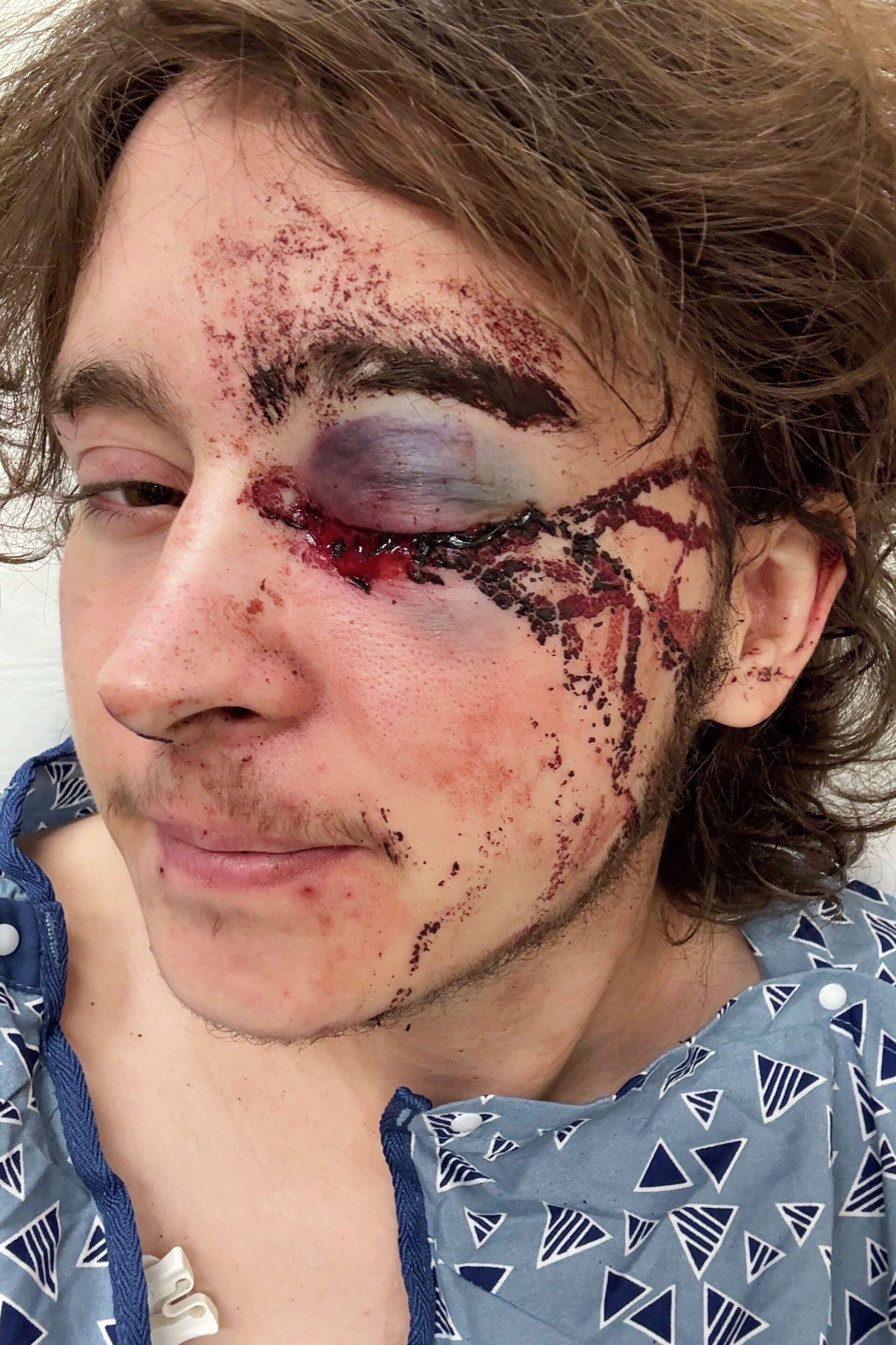
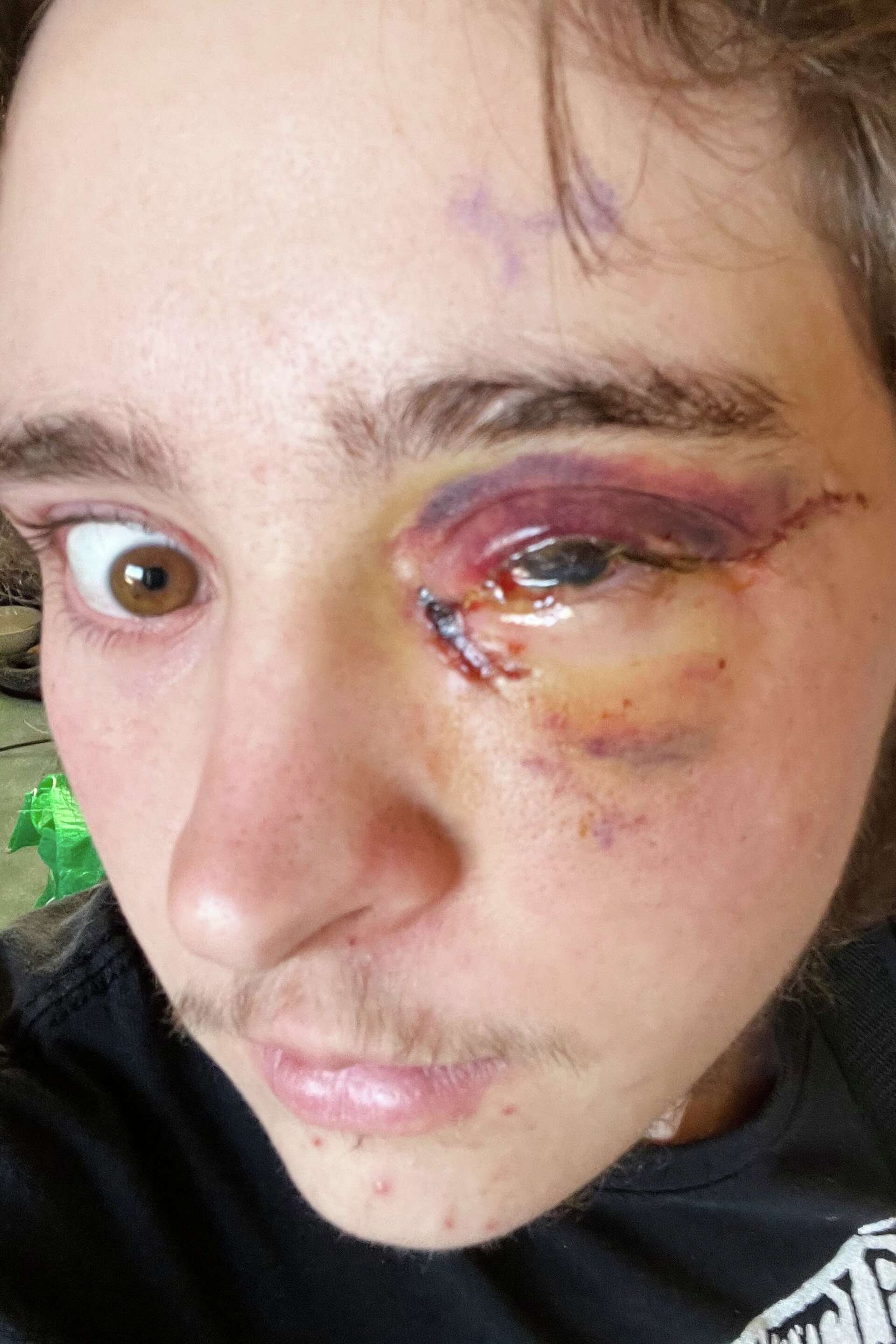
One of those rounds struck a protester in the face, leaving him blind in one eye.
The injured man has since told reporters and supporters that he “wasn’t being violent” and was holding a loudspeaker when officers grabbed him. According to his account, he was attempting to speak or chant when he was targeted, struck, and seriously injured.
Federal officials categorically reject that version. DHS says its officers were facing an organized mob of approximately 60 rioters engaged in violent acts. Officials say two of the most aggressive individuals were arrested and charged with serious offenses related to rioting and assault on law enforcement.
In a statement, DHS said plainly: “Rioting and assaulting law enforcement is a crime. Anyone who obstructs or attacks federal officers will be prosecuted to the fullest extent of the law.”

Two Stories, One Battlefield
The Santa Ana incident now exists as two competing stories.
In the first, shared widely by activists and sympathetic outlets, a peaceful protester was maimed by overzealous federal agents who used dangerous weapons against a crowd that posed little threat. In this version, the protester is a symbol of excessive force and unaccountable policing.
In the second, presented by DHS, officers were under coordinated attack by a violent mob, and the use of non-lethal rounds was a necessary response to restore order and protect lives.
Which version is closer to the truth may depend on evidence that has yet to be fully released: body-camera footage, surveillance video, and eyewitness accounts that have not been independently verified. But even before those details emerge, the narrative battle is already shaping public opinion.
Critics of the protest movement point to what they see as a recurring pattern: chaos first, sympathy later.
“They push the chaos,” one commentator said, “then the headlines turn into ‘victim stories,’ and the actual lawlessness gets memory-holed.”
Supporters of law enforcement argue that media coverage often focuses on the most dramatic injury while minimizing the violence that preceded it. They ask pointed questions:
If the protest was truly peaceful, why were officers being pelted with rocks and fireworks?
If demonstrators want accountability, why not start with those who threw the first punch?
To them, the outrage over the injured protester is selective — loud about consequences, silent about causes.
“Non-Lethal” Does Not Mean Harmless
The injury has also reignited debate over so-called “non-lethal” weapons. Crowd-control rounds, rubber bullets, and similar munitions are marketed as alternatives to live ammunition, but critics argue the label is misleading.
These projectiles can cause permanent injuries, broken bones, internal bleeding, and blindness — exactly the outcome now claimed in Santa Ana.
Law enforcement agencies maintain that such tools are intended to be used in controlled ways, aimed at lower extremities and only when crowds become dangerous. But in fast-moving, chaotic situations, accuracy can suffer, and the risk of serious injury rises sharply.
Civil liberties groups say that even when protests turn chaotic, authorities must use restraint and prioritize de-escalation. They argue that firing high-impact rounds into crowds is inherently dangerous and invites tragedy.
Law enforcement officials counter that restraint has limits. When officers are being attacked with rocks, bottles, and fireworks, they say, the priority becomes protecting lives — including their own — and preventing further violence.
The Charges
DHS says two “violent rioters” were arrested during the Santa Ana unrest and charged with crimes related to attacking officers. Officials have not publicly released full details of those charges, but they emphasize that criminal accountability is central to their response.
Federal authorities insist that the right to protest does not include the right to riot.
“Peaceful protest is protected,” one official said. “Throwing explosives and rocks at officers is not.”
This distinction — between protest and riot — is at the heart of the current argument. Activist groups say authorities often blur the line, labeling disruptive but nonviolent demonstrations as “riots” to justify aggressive tactics. Law enforcement agencies say protesters often blur the line themselves, hiding violent actors within larger crowds and then disowning responsibility when things turn ugly.
Media and Memory
How the Santa Ana incident will be remembered may depend less on court rulings than on headlines.
Critics of mainstream coverage argue that media outlets frequently focus on emotionally powerful images — like an injured protester — while downplaying or ignoring the violence that provoked police response. In this view, the story becomes about victimhood rather than responsibility.
“Notice the pattern,” one commentator said. “They push the chaos, then the headlines turn into ‘victim stories,’ and the actual lawlessness gets memory-holed.”
Supporters of protesters respond that focusing on injuries is not erasing lawlessness — it is highlighting the human cost of aggressive policing. They argue that the state has far more power than any protester and therefore carries greater responsibility for preventing harm.
This tension is not new. Similar debates followed clashes in cities from Portland to Minneapolis to Atlanta. Each time, images of burning debris, shattered windows, injured officers, and wounded demonstrators compete for dominance in the public imagination.
Respect, Authority, and Consequences
Underlying the Santa Ana dispute is a deeper cultural argument about authority and respect.
Supporters of federal enforcement say many activists treat law enforcement with open contempt, using taunts, insults, and physical attacks — then express shock when consequences arrive.
“They treat law enforcement with zero respect,” one observer said, “and then act shocked when consequences show up.”
From this perspective, the Santa Ana injury is tragic but not mysterious. If people throw rocks and fireworks at officers, serious injuries are a predictable outcome — whether to officers, protesters, or bystanders.
Activists reject this framing. They argue that respect is earned, not owed, and that many communities see ICE as an agency that tears families apart. In their view, anger is not only understandable but justified, and the real shock is that the government expects calm obedience in the face of what they see as injustice.
What Comes Next
Investigations into the Santa Ana incident are likely. Lawyers representing the injured protester are expected to push for body-camera footage and independent review. Federal authorities will defend their officers’ actions as lawful and necessary.
In court, facts will matter: who threw what, who fired when, and whether force was proportional to the threat. But in the court of public opinion, narratives may matter more.
If video emerges showing a peaceful man struck without provocation, outrage will intensify. If footage shows a violent mob attacking officers moments before the shot, sympathy may shift.
Until then, both sides are racing to define the story.
One side says: this is about a man who lost his sight because the state used dangerous weapons against demonstrators.
The other says: this is about a riot that injured officers, forced a defensive response, and is now being rewritten as a morality play about victimhood.

A Familiar Pattern
The Santa Ana clash fits a familiar pattern in modern American politics.
First comes confrontation.
Then chaos.
Then competing claims of victimhood.
Then a national argument that never fully resolves.
Each side accuses the other of bad faith. Activists say law enforcement lies to protect itself. Authorities say activists lie to excuse criminal behavior.
And the public is left to choose which story feels more believable — often based less on evidence than on prior beliefs about immigration, policing, and protest.
Conclusion
The man who says he is now blind in one eye has paid a terrible personal price for whatever happened in Santa Ana. Whether he is best understood as an innocent victim or as collateral damage in a violent riot remains disputed.
What is clear is that the incident has once again exposed deep fractures in American society: over immigration, over protest, over authority, and over the meaning of accountability.
One side asks: How many more people must be hurt before law enforcement changes its tactics?
The other asks: How many more officers must be attacked before society admits that some “protests” are simply riots by another name?
Between those questions lies the uncomfortable truth that chaos, once unleashed, rarely spares anyone — not protesters, not police, and not the communities forced to watch the conflict play out again and again.