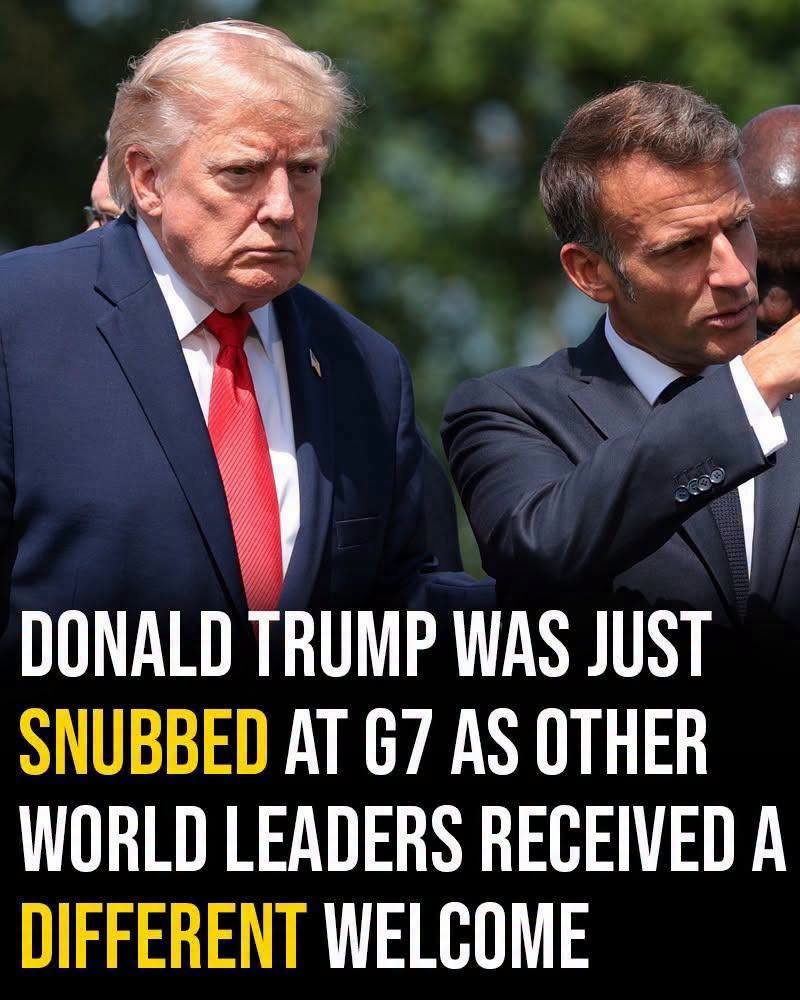
The recent G7 summit brought together some of the world’s most influential leaders during a time marked by geopolitical tensions, economic uncertainty, and growing international challenges. Representatives from major economies gathered to discuss issues ranging from global security and trade to energy policies and international cooperation. As leaders worked to address concerns affecting multiple regions, the event attracted significant attention from governments, media outlets, and citizens around the world. Beyond the official agenda, however, many observers closely followed the interactions among leaders, recognizing that even brief moments can shape public perceptions and fuel broader discussions about international relationships.
Among the leaders participating in the summit were Donald Trump, Ursula von der Leyen, Emmanuel Macron, Volodymyr Zelenskyy, and Canadian Prime Minister Mark Carney. Photographs and video clips showing greetings and conversations between leaders quickly spread across social media platforms, generating widespread commentary. Viewers analyzed handshakes, facial expressions, and body language, with some interpreting these moments as reflections of diplomatic relationships and policy positions. Experts, however, often emphasize that such interactions should be viewed cautiously, noting that protocol, scheduling, and personal familiarity can all influence how these exchanges appear.
While symbolic moments frequently capture public attention, the summit itself focused on pressing international concerns. Leaders held discussions regarding the conflict in Ukraine, developments in the Middle East, economic growth, energy security, and trade cooperation. Maintaining stability and strengthening coordination among allied nations remained central themes throughout the meetings. Economic issues also received considerable attention as officials examined inflation, supply chains, investment opportunities, and strategies designed to encourage long-term growth. With many countries continuing to adapt to changing global conditions, cooperation among major economies remains an important element in addressing challenges that extend beyond national borders.
The summit illustrated how modern diplomacy operates not only through formal negotiations but also under the constant scrutiny of cameras and digital media. In an age when images and short video clips can influence public narratives within minutes, routine interactions often become subjects of global debate. Yet despite the fascination surrounding symbolic moments, the broader significance of these gatherings lies in the discussions and decisions aimed at addressing shared concerns. As world leaders continue navigating an increasingly complex international environment, events like the G7 summit demonstrate both the importance of cooperation and the growing role public perception plays in shaping conversations about global affairs.