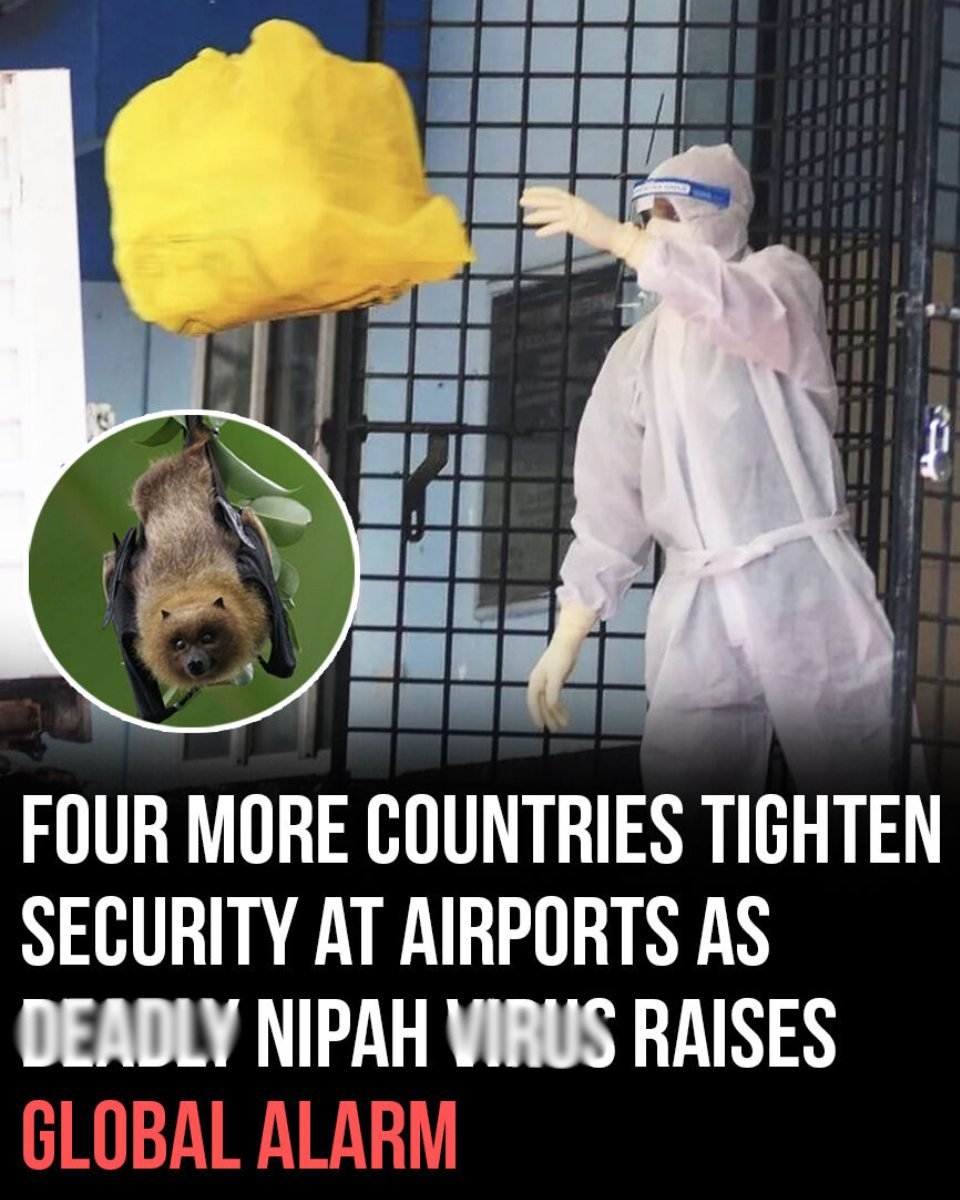
Now, another deadly virus has prompted several airports to reinstate some of the rules used during the COVID years.
Transmitted from animals to humans
Health officials are scrambling to contain an outbreak of the Nipah virus in India’s eastern state of West Bengal after five confirmed cases, including infections among doctors and nurses. The virus is regarded as extremely dangerous due to its high fatality rate and the absence of any effective treatment.
Almost 100 people have been instructed to self-quarantine at home, while those infected are being treated at hospitals in and around Kolkata. One patient is reported to be in critical condition.
Nipah is a highly dangerous zoonotic virus, meaning it spreads from animals to humans, and there is currently no vaccine or cure. The World Health Organization lists it as a high-risk pathogen, explaining that although human cases are uncommon, infections usually occur when the virus spills over from bats, often through fruit contaminated by bat saliva or droppings. The virus can also spread between people through close contact with infected bodily fluids.
A health official stands outside the Kozhikode Medical College Hospital ward, which has been converted into a Nipah virus isolation ward on September 06, 2021 in Kozhikode, India. (Photo by C. K Thanseer/DeFodi images via Getty Images)
The US Centers for Disease Control and Prevention says Nipah infection typically starts with flu-like symptoms, including fever, headache, muscle aches, and fatigue. In some cases, patients may also develop respiratory problems such as coughing or pneumonia.
Symptoms usually appear within four to 14 days after exposure.

First identified in 1999
The most serious complication linked to Nipah is encephalitis, an inflammation of the brain that can lead to confusion, seizures, or coma. Even those who survive may suffer lasting neurological problems, such as ongoing seizures or changes in personality.
Nipah was first identified in 1999 during an outbreak in Malaysia and Singapore, where pig farmers and others who had close contact with infected pigs became ill.
Since that time, outbreaks have been recorded across parts of South Asia, including Bangladesh, northeastern India, and the southern Indian state of Kerala.
Road blockade due to Nipah affected areas at Chathamangalam panjayat on September 08, 2021 in Kozhikode, India. (Photo by C. K Thanseer/DeFodi images via Getty Images)
Research shows that fruit bats are the virus’s natural hosts. While Nipah circulates among bat populations throughout Asia and Africa, human infections have largely been limited to South and Southeast Asia.
There is still no proven treatment or vaccine for the Nipah virus.
Tightened health screening
Treatment for Nipah is mainly supportive, focusing on relieving symptoms as they occur. The WHO recommends preventive steps such as avoiding raw date palm sap or fruit that may have been contaminated by bats, ensuring food is thoroughly cooked, and minimizing contact with infected people or animals.
Officials believe the current outbreak in West Bengal began within a hospital setting. Initial positive cases included a male and female nurse, followed by a doctor, another nurse, and a hospital staff member.
Although Nipah has not typically caused widespread outbreaks, several Asian countries are now taking precautionary measures to reduce the risk of transmission.
Nepal, Thailand, Taiwan, and Hong Kong have all strengthened health screening for travelers arriving from the affected region, reintroducing measures similar to those used during the COVID-19 pandemic.

Travelers passing through Suvarnabhumi, Don Mueang, and Phuket airports are now being screened for fever and other symptoms associated with the virus. Health authorities are also distributing “beware” cards, advising passengers on what to do if they begin to feel unwell.
Thailand’s Prime Minister Anutin Charnvirakul said, “Thailand’s Department of Disease Control screens travellers from West Bengal, India at Suvarnabhumi & Don Mueang airports starting 25 January amid Nipah virus outbreak. Health officials implement strict measures as passengers show excellent cooperation at checkpoints.”
Nepal has introduced checks at Tribhuvan International Airport as well as at major land border crossings with India. In Taiwan, health authorities are preparing to classify Nipah virus infection as a Category 5 notifiable disease, the highest alert level for serious emerging infections under the country’s public health laws.
China, which imposed strict controls during the COVID-19 pandemic, has reported that no Nipah cases have been detected domestically. However, state broadcaster CCTV said on Tuesday that the risk of imported cases remains, citing China’s disease control agency.
The WHO has once again highlighted Nipah as a priority pathogen because of its potential to spark an epidemic. Previous outbreaks have recorded mortality rates ranging from 40% to 75%, underscoring the need for rapid response.
For now, authorities are urging heightened caution in affected areas. As Thailand’s health officials have warned: “Don’t hunt, don’t forage, don’t eat.”