Five years. Spoken out loud, it sounds insignificant. A blink in the vastness of time.
But when those five years are spent inside hospital rooms or in a house permanently scented with disinfectant and medicated creams, time doesn’t flow—it thickens. It becomes something heavy and sticky, dragging at your ankles, refusing to let you move forward.
My name is Isabel Moreno. I’m thirty-one years old, though the woman staring back at me in the mirror looks much older. My eyes are sunken. My hands, once smooth and manicured, are dry and cracked from endless washing, from lifting wheelchairs, scrubbing stained sheets, and supporting a body that no longer supports itself.
Everything began on Interstate 70 near Golden, Colorado, on a sharp curve locals warn about but never truly respect. My husband, Andrew Moreno, was driving home from a sales conference in Denver.
He was charismatic, confident—the kind of man who filled rooms effortlessly. He drove the same way he lived: assuming the road would always make space for him. A drunk driver crossed the median. The crash was violent. Andrew lived. His spinal cord did not.
At St. Luke’s Medical Center, the doctor didn’t sugarcoat it. “Complete paraplegia.” Two words that erased everything we’d planned—children, road trips to California, moving into a bigger house in Aurora.
In that moment, I didn’t think about my own future. I thought about his. And like the woman I had been raised to be, I decided I would become his legs. His strength. His world.
I didn’t know that holding him up would slowly destroy me.
That Tuesday morning followed the same script as the previous five years. My alarm went off at 4:30 a.m. Denver was still dark, the air cold and metallic. I slipped out of bed quietly, though it didn’t matter. Andrew slept in the remodeled downstairs bedroom. I slept on the couch, trained to wake at the slightest sound.
I showered quickly, dressed in worn jeans and a plain blouse. I hadn’t bought real clothes in years. What was the point? I
mentally listed the day’s tasks: pharmacy run for catheters and bandages, another argument with insurance, making it to the hospital before shift change, bringing Andrew something edible because he despised hospital food.
At 5:15, I left the house and drove my aging sedan toward Sunrise Bakery, a small place near the hospital.
Andrew had been demanding vanilla sweet rolls for days. “The good kind,” he’d insisted. “Not that gas station trash.”
Inside, the warm scent of sugar and butter wrapped around me. For a fleeting second, I imagined I was just another woman picking up breakfast for a normal marriage.
“Can I help you?” the cashier asked.
“Four vanilla rolls and two turnovers. And black coffee, please.”
I paid carefully, counting bills. Andrew’s disability covered treatments, but everything else fell on me. I worked freelance editing at night, barely sleeping.
Traffic crawled. I called home to check on Ryan, Andrew’s son from his first marriage.
“Hey,” he answered groggily.
“Ryan, can you take out the trash before class? Pickup’s today.”
“Yeah. Later,” he muttered and hung up.
I knew he wouldn’t do it. Still, I told myself to be patient. Everyone was suffering, right?
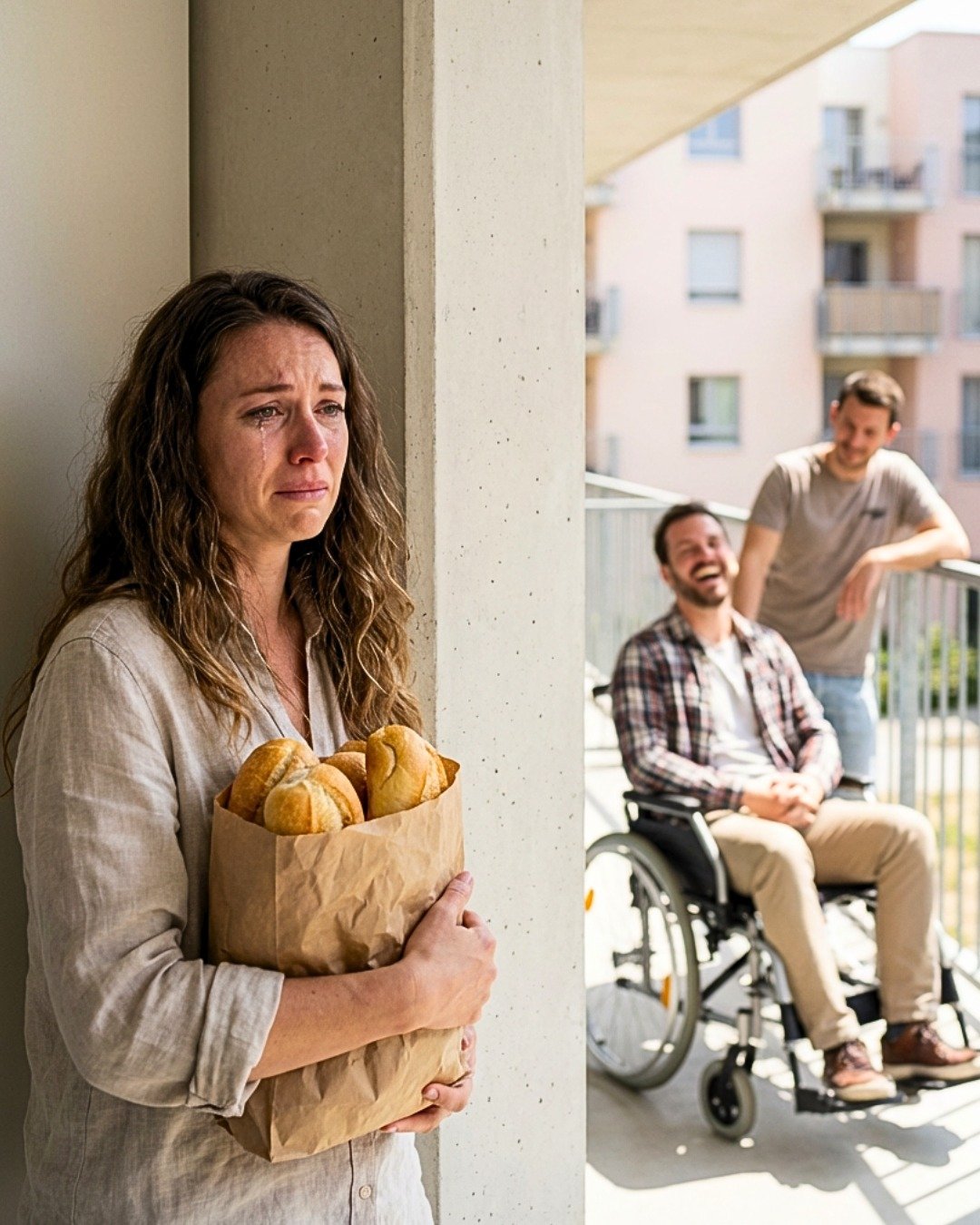
I parked several blocks from the hospital and walked, clutching the warm bag against my chest. I wanted to see Andrew smile when he tasted it.
Inside, the familiar smell of antiseptic hit me. A nurse told me Andrew was in the courtyard getting sunlight.
I walked toward the glass doors leading to the garden, paused to smooth my hair, and caught my reflection—dark circles, tired eyes, a woman worn thin. “It’s fine,” I thought. “You’re here.”
I reached for the door handle—and froze.
Andrew’s voice floated through the glass.
“…you learn to adapt,” he was saying. “Life takes your legs, but it gives you other perks.”
He was talking to Frank Miller, another rehab patient.
“Doesn’t it bother you?” Frank chuckled. “Your wife does everything for you.”
Andrew laughed. Not weak. Not bitter. Confident.
“Please. Isabel’s dependable. But let’s be honest—where would she go? I hit the jackpot.”
“What do you mean?”
“I’ve got a full-time nurse, cook, driver, and maid. Costs me nothing. Not even benefits.”
My stomach dropped.
“But she’s your wife.”
“She is. And she’s useful. Obedient. I tell her jump, she jumps. And the best part?” He lowered his voice. “She thinks she’s inheriting everything.”
Frank laughed. “Seriously?”
“Absolutely not,” Andrew said. “Everything goes to Ryan. Blood is blood. Isabel’s young—she can find someone else when I’m gone. If she’s not too worn out.”
“Lucky guy.”
“Just practical,” Andrew replied. “Hope keeps her around. Cheaper than a care facility. She’s my luxury maid.”
The words crushed me.
I stared at the bag in my hands. The breakfast. The sacrifice. The love.
One tear slipped down my cheek—not grief, but fury.
Five years flashed through my mind. Caring for him while sick myself. Selling heirlooms to pay bills. Holidays spent alone while Ryan partied.
I wanted to scream. But I didn’t.
If I exploded, I’d be the villain. The selfish wife abandoning a disabled man. I’d leave with nothing.
So I stepped back. Quietly.
I tossed the bag into a trash bin.
“Goodbye,” I whispered.
I left the hospital.
In my car, I screamed until my throat burned. When I finally stopped, I saw something different in my reflection—resolve.
My phone buzzed. Messages from Andrew: Where are you? I’m hungry.
I replied calmly: “Car trouble. I’ll be late.”
Then I drove to the public library.
From that moment, everything changed.
I played my role while gathering evidence. At night, I searched his files. Bank statements. Insurance policies. Everything left to Ryan and Andrew’s sister. I photographed it all.
With the help of an old friend, Claire Dawson, and a ruthless attorney named Morgan Hale, I filed for divorce, asset freezes, and compensation for economic abuse.
Andrew panicked. Ryan lashed out. False accusations followed—but they fell apart under evidence.
I left.
The door closing behind me felt like freedom.
Months later, Andrew was hospitalized again. The hospital called me. I declined. His son was responsible now.
Today, I sit in a café I co-own with Claire. Sunlight fills the room. I’m writing my story.
I am no longer anyone’s free labor.
I am the woman who walked away.
And dignity, once reclaimed, is worth more than any inheritance.