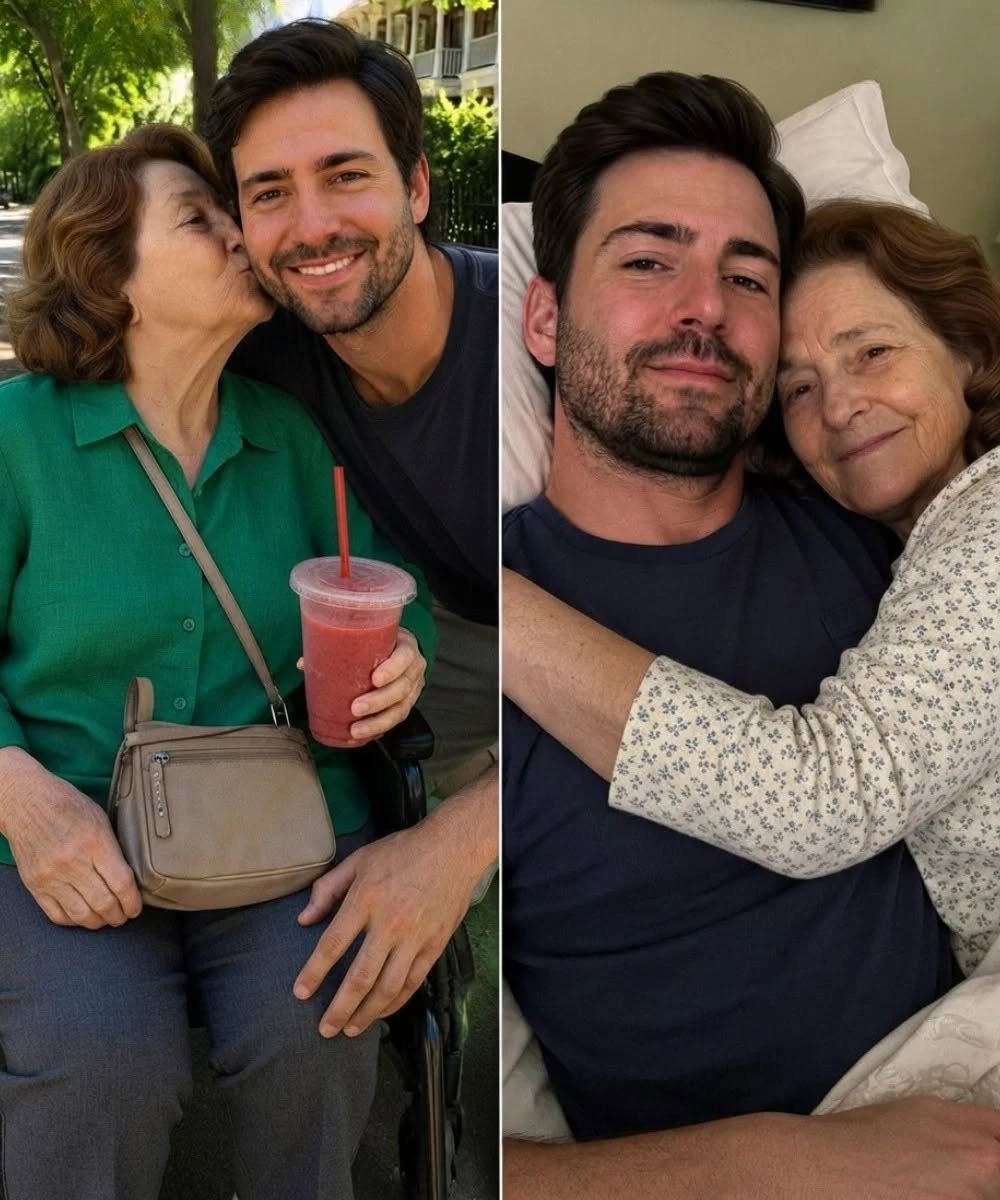
For three weeks, I had completely changed my life to care for my elderly neighbor, Susan, whose own family had barely visited her in five years.
Susan was seventy-six, seriously ill, weak, and living alone. When I discovered how badly she was struggling, I brought her into my home. I worked from home, had a spare bedroom, and couldn’t bear to see another elderly woman suffer alone.
I knew what it felt like to regret not being there.
Years earlier, my mother had raised my siblings and me almost by herself. When I moved away for college, she always told me she was fine whenever I called. I believed her because it was easier than facing the possibility that she needed me.
By the time we realized how sick she really was, there was almost no time left.
After my mother died, I carried the guilt for years.
That was why, every night at exactly nine o’clock, I sat beside Susan’s bed and confessed everything I wished I had done differently.
Then Susan’s family suddenly appeared.
Her nephew, Greg, accused me of moving Susan into my house because I wanted her money and her property. He threatened to call the police and told the neighbors I was manipulating her into changing her will.
The accusations spread quickly.
But Greg and his family had not been there when Susan struggled to breathe at two in the morning. They hadn’t helped her eat, walk safely, take her medicine, or get to medical appointments.
I refused to argue.
Then one morning, Greg returned with his wife, daughter, and a police officer.
He demanded that Susan come home.

Before I could respond, Susan appeared in the hallway holding a bundle of old letters tied with a faded blue ribbon.
“Bring everyone inside,” she said. “It’s time they heard the truth.”
Once everyone was gathered, Susan revealed something that completely changed my understanding of my past.
She had been one of my mother’s closest friends.
I was stunned.
Susan explained that my mother had written those letters years earlier, when she became seriously ill. They were addressed to me, but my mother had never sent them.
She had asked Susan to keep them until the right time.
I opened the first letter with shaking hands.
My mother explained that she knew I worried about her. She admitted she had hidden how sick she was because she didn’t want me to abandon my life and rush home out of guilt.
Most importantly, she told me not to blame myself for not being beside her when she died.
She knew I loved her.
She had always known.
I broke down crying.
Susan then told me something my mother had once said about me:
“Sam always thinks loving somebody means he has to fix everything.”
That was exactly what I had been doing to myself for years.
I had convinced myself that if I had called more often, returned home sooner, or noticed the signs earlier, I could have saved my mother.
But the letters showed me that my mother had understood me better than I understood myself.
She didn’t want her final days to become a burden of guilt that I carried forever.
Then Susan turned toward Greg and his family.

She reminded them that they had stayed away for five years and only returned when they learned she was seriously ill.
“You had time to argue about what happens after I’m gone,” she told them. “Then you have time to sit with me while I’m still here.”
Nobody had an answer.
So they stayed.
Greg stopped talking about Susan’s property. Laura began visiting her grandmother regularly. Marcy helped with meals and laundry. Slowly, the family began having the conversations they should have had years earlier.
Susan had given them another chance.
She had given me one too.
That evening, at nine o’clock, I sat beside Susan’s bed as I had every night.
But for the first time, I didn’t confess another failure.
I looked at my mother’s letter and said:
“My mother knew I loved her.”
Susan squeezed my hand.
“Yes, Sam.”
For years, I had believed my mother died wondering why I hadn’t come home.
Now I finally understood the truth.
She had died knowing I loved her.
I couldn’t go back and change the past. I couldn’t sit beside my mother during her final days.
But I could be there for Susan.

I could hold her hand when she was afraid.
I could make sure she never woke up feeling alone.
And for the first time in years, I stopped punishing myself for something my mother had already forgiven.
Susan smiled.
“She always knew.”
And that was the first night I finally believed it.